Well, I'm still catching up on movies, but I finally feel like I'm actually getting stuff done. The OYL Awards will be posted in the next couple weeks; I promise. (I know, one year late for a fake award show that was already a year late, yeah, yeah, spare me; I'm catching up anyway.) I also feel like I'm finally getting some new and fresh ideas to write about here. I don't always have the time, but at least I'm getting inspired, which is a huge step up.
As to other movies I've been watching, but didn't get to review, mostly a lot of older documentaries I'm catching up on, "Silicon Cowboys" and "The Lovers and the Despot" stand out. The Hong Kong thriller "Drug War" was pretty good too. One thing I finally got around to was "Galaxy Quest". Yeah, that weird comedy from 20 years ago where actors on a sci-fi show are mistaken for heroic astronauts by aliens. I've had a lot of weird issues trying to get ahold of a copy of that movie over the years, and somehow never could. Like, I think my library lost their copy like on three separate occasions when I was next in line to get it; it'd been a running joke for me for awhile, but I finally saw it, and actually I liked it quite a bit. It still holds pretty well. It actually reminded me a lot of Prestong Sturgess's "Sullivan's Travels" curiously enough; I'm glad I finally got to that one and it wasn't something I wished I had skipped something; I really enjoyed that film. And btw, the best quote from a Sigourney Weaver character ever is, "Whoever wrote this episode should die!" I'm not joking either, nothing tops that. Yeah, yeah, come at me on that if you want, but eh-whatever, you know what, I never liked "Alien" that much anyway; I'm standing by that this one.
Anyway, let's get to the movies I did have time to do a full review on; there's a lot of them too, and some big ones from this past year, so here we good! Onto the reviews!
HOW TO TRAIN YOUR DRAGON: THE HIDDEN WORLD (2019) Director: Dean DeBlois
★★★★

You know, I really gotta give the "How To Train Your Dragon" series credit. I genuinely never think of these movies or remotely remember any of the previous film(s) before I suddenly find myself slung into their newest sequel, but every time I do, I find myself once again taken away and enthralled with this world of Vikings and dragons. I don't know how this franchise does it, and the strange this is, these are all three really distinctive movies. The first movie was about the friendship between Hiccup (Jay Baruchel, who I swear when I just hear his voice, I always think it's Johnny Galecki) and his Night Fury Dragon Toothless and how that friendship changed the dynamics between the dragons and the Vikings, the second one is about expanding the world and strangely for Disney, a finding of a long-missing mother of all things, and Valka (Cate Blanchett) is here too, and so is Stoick (Gerard Butler) in flashback scenes at least too, and now we get a movie where the world of Berk is now, too infested with refugee dragons that Hiccup has saved from being killed or kidnapped and now need to find a new home for them before the world gets destroyed from within and from outside forces....
(Pause)
You know, I'm starting to realize there's some really disturbing symbolic implications in this movie series.
Anyway, this time the villain is the notorious dragon hunter Grimmel (F. Murray Abraham) known for having killed all the night furies, except of course for Toothless. And, one other Night Fury, that's white, a Light Fury named, um, Light Fury. Once he finds out about Toothless, he begins to orchestrate a pretty elaborate trap for Hiccup that he manages to fall into surprisingly logically. He ends up abandoning Berk and eventually finding a seeking world once mythologized about where dragons apparently come from. I never think about this, but this is a weird narrative idea, isn't it? Like, I know we haven't explored 100% of this planet yet, but everytime I hear about this magical utopian world in fiction where a certain lone species secretly turns out to be the origins of them, it always feels odd. I mean, it's get existed in sci-fi and fiction since "Journey to the Century of the Earth" or even "Gulliver's Travels", but still.... That said, done well it works. It worked in the "Kung Fu Panda" movies, and it works here. I think the look and animation helps. The "How to Train Your Dragon" movies have always have great cinematography and production design; creating a truly amazing world. Roger Deakins of all people is listed as a lighting consultant, and I got admit, some of the imagery in these films are just spectacular. Flying is always done better in animation of course, but it's done spectacularly well here again.
Also, I like the strange steampunk nature of this world. Or how about even that, we have a couple main characters who have lost body parts over the franchise's run and they stick to it. Personally it overwhelms me a little bit, but the "How To Train Your Dragon" movies are incredible worlds that have been constructed. I guess that's why I did feel sad at the end of this. Even Astrid's (America Ferrara) role, on paper, she's the cliche girlfriend of the main character, but she is more than that. She a fighter too, and we've been through two movies of their relationship; it honestly does feel bizarre that they're not married, or at least engaged at this point in their lives.
Also, when's the last time in animated movie where you actually saw the characters grow older as the series goes along. And don't give me Andy from "Toy Story", that doesn't count; I mean, the main characters. It didn't used to be so weird by the way; nowadays we just accept that the characters on "Family Guy" and "The Simpsons" are always gonna be their ages, but somehow Pebbles and Bam-Bam we got to see from birth 'til they began having kids of their own on "The Flintstones", and we saw their parents get older and have different, newer adventures too. Honestly, kudos for doing this well in a theatrical feature animated franchise. And so subtlely too. This could've been so much hackier the way it could read on paper.
Purportedly, this is the last of the "How to Train Your Dragon" trilogy, and I hope that's true, 'cause they did close this series well, and the aforementioned end to the "Toy Story" films at three was apparently a bigger lie then we were led to believe, even at the time. I wrote at the end of my review of the second feature that I looked forward to more movies in this franchise and see where they go and how much of the world they can explore. Well, they did that again, and this did it with a finality I wasn't expecting. I certainly wasn't expecting to get so emotional over it too. It's weird, Disney's had several notable stories about growing up and growing old over the years, and yet it's the recent ones that truly get me emotional. This one really surprised me, 'cause as much as I've given these films in the past, I can't honestly say that they've stuck with over time or that I find them particularly memorable or great within the Disney canon. And yet, the movies win me over every single time. It's one more reminder that it's never what the story is about, it's how it's about it that matters. This franchise got me emotional about dragons that don't talk and the humans who enslave them for their own gains, somebody's doing something right with these.
LONG SHOT (2019) Director: Jonathan Levine
★★★1/2
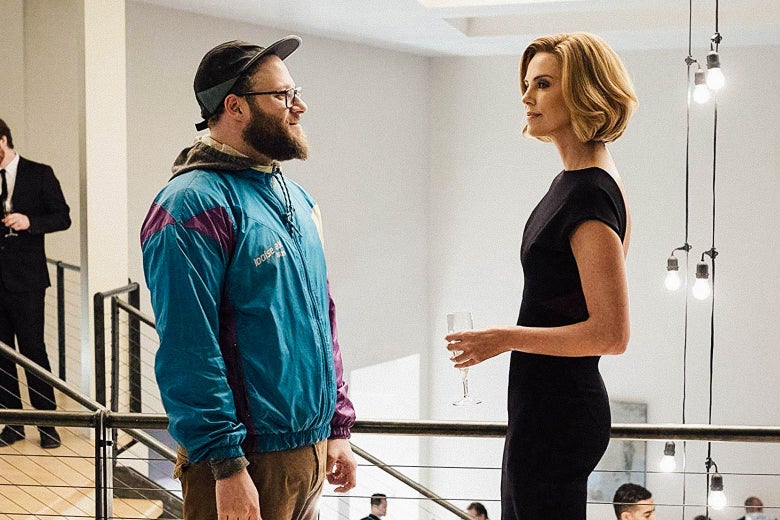
So, "Long Shot" is one of those movies that's gonna have a little bit of a struggle for me, right out the gate, just based on the premise. Not because I don't believe Charlize Theron and Seth Rogen, not because I can't buy either of them in the situation, her being Secretary of State, running for President in a world where the TV actor President doesn't want to run for a second term, or that she would date some loser righteous journalist,... none of this, Mostly it's that, I'm constantly comparing it to the best version of this story.
When it comes to a romantic-comedy set in the world U.S. politics, Rob Reiner's "The American President" is pretty untouchable to me; in fact I think it's one of the best films of the '90s. Sure, part of it is that it basically became a trial run for screenwriter Aaron Sorkin to create "The West Wing", which is still the best drama series of all-time, btw, but it is more than that. "The American President' is just a solidly great movie, with shining, winning performances and a brilliant screenplay that's both politically sharp and realistic, (Well, realistic for the time anyway...) and also inspirational and idealistic about both the power of politics and the power of romance. That said, I guess there are parts of it that don't age well. People can misconstrued Sorkin's romantic idealism to read as more fictitious or fantasy, and now that we live in a surreal political landscape, the idea that, once upon a time a President dating a lobbyist can actually be detrimental to a U.S. President seems almost blissfully coy of us now. Man the '90s were so innocent what happened?
Anyway, yeah, I guess there is reason to tread this material anew. Stories of powerful women in romances with the everyman in politics date back to Hepburn & Tracy movies to some extent. And even if there isn't, I'm glad somebody in Hollywood is trying to keep alive the smart romantic-comedy. I really regret this genre dying as much as it is. I know there's theories why it's so suddenly fallen off the face of the entertainment landscape, with only an occasional anomaly entry being good like 'Trainwreck" or "(500) Days of Summer", but personally I blame Richard Curtis's "Love, Actually", because that film was such a masterpiece and was so over-the-top extravagant with how shamelessly it's played with so many different great rom-com conceits and did them so well that basically most everything else feels slight in comparison. Although, I'd also note that romantic-comedies are just one of the toughest genres to begin with. I mean, there's a reason why Sandra Bullock, even long after the death of the genre kept doing them, it wasn't because she wasn't talented and not getting better part offers, it's because she was really incredibly talented and was one of the few actresses in Hollywood who could keep pulling off rom-coms like that. (Seriously, she turned a lot of shit into mediocrity.)
Charlize Theron can pull it off too though. I wish she wasn't doing it in what's basically another variant on the Seth Rogen stoner comedy, but eh, I generally like those films too. (Hell, I was lenient on "Sausage Party") She plays the workaholic-but-enchanting beauty U.S. Secretary of State Charlotte Field. After the actor-turned President Chambers (Bob Odenkirk) decides that he doesn't want to run for reelection because he wants to pursue a film career, ([Sigh.] Remember when that kind of joke was funny? Good times.) and now Charlotte is working on an international environmental initiative which will work as a springboard to her inevitable Presidential run, which reportedly will have the President's endorsement. Rogen plays Fred Flarsky a scrubby investigative journalist, the kind with such high morality that they take on the most unlucrative assignment like infiltrating the Ku Klux Klan and put their lives at risk for a small low-budget indy/online press then immediately quits when that company gets bought out by some giant news conglomerate, in this case, the conglomerate is a British conservative media mogul named Wembley (Andy Serkis) who nobody likes but controls every piece of the media and those who make it. Yes, this is an obvious Rupert Murdoch stand-in; I'm okay with that.
Anyway, there's a chance meet-cute between-, well, actually a re-meet cute, 'cause Charlotte, once upon a time, was Fred's babysitter. Afterwards, this is basically enough to get him hired on as a speechwriter, even though they're basically polar opposites now, but they begin to influence each other. Still, I'm not entirely sure how much the former babysitter idea works. I mean, something always kinda bugs me about these past meet-cutes that turn into relationships, you know, when you meet someone from your past and then they become lovers, especially when only one of them thought of the other that way as a kid, which is very clearly what's done here I might add. I guess it's alright, and the movie does evolve past that early beginnings, and the movie actually feels progressive in how it's about how a powerful successful woman and how she met her husband, and not have it be like boys vs. girls thing or something. Not that I don't appreciate, say, "Adam's Rib" or something like that, but it's nice how it's just not commented on, things just happen and that's the dynamic between them, and there's nothing artificial getting in their way or dividing them. The main conflict is really about how Charlotte wants to be perceived to a public that's enthralled by her and how to be able to keep their interest in order to both gain political power and use it for good. I mean, it's simplistic politics really, but it's realistic enough that I don't mind it entirely. The political battles in "The American President" are kinda simple to when you think about it, although they had a little more bite to them in a mid-90s U.S.
It helps also that it's got good people behind it. Director Jonathan Levine is known mostly for "The Wackness" and "50/50", as well as some other good lighter films on some darker subjects. Dan Sterling is a pretty good television writer up 'til now, this is his first screenplay and story, and Liz Hannah wrote Spielberg's "The Post", so the political stuff is right up her alley and Sterling gets the good comedy stuff. Although, I was a little unsure of what to make of that one sex scene in the movie? Eh, I swear sometimes, we're just trying backdoor ways to get our favorite female actors to say the things the writer's favorite porn actresses have said, sometimes, but eh, I guess it works with the character...?; eh, I'll let it go.
I might have some issues personally, but it's a nice, smart Hollywood rom-com where nobody's a complete idiot; I'll take it.
ASH IS PUREST WHITE (2019) Director: Zhangke Jia
★★★★★
There's a scene in "Ash is Purest White" that includes a simple idea that I'm kinda amazed I've never seen it done before until now. A character arrives at a building with to meet and reconnect with someone who she hasn't seen in a very long time. It's one of those automatic sliding doors that opens when you walk up close to it, only, it doesn't open for her. Not because it's not working, it clearly works, but not for her. It's subtle, but it's subtle in a way that makes the scene almost seem symbolic of the whole film, which is saying something 'cause there's already a lot in this movie.
Zhangke Jia ia one of the best filmmakers in the world. I've seen only three of his movies, "A Touch of Sin", "Mountains May Depart" and this latest, "Ash is Purest White". The other two movies made my ten best lists, and I'm fascinated by whatever he comes out with next. Every time I try to describe his films or his directing style, I run into a bind. I keep wanting to adequately compare him to some of the more well-known Western filmmakers, Richard Linklater, Robert Altman, Terence Malick, etc. etc. and there's comparable aspects to those filmmakers and several others, but none of those names ever seems perfectly fit. That's not a criticism, that's a compliment by the way. The movies he makes are distinctively his. Filled with quiet, fascinating long takes, observant slice-of-life portrayals of the past, present and the future of China, with quiet main characters who think much more than they often speak out. He characters live lives of quiet desperation until all that's built up in them, inevitably implodes and he finds and elegaic elegance to that. Despite the beauty of these films, he is regarded as controversial, and he's certainly a critic of modern Chinese society and where it's going. His films all seem to reflect that, often taking place in the past, present and sometimes even in an otherworldly future to show us a warning that we may or may not heed.
All that said, "Ash is Purest White" is his most straightforward film yet, and I wouldn't be surprised if this is the one that gains the biggest cult appreciation in America. For one thing, it's a gangster movie. A popular genre all over the world and Asian gangster films in particular have caught on here. That said, it's still different. It focuses not on the crimes or even the big boss, or the investigation into the underworld, but instead on the girlfriend of the boss. Qiao (Tao Zhao) is a empathic and fascinating character. She's dating a well-known underworld figure named Bin (Fan Liao). He's so well-known that he's often under attack from rival gangs in attempts to take him out perhaps in order to take over his territory and properties. The movie begins at the turn of the century and he's still making deals in discos and running his organization. Him and Qiao seem in love, and while she runs her own charitable side projects and works at her own job, she's beginning to get used to the gangster life that he's in.
Then, an incident occurs where she is arrested after trying to defend Bin from an attack. She spends the next five years in jail, and returns to a new China essentially. This is his second movie in a row that seems to document the westernization, cultural, economic and even geographical changes in the country over years. When she is out, she begins to find Bin and return to their normal life, but plans go awry here as well as Bin has left the life and many others have moved on from their old positions and are trying to dissuade her from finding Bin herself, but she's particularly sly and knows how to maneuver around. I like one sequence in particular where we see how she manages to get somebody in a rich party in a restaurant to give her some money to get around town. You don't see too many movies about a women's journey into the life of being a gangster, but essentially we do get that parallel as she becomes more like Bin while Bin, we find out, has left the life entirely and doesn't want anything more to do with Qiao.
That is, until years later, when he reenters and Qiao is right there with him, both of them coming back into the fold after life-altering, in Qiao's case, otherworldly events change the course of their life once more.
I'm still only scraping the surface of "Ash is Purest White" btw. This is a movie filled with tons of emotional depth, some humor, a great character study, a reflection on the state of China and how it's continuous westernization is making the country less individualistic than ever, it's even a pretty decent commentary on what exactly a love story can be. As long as Zhangke Jia has something to say, I'm gonna want to hear what he says next. Few filmmakers have as fascinating a take on the world as him and he's earned his place as one of the best directors alive. Don't be surprised if he makes another Top Ten List of mine with this film. This one in particular, while it may or may not be his best film, it's definitely the one where I most got caught up in the world that he's in.
THE HEIRESSES (2019) Director: Marcelo Martinessi
★★1/2
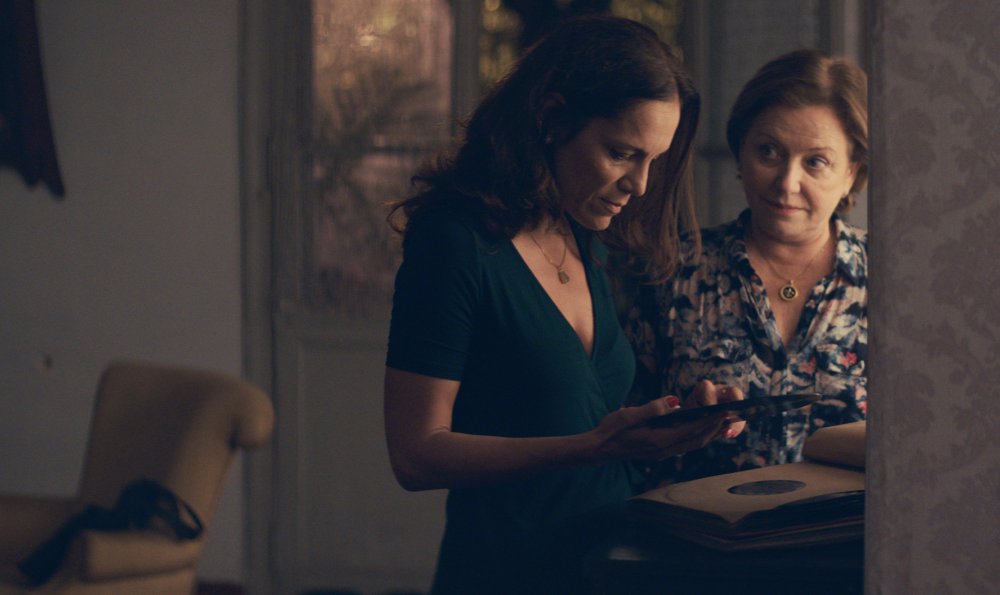
I feel like "The Heiresses" is the kind of movie I should really enjoy more than I did. It was Paraguay's submission for the Foreign language Oscar, and for one thing, I'm kinda fascinated by that country; it's a landlocked South American country with more of an indigineous population than most of South America, and a strange history and geographical makeout to begin with, and also because I liked the last Paraguayian film I saw, Juan Carlos Maneglia & Tana Schembori's "7 Boxes". This film though, is the first feature from Marcelo Martinessi, and on the surface it looks fascinating. It's filled with unknown or amateur actors and he gets some great work out of them. Also, conceptually, it's an interesting premise for a movie. (And an interesting location for the story as well I might add.) The titular heiresses are Chela (Ana Brun) and Chiquita (Margarita Irun), a couple who both came from money, they're families were both rich and for the most part, they've never really had to do much with their lives until now, as they've begun selling some of their more prized possessions in order to pay off certain debts.
In this case, it doesn't work and Chiquita actually ends up in jail for fraud over it. Chela is now alone, mostly, she does keep one live-in maid, Pati (Nilda Gonzalez) on staff and continues trying to sell some expensive rare china and other things. She also starts giving and charging for rides for some of the other upper class she's around. Anyway, it starts to get her eyes opened up a little bit, and she becomes enthralled with Angy (Ana Ivanova) who needs lifts in order to take her sick mother back and forth from medical appointments. I guess, she begins to find out more about herself in this more subservient position to these people. Eh, honestly, I'm stretching. I mean, it does this, but it took me a couple viewings to try and pry this out.
The thing is, this isn't a bad or weird concept. Like, these performers are all good, especially so considering that they're not trained actors for the most part, and I don't know how difficult it is to find trained actors in Paraguay, but I do feel like this movie didn't needed this neorealistic take. There's nothing wrong with it, but I don't get why...; the idea of famous people playing heiresses who have to figure out tough choices and paths in life the hard way and without the money that they're used to is not a terribly new idea in film; I can think back to movies from the Golden Age of Hollywood that had takes on that, and for more modern examples, there's dozens of them. I can even think of a pretty good South American movie, the Argentinean film "Live-In Maid" that did this subject to some degree, pretty well. There's several ways to dive into a riches-to-rags story and do it well, and I'm just not sure in hindsight what direction is this movie going for.
I'm sure that there are certian details related to modern Paraguay in particular that flew over my head, like how a debt can lead to imprisonment for fraud; I'm betting that that's something that's probably become common there in recent years, or at least was at one time, but honestly, this is a tale that could otherwise take place anywhere. I guess, you can argue that it makes it universal, but that's a not a good thing here. This is a character study about multiple people who are specifically struggling with being born rich and now as adults having to grow up with and engage with this several new statuses in their lives. Trying to live life like you always have, even when you can't, having to adjust and form a new life, having old familiar, trusted friends leave and betray you and having to make new ones.... Like, it's not that these steps aren't there, but they're so de-emphasized, even for a subtle Bresson-like film that focuses intently on the characters showing their emotions through their faces and their lack of movement in them, it still feels like I got barely any insight on who these characters are. Why were they rich to begin with? What did it mean to them that they were rich and are not now?
One of my favorite short stories is Flanney O'Connor's "Everything That Rises Must Converge", that's a story about an older southern mother and her adult son and as they take a newly-integrated bus ride to get his mother to an exercise class and they debate how much they should be defined by their family history and culture as she stay true to the past, as her family used to be big back in the days of slavery and whatnot, while the son is trying to show how their past shouldn't define them and how they should start carving a new path considering the situation and life they currently have. I kept thinking about that short story during this film, because that story really does present us and the story's protagonists with some tough questions about the self and what does that mean to be born and brought up in one class and during one time period and having to then live, struggle and try to survive in a new one. The thing is, there's just so little of that in "The Heiresses", that I think I was thinking of that short story in a desperate attempt to try to add details to this narrative that just aren't there, or aren't there enough. And even if you don't want to do that, you need a little more something with the modern tale. "The Heiresses" almost gets there; it's like right there, but ultimately, it just misses.
MAMMA MIA: HERE WE GO AGAIN (2018) Director: Ol Parker
★

So, I tweeted while I was watching "Mamma Mia: Here We Go Again," a movie that, frankly I didn't think I'd have to watch, if I'm being blunt. I don't think this is a controversial opinion, but I absolutely hated the first "Mamma Mia". I didn't expect to hate it; I'm not an ABBA fan, but their music is fine and should've been able to be a cool inspiration to jump off into a story. Hell, it had happened in film before with "Muriel's Wedding", and that was a decent movie. But I just felt sorry for ABBA after I saw the first "Mamma Mia". I'm sure they don't care as it was already a hugely successful Broadway show and now there's a sequel a decade after the movie adaptation, but I can't help it; the story of the movie was just moronic and awful. I mean, I guess I prefer it to say "Rock of Ages" but that's mostly because it's so infectious in it's idiocy that you kinda give in even when you don't want to.
That said, the sequel, got surprisingly good reviews across the board, much moreso than "Mamma Mia!" which actually did split critics badly. And I got some blowback from that tweet of mine from people, friends whose opinions I respect btw. I can kinda see, sorta what they're talking about to some extent, but if I'm being honest, as bad as I thought the original, this sequel, is just pointless.
It's begins stupidly. There's no other way to put it, this movie doesn't know how Valedictorians work and one of Sophie's dad is apparently busy, getting an award for, and I'm not making this up, "Greatest Swede of All-Time"! Yeah, that pretty much triggered me to tweet. (I mean, I don't know who the Greatest Swede actually is, but-eh, off the top of my head, Alfred Nobel comes to mind. He comes to mind in particular because he actually has a Prize named after him that tends to give out awards for greatness in several fields.) Anyway, I do have to believe that this is just a weird difficult project to begin with. It's a movie musical sequel of a movie musical, that was a movie adaptation of a Broadway musical, that was based on the music of a disco group, and by the way, the original wasn't that great to begin with. What the hell do you even try to do for that?
Well, I guess they decided to, tell what us about the "Dot, dot, dots!" from the first movie were. (They're called ellipses btw, movie.) So we get the flashback to Donna's (Meryl Streep) youth (Lily James) and the inexplicable reasons that she is so drawn to this magical Greek isle and decides to run a hotel on the island. And we get, of course, Young Harry, (Hugh Skinner) Young Bill (Josh Dylan) and Young Sam (Jeremy Irving) the young version of Sophie's (Amanda Seyfriend) three fathers. (Colin Firth, Stellan Skarsgaard and Pierce Brosnan, respectively) that she met, because she invited all of them to her wedding in the first movie, where they all met her and reunited with Donna after a couple decades time.
That's the flashback aspect of the movie. The current day aspect, is that Donna has now died, and Sophie has taken it upon herself to remodel and reopen, the hotel (I'm not sure why it was closed even after Donna passed, which is also stupid on it's own, but we'll get to that.) , 'cause, that's just what she wants to do now. Her husband Sky (Dominic Cooper) is in New York training in the Hotel business... (I probably would've picked Vegas, but New York works too, I guess... [Hey, it's the one field my college has actually been listed as the best program in the world at one point; I'm taking the shot! Go Runnin' Rebels!]) and apparently he's so good at his stoge that he wants to stay in New York and work there permanently, while Sophie, who btw is now pregnant, because of course she is, although her kid only has one father, doesn't want him to leave and she wants Sky to come back and run the hotel with her in Greece.
I mean, it's not like the original movie wasn't contrived, it was blatantly contrived, but this is such a non-conflict here; I'd call it a celebration of the original, but even a celebration of an original work, like "Rocky Balboa" still had like, stuff going on. Sure "Mamma Mia" and "Mamma Mia: Here We Go Again" are basically just an excuse to have a bunch of people perform ABBA songs; that's always what it's been, and for some that's enough, but by that same token "Singin' in the Rain" was just a vehicle for a bunch of 30-year-old Arthur Freed songs. This is just a derivitive of an excuse for ABBA songs, and it's not like they held back before. There's a couple new songs there, but there's a lot of the same ones as the original. And even less context for them. In fact, sometimes they're not even like musical numbers, songs just happen whenever, without setup or reasoning. I mean, I guess some of them fit with the theme and the situation, but it's so dour for most of the movie; at least with the original, they were blissfully stupid with the musicals. Mostly though, any justification I can stretch with the original's reasons for existing, I can't find here. There's not a twist, or a new narrative; there's new actors playing the same roles we saw before and the old actors playing the same roles as before, only without the conflict.
And one of the characters' dead for no reason. Let me get to Meryl Streep's role for here for a second, this- I'm sure there's some reason for this shit, maybe Meryl just smartly decided to get the hell out of this thing before it did actual damage to her career, but I'll say this, Meryl Streep's performance was my favorite part of the first "Mamma Mia!". She was the best character, gave the best performance, and even in crap like this, I like Meryl Streep's lighter side. We don't see enough of it; we don't see her in comedies as much, we are finally seeing her in musicals more, which, btw, she was a trained opera singer before she was an actress, so this isn't actually like a new skill for her, singing, and she had the most memorable and iconic scenes and movie. This movie, she's dead the whole time, but completely omnipresent, until the very end where there is, what I'm presuming is a heaven-like dream sequence, where she's there and she's alive and she performs... (Sigh)
Look, I'm just gonna say, this is her Burt Reynolds in "Smokey and the Bandit Part 3" role. Remember the third one of those? For those who don't remember, Burt Reynolds isn't in it. He was too big to keep playing Bandit at that point, and admittedly, probably for the best. Basically, Jerry Reed, dresses up as the Bandit, and pretends to be the Bandit throughout the whole movie until one of the final scenes when Jackie Gleason confronts him after he thinks he's finally caught Bandit, and then Burt Reynolds gives like, the worst green-screen cameo, because Smokey just thinks he's the Bandit despite all the obvious signs to the contrary. This isn't that bad, but it's almost there. Here's the thing though, why is she dead? I mean, sure she dies, but this movie could've existed with her still being alive? Even with the same plot! In fact, it would add more conflict if she were alive. She's retiring to go off and live with Sam somewhere and now Sophie's getting the keys to the hotel and making it her own and that's distressing the mother and now Sophie's fighitng with her mother and her husband, and there's the setup for the big opening coming...- like, that would've actually made sense. Just to kill her off, makes none actually.
It certainly weakens the Cher subplot which-, I'm not even gonna get into all the stupid plot points that leads to Cher being in this, but Cher's in this one, she plays Donna's mother, which, (sigh) fine, but I don't know why this was an added element to the film. She has a weird duet with Andy Garcia who has a minor role and not enough of one as well, I might add. (Shrugs) Fine, I love Cher. She's Cher. She basically can't do wrong; she's literally teflon at this point. However, even when I am happy to see her in something these days, like on "Will & Grace" when she makes an occasional surprise appearance, or when she's hanging out with Kathy Griffin, or having regular residencies in Vegas, she's amazing and fun, and brilliant; but she's also just Cher!? She's not playing a part or anything, which is sad 'cause she actually is an amazing actress, but all she does now is show up in situations where it would just be cool for Cher to show up at, even when I am happy to see here, that's basically the only times I ever see her. When the stars align and there's something in the air that night, and suddenly here's Cher.
I'm happy to hear Cher cover ABBA, but she has no real reason to be in this thing either. She's basically in this because there's a lot of correlation between Cher and ABBA/"Mamma Mia" fans and she's taking advantage of that. (IDK, either that or maybe she owed Meryl a favor from when they were in "Silkwood" or something too...?) I honestly don't know what to make of her presence; it feels so weird.
This whole movie is weird, and not in the same way that "Mamma Mia!" was weird either, but just as bad. Maybe on a technical level it's better than the original, but I can't justify it's existence, and better than the original isn't good enough to recommend a movie.
JULIET, NAKED (2018) Director: Jesse Peretz
★★★

This is one of those strangest of plot narratives that honestly freaks me out every time I see it. I swear, I've only seen a few of these movies, but I feel like I've seen a bunch of them. It's this narrative where the main characters are usually some kind of journalists or documentarian who are infatuated of the enigmatic rock star who suddenly quit making music, and then dropped completely from the public's eye. I guess there's other versions of it, the novelist, the artist, etc., usually it's musician though, and usually rock star, and they have to go and find him, this artistic genius who fell out of the artistic world.
It's not that I hate this narrative, I usually am generally okay with the movies and stories that come from this, but mostly I just find it weird. Is this a bigger thing than I think it is, the idea that there's some mythic greater-than-great rock star that comes out with one or two albums, that slowly grow in popularity, but just as soon as he becomes idolized by his cult following, he becomes uber-reclusive to the point of never recording again, and falling off the entire world map to where people think he's a legit missing person? And, in all these movies, he's apparently left the life of being a rock star, for something else, because...- um,- I don't know why, something generic about fame or money, or just because he wanted to do it, or didn't want to end up like Kurt Cobain or something.... I never hated any of these stories necessarily, but it's all really weird. This notion that somebody can just fall off hte face of the Earth anymore, much less a beloved public figure...- I mean, okay, Daniel Johnston, kinda fits this. So does, eh, Gonzalez, both of those artists' careers were documented in some great documentaries in recent years, and both of them included very bizarre backstories for them to even make sense, in real life. Most of the time, it's never something so extreme, this story, especially when it's fictional is more akin to,- if Jeff Buckley, instead of drowning one day, just decided to just never record again and start a family in a small midwestern town under an assumed name. I just don't see something like that happening these days, you know? It's usually nobody ever heard of you, or you were only famous for a moment, and you weren't that great so you slipped out of consciousness and got a real job, or you're too famous to not be a musicial artist for the rest of your life, quality of content be damned. I mean, there's the occasional Sly Stone who did just quit music entirely and has done like, one surprised concert in thirty years or something, but it's not like we didn't know if Sly Stone was still alive; we knew where he was. We knew where to basically find Axl Rose for those two decades,.... This weird middle ground space that these stories encompass-, I guess there's a couple ways to read this story as romantic, but I just don't get it. I mean, as much I love Dido, despite one album and not touring for fifteen years, I never wondered if she was still alive or anything; we kept a pretty close eye on her, made sure she was still there and all. (BTW, is this story ever done with a female artist? Hmm...)
Anyway, I'm not surprised to see another one, and in this case, I'm really not surprised that this story came from Nick Hornby. I don't normally talk about the author of the original material in a review first, but Hornby is an interesting case. He's actually written screenplays as well, most notably the adaptations of other novelist's works like "Wild", "Brooklyn", and "An Education", all good films btw, but his novels are adapted into films quite often as well. Most famously, "High Fidelity", "About a Boy" and "Fever Pitch", three of the best romantic-comedies that film has made in the last couple decades. The guy can write, and his own stories often tend to be about music. Even the novels of his that haven't been adapted yet, often center around the world of popular music somehow. I'm honestly shocked Richard Curtis hasn't adapted a work of his yet because of that, but instead this is directed by Jesse Peretz, who's made a feature film here and there but is mostly a TV filmmaker at this point. I like Hornby a lot, but him tackling this specific area of storytelling surrounding pop music; it's almost too obvious and I was basically dreading the idea.
That said, I guess he manages an interesting look at it. Mostly he puts the superfans to shame, so I like that. Duncan (Chris O'Dowd) is a professor who teaches Modern American Television in London during the day and runs a fan site that for Tucker Crowe (Ethan Hawke), a mid-90s singer-songwriter who recorded one critically acclaimed album and then never recorded again and apparently went into hiding after not finishing his last concert, and has been the subject of admiration and speculation from his devoted fandom ever since. Duncan's long-suffering girlfriend Annie (Rose Byrne) has been living with his infatuation and obsession for years and ergo some of Duncan's other possessive and superficial ideas about adulthood and it's starting to wear her down. She works at a gallery where she's putting on an ebhibition about the Summer of 1964, and has begun yearning for kids when she opens Duncan's mail one day to find, "Juliet, Naked", a previously unreleased acoustic demo version of Crowe's only album, "Juliet".
Okay, the first thing is,-, goddamn it, The Beatles did everything first, didn't they? The idea of a stripped down early version of an album getting released under the "Naked" moniker comes from "Let It Be, Naked", which was the stripped down version of The Beatles "Let It Be" that got released a couple decades after that original album, which-, for those who don't know their Beatles, the original album was these original Naked recordings, but they were given to Phil Spector to essentially finish by John Lennon after the Beatles had broken up and finished "Abbey Road", so the release of "Let It Be Naked" was essentially, releasing the album as it was originally conceived, sorta.
Anyway, naturally, Duncan, a Tucker Crowe originalist loves it, but Annie didn't think much of it and posted on his own message board about how trite it was. She then got a positive response from Tucker Crowe himself.
At this point, the movie turns into, "You've Got Mail", I guess. Or really, "You've Got DMs". Tucker turns out to be a drifter that lives on his ex-girlfriend's basement where he watches over his youngest kid, Jackson (Azhy Robertson). However, as Duncan and Annie's relationship becomes to get more strained, Annie and Tucker start to realize how much in common they have. It doesn't hurt that Duncan is basically one of those really obnoxious fans who doesn't think the artist's intention with a work matters, only how the public reacts and interprets it that matter. (Yeah, I'm not a "Death of the Author" guy, specifically because of people like him, I must say.)
I honestly don't know what to make of this film. It's more interesting and memorable than other films with this thread. I guess, I like it just based on the strength of the original author; Hornby's combination of romanticsm mixed with modern-day cringe is still good here, even if I prefer some of his adaptations more. (Now, it's not a direct adaptation of the story from his book, there's actually a few big changes, but... still.) Some of the choices are a bit strange here, and it's clear that certain subplots got conflated for time purposes from the novel, but that's to be expected. I guess the movie is ultimately a film about the conflict between how we're shaped by the things we love during our coming-of-age years with the emotional pulls of adulthood. Say whatever you want, but fandom is definitely based more in nostalgia than anything else, which is probably why is needs to be smashed down and brought back to Earth whenever possible. You don't see people who suddenly become shaped by a great new artist in their 40s, you know, so yeah, i can see why people may take issue with the Bill Maher's world for simplifying their superhero fascinations, but at the same time I get where he's coming from. And I suspect Hornby comes from a similar place. Some grow out of the phase, and turn towards newer things or advance, others don't. Eh, I guess it's okay, but I prefer Hornby's earlier works; I suspect he wouldn't though.
FAHRENHEIT 11/9 (2018) Director: Michael Moore
★★★1/2
(Very deep, audible, worried breath)
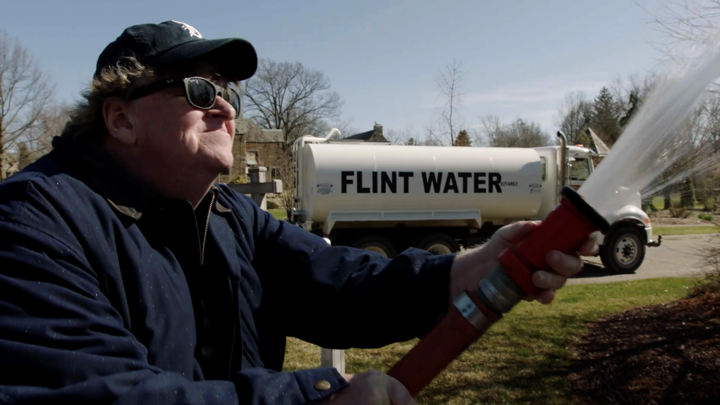
So, I'd been dreading the moment where I'd get to "Fahrenheit 11/9". I tend to dread every Michael Moore movie nowadays. It's not that I don't like him; in fact I'm actually a huge fan of his work and think he's made some of the greatest and most important documentaries of the last thirty years. I've read several of his books, I even once used a clip from "The Big One" as a visual aid in a classroom presentation. It's not even that I've heard the stories and lawsuits and rumors about him behind-the-scenes in the industry. (Apparently he occasionally skims out on paying people sometimes, and yeah, that's not a good thing. It is possible that his own actions are just as hypocritical as the hypocrites he exposes in the movies he makes. Blah, blah, blah, fine, I don't care.) And, yes, everybody's got an anti-Trump media piece now. It's not like when he first broke onto the scene and putting out these editorial essays of movies of his, we basically get in-depth pieces of investigative journalism done with an comedic slant every day of the week now on our favorite variety shows. You can make a very direct link that Michael Moore to "The Daily Show with Jon Stewart" to "Last Week Tonight with Jon Oliver" and ergo, to, basically every late night variety talk series that matters at all, except for possibly Jimmy Fallon. So, the impact and importance of his movies has considerably lessened over the years even if the quality of them is still pretty great, 'cause of the niche audience that he arguably more-then-anybody, created.
I think I'm one of the few people who lists "Capitalism: A Love Story" among his best films, because I think it was one of the only times where even the amount and subject and the degree in which it was just so much more over his head and unbeatable to stop just kinda overwhelmed him. People criticized some of his movies now for how much they are often about him as opposed to the subjects he's tackling. I don't think that's a criticism; I think that's part of what makes them great, seeing him as he takes on his subjects and reacting to them. Moore is one of the few filmmakers out there with whom we can document their life and career from when they were a beginning filmmaker to their present status, and not just through their films, but through themselves in their movies. It's like "Boyhood", only, the boy is Michael Moore, and the hood, um, thirty years of him becoming a pseudo-celebrity. (It's not a great comparison, but it's there.) He's not unbiased, he's building an argumentative essay through the medium of film, and that's how I approach them.
That said, is there anything left of Trump to go after that we aren't already fighting and combating? I hope there is, 'cause..., Jesus, that title.
Oh boy. So, on top of the Ray Bradbury reference, Moore's most infamous movie is "Fahrenheit 9/11", which was about the Bush administration and was very specifically about their failures in their administration (and others, admittedly) to prevent that attack, and documents the war crimes that the Bush adminstration committed in order to attack Iraq, using 9/11 as the reasoning, even though, Iraq and Saddam Hussein, had literally nothing to do with the 9/11 attacks. So, him changing those numbers to the date that Trump officially won the 2018 election; I mean it's inevitably obvious and clever, but, even after all the other anti-trump pieces, and anti-Trump people like me, that's a lot to take in. I mean, we can say things about how much worst Trump is than Bush was, and I won't disagree necessarily, but he's literally putting the deaths of three-thousand civilians on top of over a 1,000 soldiers, and anybody else who was killed in the Iraq and perhaps the Afghanistan conflicts, and arguably any horrible side-effects that came afterwards because of the attacks and our reactions to them, on par with Trump getting elected.
I mean, I'm not surprised this didn't take hold of the American public the way "Fahreneit 9/11" did, different time and he was the only one doing it back then, but part of me is thinking, "Yeah, the title change is cute and accurate and all, but do you really want to make that distinct comparison?
(Shrugs) I don't know; maybe. He might be right.
I haven't come to a conclusion on that subject yet, but I will say that, he does find an area of entry that I wasn't expecting from him, which is weird, 'cause I really should've expected it from him. He's the one that warned us about how Trump's political ambitions were nothing more than a ploy to get more money out of NBC for his show.
https://michaelmoore.com/TrumpSabotage/
I remember Moore posting that article on his website back in September of 2016, after Moore declared that Trump shouldn't be taken lightly on Bill Maher saying that he thought he would win and during an unusually strange run of weeks during Trump's campaign, strange even for Trump, where he seemed to be doing everything to sacrifice his chances at winning. I believed it 100% at the time, and in hindsight, I think I might've undervalued that observation. Moore left out some details, a few of which that he now includes in the opening of this film, but I do recognize the way that he's talking about stuff in Hollywood circles that he's not really supposed to be talking about, 'cause it's all secondhand. Let's just say that if somebody knew enough to drop off the "Access Hollywood" tape to the New York Times because NBC was holding the story, then it is very believable to me that somebody at NBC snuck this story to Moore.
I hoped that the film would dive more into that egotistical, pseudo-celebrity side of Trump that really anchors his way of thinking, and that Moore himself is more apart of than he'd like to admit. Actually though, he doesn't take too many shots at Trump himself. I mean, the whole undercurrent is how bad he is, but he is more interested in how we ended up electing him and exactly how do we end up getting out of it. He actually hangs a lot of the Democratic Party out to dry, especially for the superdelegate votes that in some states overtook Bernie's popular vote. I mean, honeslty, I'm not against superdelegates, but I can see his point on that one; there shouldn't be more enough superdelegate votes to overtake a state's votes elsewhere.
He also holds Obama's feet to the fire, mostly on the Flint water crisis, which is naturally a painful subject for him. (Honestly, I'm actually befuddled that it took him this long to make a movie on that, although Moore was curiously absent through almost all of the Obama administration when, perhaps he really shouldn't have been; he's just as capable of going after Democrats as he is Republicans, and had in the past, but he left Obama off-the-hook more often than not. Well, until this movie anyway....) Watching Moore's movies makes the irony of the only place in Flint that got the water from Lake Huron, instead of from the lead-infested pipes and Flint River being the GM Plant, just so much more bizarre. But yeah, Michigan was lost not because of pro-Trump votes, but of many people feeling neglected by the Democrats and believe that no matter what, their party was bought out and sold years ago. Although Gov. Snyder certainly holds more direct blame for the several ways in which he orchestrated a coupe on the African-American cities in the state where he then put in figurehead leaders that force the installation of the pipes.
The movie actually does feel much more like a reflection of Moore's other films than an anti-Trump movie; who he for the most part disregards except for the fact that, you know, he's the next Hitler. It's not him saying that, it's the historians. He's right about that, everybody says everything bad already about Trump; if Moore did it, he's just being adding a very obvious log onto the fire. (Although, he does include this admittedly creepy montage of Trump and Ivanka, which...- Ugh. Okay, I actually do know people who think the worst in regards to Donald and Ivanka's "relationship", and I'll admit that there's definitely an awkwardness regarding them. I would be more defensive on that aspect actually, since I've never heard any actual confirmation about that, it's just innuendo and rumor run amuck from what I can tell and besides Trump does enough horrible things to be really bothered with that I frankly don't need to add possible incest to the scenario..., but on the same token, it's not like Trump made it hard for Moore to create that montage.... ugh.) He instead focuses on the nationwide teacher strikes that started in West Virginia, as well as the angry left-winged population that began to start running for local and national office; profiling several members of the left that ran for Congress in 2018, including Alexandria Ocasio-Cortez and Rashida Talib, two of the biggest freshman members of the House.
Moore also mentioned something that I do think is under-reported, how America, demographically is actually much more leftist than some of the media and even the politicians on both sides lead others to believe. I know there's this belief that that's not the norm considering the electoral college means we often have to cater to the more right-wing and moderate sides of the aisle that come out to vote more often and vigorously, but statistically, Moore isn't wrong. When some of the newscasters, many of which Moore points out were Trump's cronies in being sexual predators, bring up words like "The Real America", they're talking about White Conservatives. That's such a stupid phrase, "The Real America," like New York City is somehow less american than Youngstown, Ohio or Wheeling, West Virginia or Flint, Michigan or wherever. Or Parkland, Florida, where Moore is on-hand, literally for the Parkland students set up a nationwide student walkout, and even force a Maine representative who was running unopposed for his seat, to resign, literally a day after some 28-year-old girl managed to get enough signatures in by the Deadline after saying discriminatory things about one of the survivors.
It's clear that there are people, angry, young people who are trying to get into office so that they can fix everything that the generations of politicians who did nothing to protect have fucked up, and that's probably the one really good thing that comes out of Trump being in office. I mean, we haven't had another 9/11 or a Reichstag Fire that could polarize the country into giving all our literal power to Trump; not yet anyway. Moore puts a lot of old reel footage of Hitler and the nazis over Trump; not new, but he's not historically wrong. I think Moore is still basically handcuffed myself, by his own realization that everything might be too much for him, but his influence is still there. I wonder if those Parkland kids would've been so politically active if it wasn't for "Bowling for Columbine" or growing up in a world where I can use the word "Columbine" and everybody knows exactly what I'm talking about.
There's more of an overall narrative though, it's about what led to Trump and like "Capitalism..." he ends by questioning, not the public or the politicians, but the system, itself. Perhaps that's what he and we should've been going after them all along?
The movie ends with one historian pointing out that the original founders didn't think the country would last as long as it's had; that's probably true now that I think about. Most governments didn't back then, it then leads to a forceful cry for immediate change, by Emma Gonzalez, one of the more vocal of the Parkland survivors, echoing their demand on why something must be done. She lists off those friends of her who have died, and symbolically, each name can represent an atrocity and failure of our politcal system, those small, singular steps that led us to this point here, told to us by the future of America, and probably the future of American politics. I hope those statistics about America being left wing are truly accurate come 2020, Mr. Moore, but keep in mind, that last movie of yours with "Fahrenheit," in the title, didn't lead to a Democrat win in '04, and that was a far better movie, nothing personal, but it was. This is one of his good, but not great works. (Shrugs) Perhaps he'll still be right though and 2020 will truly be the year where hindsight wins out.
I'd end this with, "We can only hope," but I think Moore would hate that, and be right to do so, 'cause it requires more than hope; it requires action.
ON HER SHOULDERS (2018) Director: Alexandria Bombach
★★★★

This will be one of my more unusual reviews. Mostly because, well, I fear I'm not getting the whole story with this movie. See, I had some struggles getting a copy of "On Her Shoulders", and while, eventually I did find a decent copy of the movie to watch, the version I ended up watching, well, it didn't subtitles for the Kurdish that was the majority of what the movie's main subject spoke in. Which is a shame, because the movie mostly is about how she told her really disturbing story several, several times over to the entire world.
The subject of the movie is Nadia Murad, a young woman of Yazidi descent. Yazidi people are a traditional endogamous people in the Middle East, most of whom reside these days in Northern Iraq, at least they did until ISIL slaughtered a bunch of them. This happened in 2014, and Murad's family and herself was among the captured. She survived as a prisoner along with by some estimates, over 6,000 other captured women, who ISIL essentially kept as sex slaves. Murad was in Mosul and experienced torture and cruelties that I'm not even gonna bother describing here. She managed to escape one day, after her captured left her place unlocked long enough for her to escape to a neighboring family who got her the hell out of country.
Since 2015, she has been repeating her story again and again and again, to any news source, media or governing body who will allow her to speak and tell her story. If the name sounds familiar, last year she was one of two awarded the Nobel Peace Prize for her efforts to end the use of sexual violence as a weapon of war and armed conflict. The movie however...- I wouldn't say glorifies or deitizes her. It's actually kind of a fascinating doc as it's essentially about her as a public figure.
That's actually kinda fascinating to me. I wouldn't call this movie a celebrity profile, but there is this subsect of media personalities because they lived through a horrific event and tragedy and for whatever reason chose to devote their whole lives to it. Obviously there's different levels of this, but it's not like you can blame the Malala Yousafzai's or James Hogg's for what they went through and how they're reacting. It's still a strange transition though, and curiosly what we get mostly from the appropriate and aptly-titled "On Her Shoulders" is a behind-the-scenes at how she does what she does now. We get her compelling and tragic story and a lot of it as well, but it is odd that so much of stuff like this is the selling of horrors. There is nothing about being ISIL's sex slave and having your entire family killed that should compel anybody to ever want to keep going with their lives, but she does and now Amal Clooney is basically her promoter and manager essentially. I mean, she's also her lawyer and she took action against ISIL commanders and good luck with that, but yeah, the transition is fascinating and strange and seeing how Nadia evolves and reacts as this continuous journey goes on is fascinating. She's definitely, at first, petrified and shy and disturbed and worried, still suffering from the trauma but eventually she finds a way to sort herself through this.
If there's a documentary that kinda reminds me of this film, it's actually "Wish Me Away", the documentary about country singer Chely Wright as we see the behind-the-scenes preparation and processes and struggles of her as she came out as a lesbian, which is far more trivial a subject matter in comparison, but the approaches are fairly similar. Look, I didn't like "He Named Me Malala"; as much as I admired the young woman, the film basically just was a love letter to how great this teenage girl was, and she is great, but that's not much of a movie. "On Her Shoulders" works better because it's got these two contrasting sides of this horror and ultimately, I like that about it. "On Her Shoulders", feels like a more interesting and complex picture to what happens, after the horrors one experiences and then decides to let the world know about the hell you went through because others are still going through it. That kind of sacrifice might oddly be more daunting in many ways.
THE DAWN WALL (2018) Director: Josh Lowell & Peter Mortimer
★★★
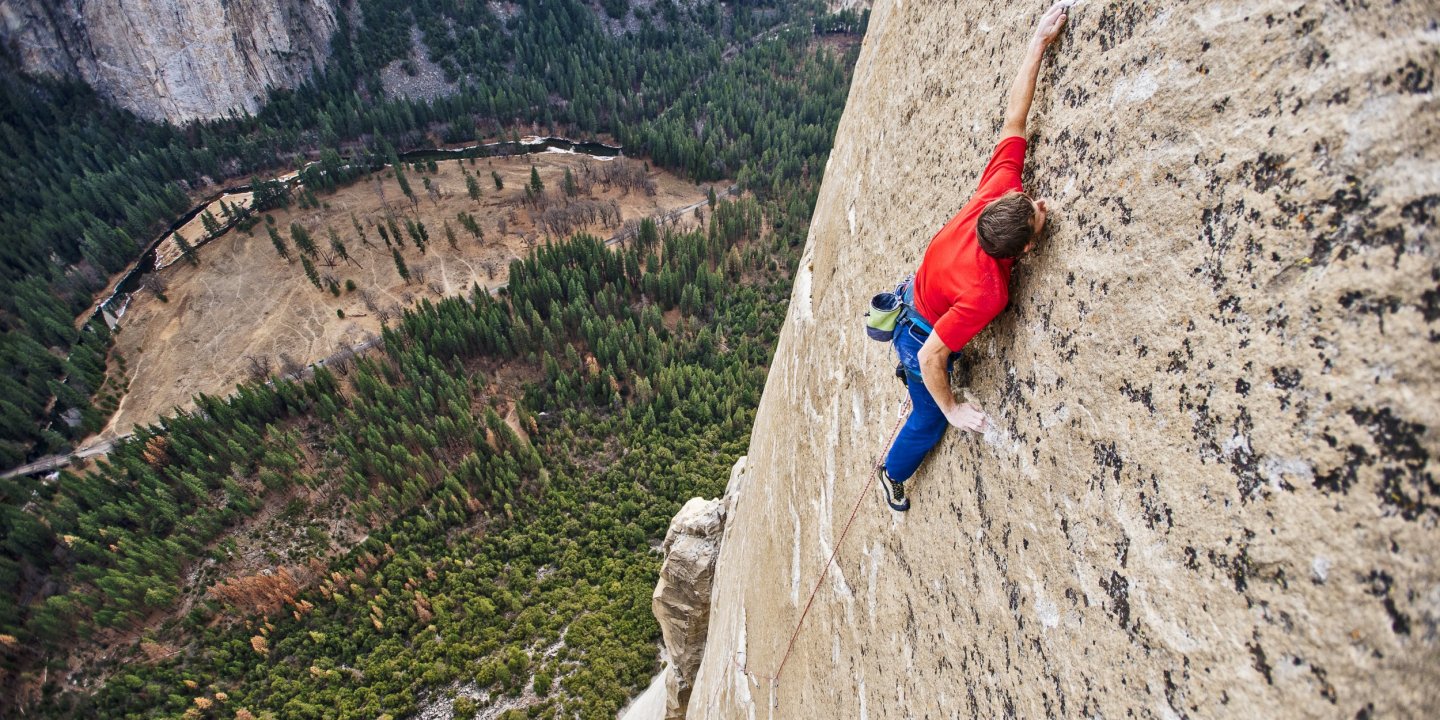
So-eh, I kinda went on a Twitter rant as I started watching "The Dawn Wall", um, it's not my proudest moment, but I honestly can't think of a better way to start this review, so here it is; italicized and paragraphed out in a manner close to the way I intended it to be:
Me on Twiiter and Facebook:

So, the Republic of Georgia is apparently the birthplace of wine, which is why famed sommelier Jeremy Quinn decided to take a extending working vacation there, I guess.
The sentence I wrote above is literally the only notes I bothered to write on "Our Blood is Wine". I-eh, look, I didn't outright hate this movie or anything, but I never got the feeling I was watching something that was more than a watching somebody's vacation photos, somebody who I didn't know to begin with and didn't particularly. Which is a bit of a shame, 'cause I actually find wine and the process of making it interesting, as well as the idea of wine-tasting and wine-pairing. I don't know how legitimate the field is, but I think there is something to it at it's core. I know, I feel there's something off when I'm drinking something that doesn't quite go with the food I'm eating, so, yeah it makes sense that certain wines probably taste better with certain foods and certain wines have different tastes as well.
As to other movies I've been watching, but didn't get to review, mostly a lot of older documentaries I'm catching up on, "Silicon Cowboys" and "The Lovers and the Despot" stand out. The Hong Kong thriller "Drug War" was pretty good too. One thing I finally got around to was "Galaxy Quest". Yeah, that weird comedy from 20 years ago where actors on a sci-fi show are mistaken for heroic astronauts by aliens. I've had a lot of weird issues trying to get ahold of a copy of that movie over the years, and somehow never could. Like, I think my library lost their copy like on three separate occasions when I was next in line to get it; it'd been a running joke for me for awhile, but I finally saw it, and actually I liked it quite a bit. It still holds pretty well. It actually reminded me a lot of Prestong Sturgess's "Sullivan's Travels" curiously enough; I'm glad I finally got to that one and it wasn't something I wished I had skipped something; I really enjoyed that film. And btw, the best quote from a Sigourney Weaver character ever is, "Whoever wrote this episode should die!" I'm not joking either, nothing tops that. Yeah, yeah, come at me on that if you want, but eh-whatever, you know what, I never liked "Alien" that much anyway; I'm standing by that this one.
Anyway, let's get to the movies I did have time to do a full review on; there's a lot of them too, and some big ones from this past year, so here we good! Onto the reviews!
HOW TO TRAIN YOUR DRAGON: THE HIDDEN WORLD (2019) Director: Dean DeBlois
★★★★
You know, I really gotta give the "How To Train Your Dragon" series credit. I genuinely never think of these movies or remotely remember any of the previous film(s) before I suddenly find myself slung into their newest sequel, but every time I do, I find myself once again taken away and enthralled with this world of Vikings and dragons. I don't know how this franchise does it, and the strange this is, these are all three really distinctive movies. The first movie was about the friendship between Hiccup (Jay Baruchel, who I swear when I just hear his voice, I always think it's Johnny Galecki) and his Night Fury Dragon Toothless and how that friendship changed the dynamics between the dragons and the Vikings, the second one is about expanding the world and strangely for Disney, a finding of a long-missing mother of all things, and Valka (Cate Blanchett) is here too, and so is Stoick (Gerard Butler) in flashback scenes at least too, and now we get a movie where the world of Berk is now, too infested with refugee dragons that Hiccup has saved from being killed or kidnapped and now need to find a new home for them before the world gets destroyed from within and from outside forces....
(Pause)
You know, I'm starting to realize there's some really disturbing symbolic implications in this movie series.
Anyway, this time the villain is the notorious dragon hunter Grimmel (F. Murray Abraham) known for having killed all the night furies, except of course for Toothless. And, one other Night Fury, that's white, a Light Fury named, um, Light Fury. Once he finds out about Toothless, he begins to orchestrate a pretty elaborate trap for Hiccup that he manages to fall into surprisingly logically. He ends up abandoning Berk and eventually finding a seeking world once mythologized about where dragons apparently come from. I never think about this, but this is a weird narrative idea, isn't it? Like, I know we haven't explored 100% of this planet yet, but everytime I hear about this magical utopian world in fiction where a certain lone species secretly turns out to be the origins of them, it always feels odd. I mean, it's get existed in sci-fi and fiction since "Journey to the Century of the Earth" or even "Gulliver's Travels", but still.... That said, done well it works. It worked in the "Kung Fu Panda" movies, and it works here. I think the look and animation helps. The "How to Train Your Dragon" movies have always have great cinematography and production design; creating a truly amazing world. Roger Deakins of all people is listed as a lighting consultant, and I got admit, some of the imagery in these films are just spectacular. Flying is always done better in animation of course, but it's done spectacularly well here again.
Also, I like the strange steampunk nature of this world. Or how about even that, we have a couple main characters who have lost body parts over the franchise's run and they stick to it. Personally it overwhelms me a little bit, but the "How To Train Your Dragon" movies are incredible worlds that have been constructed. I guess that's why I did feel sad at the end of this. Even Astrid's (America Ferrara) role, on paper, she's the cliche girlfriend of the main character, but she is more than that. She a fighter too, and we've been through two movies of their relationship; it honestly does feel bizarre that they're not married, or at least engaged at this point in their lives.
Also, when's the last time in animated movie where you actually saw the characters grow older as the series goes along. And don't give me Andy from "Toy Story", that doesn't count; I mean, the main characters. It didn't used to be so weird by the way; nowadays we just accept that the characters on "Family Guy" and "The Simpsons" are always gonna be their ages, but somehow Pebbles and Bam-Bam we got to see from birth 'til they began having kids of their own on "The Flintstones", and we saw their parents get older and have different, newer adventures too. Honestly, kudos for doing this well in a theatrical feature animated franchise. And so subtlely too. This could've been so much hackier the way it could read on paper.
Purportedly, this is the last of the "How to Train Your Dragon" trilogy, and I hope that's true, 'cause they did close this series well, and the aforementioned end to the "Toy Story" films at three was apparently a bigger lie then we were led to believe, even at the time. I wrote at the end of my review of the second feature that I looked forward to more movies in this franchise and see where they go and how much of the world they can explore. Well, they did that again, and this did it with a finality I wasn't expecting. I certainly wasn't expecting to get so emotional over it too. It's weird, Disney's had several notable stories about growing up and growing old over the years, and yet it's the recent ones that truly get me emotional. This one really surprised me, 'cause as much as I've given these films in the past, I can't honestly say that they've stuck with over time or that I find them particularly memorable or great within the Disney canon. And yet, the movies win me over every single time. It's one more reminder that it's never what the story is about, it's how it's about it that matters. This franchise got me emotional about dragons that don't talk and the humans who enslave them for their own gains, somebody's doing something right with these.
LONG SHOT (2019) Director: Jonathan Levine
★★★1/2
So, "Long Shot" is one of those movies that's gonna have a little bit of a struggle for me, right out the gate, just based on the premise. Not because I don't believe Charlize Theron and Seth Rogen, not because I can't buy either of them in the situation, her being Secretary of State, running for President in a world where the TV actor President doesn't want to run for a second term, or that she would date some loser righteous journalist,... none of this, Mostly it's that, I'm constantly comparing it to the best version of this story.
When it comes to a romantic-comedy set in the world U.S. politics, Rob Reiner's "The American President" is pretty untouchable to me; in fact I think it's one of the best films of the '90s. Sure, part of it is that it basically became a trial run for screenwriter Aaron Sorkin to create "The West Wing", which is still the best drama series of all-time, btw, but it is more than that. "The American President' is just a solidly great movie, with shining, winning performances and a brilliant screenplay that's both politically sharp and realistic, (Well, realistic for the time anyway...) and also inspirational and idealistic about both the power of politics and the power of romance. That said, I guess there are parts of it that don't age well. People can misconstrued Sorkin's romantic idealism to read as more fictitious or fantasy, and now that we live in a surreal political landscape, the idea that, once upon a time a President dating a lobbyist can actually be detrimental to a U.S. President seems almost blissfully coy of us now. Man the '90s were so innocent what happened?
Anyway, yeah, I guess there is reason to tread this material anew. Stories of powerful women in romances with the everyman in politics date back to Hepburn & Tracy movies to some extent. And even if there isn't, I'm glad somebody in Hollywood is trying to keep alive the smart romantic-comedy. I really regret this genre dying as much as it is. I know there's theories why it's so suddenly fallen off the face of the entertainment landscape, with only an occasional anomaly entry being good like 'Trainwreck" or "(500) Days of Summer", but personally I blame Richard Curtis's "Love, Actually", because that film was such a masterpiece and was so over-the-top extravagant with how shamelessly it's played with so many different great rom-com conceits and did them so well that basically most everything else feels slight in comparison. Although, I'd also note that romantic-comedies are just one of the toughest genres to begin with. I mean, there's a reason why Sandra Bullock, even long after the death of the genre kept doing them, it wasn't because she wasn't talented and not getting better part offers, it's because she was really incredibly talented and was one of the few actresses in Hollywood who could keep pulling off rom-coms like that. (Seriously, she turned a lot of shit into mediocrity.)
Charlize Theron can pull it off too though. I wish she wasn't doing it in what's basically another variant on the Seth Rogen stoner comedy, but eh, I generally like those films too. (Hell, I was lenient on "Sausage Party") She plays the workaholic-but-enchanting beauty U.S. Secretary of State Charlotte Field. After the actor-turned President Chambers (Bob Odenkirk) decides that he doesn't want to run for reelection because he wants to pursue a film career, ([Sigh.] Remember when that kind of joke was funny? Good times.) and now Charlotte is working on an international environmental initiative which will work as a springboard to her inevitable Presidential run, which reportedly will have the President's endorsement. Rogen plays Fred Flarsky a scrubby investigative journalist, the kind with such high morality that they take on the most unlucrative assignment like infiltrating the Ku Klux Klan and put their lives at risk for a small low-budget indy/online press then immediately quits when that company gets bought out by some giant news conglomerate, in this case, the conglomerate is a British conservative media mogul named Wembley (Andy Serkis) who nobody likes but controls every piece of the media and those who make it. Yes, this is an obvious Rupert Murdoch stand-in; I'm okay with that.
Anyway, there's a chance meet-cute between-, well, actually a re-meet cute, 'cause Charlotte, once upon a time, was Fred's babysitter. Afterwards, this is basically enough to get him hired on as a speechwriter, even though they're basically polar opposites now, but they begin to influence each other. Still, I'm not entirely sure how much the former babysitter idea works. I mean, something always kinda bugs me about these past meet-cutes that turn into relationships, you know, when you meet someone from your past and then they become lovers, especially when only one of them thought of the other that way as a kid, which is very clearly what's done here I might add. I guess it's alright, and the movie does evolve past that early beginnings, and the movie actually feels progressive in how it's about how a powerful successful woman and how she met her husband, and not have it be like boys vs. girls thing or something. Not that I don't appreciate, say, "Adam's Rib" or something like that, but it's nice how it's just not commented on, things just happen and that's the dynamic between them, and there's nothing artificial getting in their way or dividing them. The main conflict is really about how Charlotte wants to be perceived to a public that's enthralled by her and how to be able to keep their interest in order to both gain political power and use it for good. I mean, it's simplistic politics really, but it's realistic enough that I don't mind it entirely. The political battles in "The American President" are kinda simple to when you think about it, although they had a little more bite to them in a mid-90s U.S.
It helps also that it's got good people behind it. Director Jonathan Levine is known mostly for "The Wackness" and "50/50", as well as some other good lighter films on some darker subjects. Dan Sterling is a pretty good television writer up 'til now, this is his first screenplay and story, and Liz Hannah wrote Spielberg's "The Post", so the political stuff is right up her alley and Sterling gets the good comedy stuff. Although, I was a little unsure of what to make of that one sex scene in the movie? Eh, I swear sometimes, we're just trying backdoor ways to get our favorite female actors to say the things the writer's favorite porn actresses have said, sometimes, but eh, I guess it works with the character...?; eh, I'll let it go.
I might have some issues personally, but it's a nice, smart Hollywood rom-com where nobody's a complete idiot; I'll take it.
ASH IS PUREST WHITE (2019) Director: Zhangke Jia
★★★★★
There's a scene in "Ash is Purest White" that includes a simple idea that I'm kinda amazed I've never seen it done before until now. A character arrives at a building with to meet and reconnect with someone who she hasn't seen in a very long time. It's one of those automatic sliding doors that opens when you walk up close to it, only, it doesn't open for her. Not because it's not working, it clearly works, but not for her. It's subtle, but it's subtle in a way that makes the scene almost seem symbolic of the whole film, which is saying something 'cause there's already a lot in this movie.
Zhangke Jia ia one of the best filmmakers in the world. I've seen only three of his movies, "A Touch of Sin", "Mountains May Depart" and this latest, "Ash is Purest White". The other two movies made my ten best lists, and I'm fascinated by whatever he comes out with next. Every time I try to describe his films or his directing style, I run into a bind. I keep wanting to adequately compare him to some of the more well-known Western filmmakers, Richard Linklater, Robert Altman, Terence Malick, etc. etc. and there's comparable aspects to those filmmakers and several others, but none of those names ever seems perfectly fit. That's not a criticism, that's a compliment by the way. The movies he makes are distinctively his. Filled with quiet, fascinating long takes, observant slice-of-life portrayals of the past, present and the future of China, with quiet main characters who think much more than they often speak out. He characters live lives of quiet desperation until all that's built up in them, inevitably implodes and he finds and elegaic elegance to that. Despite the beauty of these films, he is regarded as controversial, and he's certainly a critic of modern Chinese society and where it's going. His films all seem to reflect that, often taking place in the past, present and sometimes even in an otherworldly future to show us a warning that we may or may not heed.
All that said, "Ash is Purest White" is his most straightforward film yet, and I wouldn't be surprised if this is the one that gains the biggest cult appreciation in America. For one thing, it's a gangster movie. A popular genre all over the world and Asian gangster films in particular have caught on here. That said, it's still different. It focuses not on the crimes or even the big boss, or the investigation into the underworld, but instead on the girlfriend of the boss. Qiao (Tao Zhao) is a empathic and fascinating character. She's dating a well-known underworld figure named Bin (Fan Liao). He's so well-known that he's often under attack from rival gangs in attempts to take him out perhaps in order to take over his territory and properties. The movie begins at the turn of the century and he's still making deals in discos and running his organization. Him and Qiao seem in love, and while she runs her own charitable side projects and works at her own job, she's beginning to get used to the gangster life that he's in.
Then, an incident occurs where she is arrested after trying to defend Bin from an attack. She spends the next five years in jail, and returns to a new China essentially. This is his second movie in a row that seems to document the westernization, cultural, economic and even geographical changes in the country over years. When she is out, she begins to find Bin and return to their normal life, but plans go awry here as well as Bin has left the life and many others have moved on from their old positions and are trying to dissuade her from finding Bin herself, but she's particularly sly and knows how to maneuver around. I like one sequence in particular where we see how she manages to get somebody in a rich party in a restaurant to give her some money to get around town. You don't see too many movies about a women's journey into the life of being a gangster, but essentially we do get that parallel as she becomes more like Bin while Bin, we find out, has left the life entirely and doesn't want anything more to do with Qiao.
That is, until years later, when he reenters and Qiao is right there with him, both of them coming back into the fold after life-altering, in Qiao's case, otherworldly events change the course of their life once more.
I'm still only scraping the surface of "Ash is Purest White" btw. This is a movie filled with tons of emotional depth, some humor, a great character study, a reflection on the state of China and how it's continuous westernization is making the country less individualistic than ever, it's even a pretty decent commentary on what exactly a love story can be. As long as Zhangke Jia has something to say, I'm gonna want to hear what he says next. Few filmmakers have as fascinating a take on the world as him and he's earned his place as one of the best directors alive. Don't be surprised if he makes another Top Ten List of mine with this film. This one in particular, while it may or may not be his best film, it's definitely the one where I most got caught up in the world that he's in.
THE HEIRESSES (2019) Director: Marcelo Martinessi
★★1/2
I feel like "The Heiresses" is the kind of movie I should really enjoy more than I did. It was Paraguay's submission for the Foreign language Oscar, and for one thing, I'm kinda fascinated by that country; it's a landlocked South American country with more of an indigineous population than most of South America, and a strange history and geographical makeout to begin with, and also because I liked the last Paraguayian film I saw, Juan Carlos Maneglia & Tana Schembori's "7 Boxes". This film though, is the first feature from Marcelo Martinessi, and on the surface it looks fascinating. It's filled with unknown or amateur actors and he gets some great work out of them. Also, conceptually, it's an interesting premise for a movie. (And an interesting location for the story as well I might add.) The titular heiresses are Chela (Ana Brun) and Chiquita (Margarita Irun), a couple who both came from money, they're families were both rich and for the most part, they've never really had to do much with their lives until now, as they've begun selling some of their more prized possessions in order to pay off certain debts.
In this case, it doesn't work and Chiquita actually ends up in jail for fraud over it. Chela is now alone, mostly, she does keep one live-in maid, Pati (Nilda Gonzalez) on staff and continues trying to sell some expensive rare china and other things. She also starts giving and charging for rides for some of the other upper class she's around. Anyway, it starts to get her eyes opened up a little bit, and she becomes enthralled with Angy (Ana Ivanova) who needs lifts in order to take her sick mother back and forth from medical appointments. I guess, she begins to find out more about herself in this more subservient position to these people. Eh, honestly, I'm stretching. I mean, it does this, but it took me a couple viewings to try and pry this out.
The thing is, this isn't a bad or weird concept. Like, these performers are all good, especially so considering that they're not trained actors for the most part, and I don't know how difficult it is to find trained actors in Paraguay, but I do feel like this movie didn't needed this neorealistic take. There's nothing wrong with it, but I don't get why...; the idea of famous people playing heiresses who have to figure out tough choices and paths in life the hard way and without the money that they're used to is not a terribly new idea in film; I can think back to movies from the Golden Age of Hollywood that had takes on that, and for more modern examples, there's dozens of them. I can even think of a pretty good South American movie, the Argentinean film "Live-In Maid" that did this subject to some degree, pretty well. There's several ways to dive into a riches-to-rags story and do it well, and I'm just not sure in hindsight what direction is this movie going for.
I'm sure that there are certian details related to modern Paraguay in particular that flew over my head, like how a debt can lead to imprisonment for fraud; I'm betting that that's something that's probably become common there in recent years, or at least was at one time, but honestly, this is a tale that could otherwise take place anywhere. I guess, you can argue that it makes it universal, but that's a not a good thing here. This is a character study about multiple people who are specifically struggling with being born rich and now as adults having to grow up with and engage with this several new statuses in their lives. Trying to live life like you always have, even when you can't, having to adjust and form a new life, having old familiar, trusted friends leave and betray you and having to make new ones.... Like, it's not that these steps aren't there, but they're so de-emphasized, even for a subtle Bresson-like film that focuses intently on the characters showing their emotions through their faces and their lack of movement in them, it still feels like I got barely any insight on who these characters are. Why were they rich to begin with? What did it mean to them that they were rich and are not now?
One of my favorite short stories is Flanney O'Connor's "Everything That Rises Must Converge", that's a story about an older southern mother and her adult son and as they take a newly-integrated bus ride to get his mother to an exercise class and they debate how much they should be defined by their family history and culture as she stay true to the past, as her family used to be big back in the days of slavery and whatnot, while the son is trying to show how their past shouldn't define them and how they should start carving a new path considering the situation and life they currently have. I kept thinking about that short story during this film, because that story really does present us and the story's protagonists with some tough questions about the self and what does that mean to be born and brought up in one class and during one time period and having to then live, struggle and try to survive in a new one. The thing is, there's just so little of that in "The Heiresses", that I think I was thinking of that short story in a desperate attempt to try to add details to this narrative that just aren't there, or aren't there enough. And even if you don't want to do that, you need a little more something with the modern tale. "The Heiresses" almost gets there; it's like right there, but ultimately, it just misses.
MAMMA MIA: HERE WE GO AGAIN (2018) Director: Ol Parker
★
So, I tweeted while I was watching "Mamma Mia: Here We Go Again," a movie that, frankly I didn't think I'd have to watch, if I'm being blunt. I don't think this is a controversial opinion, but I absolutely hated the first "Mamma Mia". I didn't expect to hate it; I'm not an ABBA fan, but their music is fine and should've been able to be a cool inspiration to jump off into a story. Hell, it had happened in film before with "Muriel's Wedding", and that was a decent movie. But I just felt sorry for ABBA after I saw the first "Mamma Mia". I'm sure they don't care as it was already a hugely successful Broadway show and now there's a sequel a decade after the movie adaptation, but I can't help it; the story of the movie was just moronic and awful. I mean, I guess I prefer it to say "Rock of Ages" but that's mostly because it's so infectious in it's idiocy that you kinda give in even when you don't want to.
That said, the sequel, got surprisingly good reviews across the board, much moreso than "Mamma Mia!" which actually did split critics badly. And I got some blowback from that tweet of mine from people, friends whose opinions I respect btw. I can kinda see, sorta what they're talking about to some extent, but if I'm being honest, as bad as I thought the original, this sequel, is just pointless.
It's begins stupidly. There's no other way to put it, this movie doesn't know how Valedictorians work and one of Sophie's dad is apparently busy, getting an award for, and I'm not making this up, "Greatest Swede of All-Time"! Yeah, that pretty much triggered me to tweet. (I mean, I don't know who the Greatest Swede actually is, but-eh, off the top of my head, Alfred Nobel comes to mind. He comes to mind in particular because he actually has a Prize named after him that tends to give out awards for greatness in several fields.) Anyway, I do have to believe that this is just a weird difficult project to begin with. It's a movie musical sequel of a movie musical, that was a movie adaptation of a Broadway musical, that was based on the music of a disco group, and by the way, the original wasn't that great to begin with. What the hell do you even try to do for that?
Well, I guess they decided to, tell what us about the "Dot, dot, dots!" from the first movie were. (They're called ellipses btw, movie.) So we get the flashback to Donna's (Meryl Streep) youth (Lily James) and the inexplicable reasons that she is so drawn to this magical Greek isle and decides to run a hotel on the island. And we get, of course, Young Harry, (Hugh Skinner) Young Bill (Josh Dylan) and Young Sam (Jeremy Irving) the young version of Sophie's (Amanda Seyfriend) three fathers. (Colin Firth, Stellan Skarsgaard and Pierce Brosnan, respectively) that she met, because she invited all of them to her wedding in the first movie, where they all met her and reunited with Donna after a couple decades time.
That's the flashback aspect of the movie. The current day aspect, is that Donna has now died, and Sophie has taken it upon herself to remodel and reopen, the hotel (I'm not sure why it was closed even after Donna passed, which is also stupid on it's own, but we'll get to that.) , 'cause, that's just what she wants to do now. Her husband Sky (Dominic Cooper) is in New York training in the Hotel business... (I probably would've picked Vegas, but New York works too, I guess... [Hey, it's the one field my college has actually been listed as the best program in the world at one point; I'm taking the shot! Go Runnin' Rebels!]) and apparently he's so good at his stoge that he wants to stay in New York and work there permanently, while Sophie, who btw is now pregnant, because of course she is, although her kid only has one father, doesn't want him to leave and she wants Sky to come back and run the hotel with her in Greece.
I mean, it's not like the original movie wasn't contrived, it was blatantly contrived, but this is such a non-conflict here; I'd call it a celebration of the original, but even a celebration of an original work, like "Rocky Balboa" still had like, stuff going on. Sure "Mamma Mia" and "Mamma Mia: Here We Go Again" are basically just an excuse to have a bunch of people perform ABBA songs; that's always what it's been, and for some that's enough, but by that same token "Singin' in the Rain" was just a vehicle for a bunch of 30-year-old Arthur Freed songs. This is just a derivitive of an excuse for ABBA songs, and it's not like they held back before. There's a couple new songs there, but there's a lot of the same ones as the original. And even less context for them. In fact, sometimes they're not even like musical numbers, songs just happen whenever, without setup or reasoning. I mean, I guess some of them fit with the theme and the situation, but it's so dour for most of the movie; at least with the original, they were blissfully stupid with the musicals. Mostly though, any justification I can stretch with the original's reasons for existing, I can't find here. There's not a twist, or a new narrative; there's new actors playing the same roles we saw before and the old actors playing the same roles as before, only without the conflict.
And one of the characters' dead for no reason. Let me get to Meryl Streep's role for here for a second, this- I'm sure there's some reason for this shit, maybe Meryl just smartly decided to get the hell out of this thing before it did actual damage to her career, but I'll say this, Meryl Streep's performance was my favorite part of the first "Mamma Mia!". She was the best character, gave the best performance, and even in crap like this, I like Meryl Streep's lighter side. We don't see enough of it; we don't see her in comedies as much, we are finally seeing her in musicals more, which, btw, she was a trained opera singer before she was an actress, so this isn't actually like a new skill for her, singing, and she had the most memorable and iconic scenes and movie. This movie, she's dead the whole time, but completely omnipresent, until the very end where there is, what I'm presuming is a heaven-like dream sequence, where she's there and she's alive and she performs... (Sigh)
Look, I'm just gonna say, this is her Burt Reynolds in "Smokey and the Bandit Part 3" role. Remember the third one of those? For those who don't remember, Burt Reynolds isn't in it. He was too big to keep playing Bandit at that point, and admittedly, probably for the best. Basically, Jerry Reed, dresses up as the Bandit, and pretends to be the Bandit throughout the whole movie until one of the final scenes when Jackie Gleason confronts him after he thinks he's finally caught Bandit, and then Burt Reynolds gives like, the worst green-screen cameo, because Smokey just thinks he's the Bandit despite all the obvious signs to the contrary. This isn't that bad, but it's almost there. Here's the thing though, why is she dead? I mean, sure she dies, but this movie could've existed with her still being alive? Even with the same plot! In fact, it would add more conflict if she were alive. She's retiring to go off and live with Sam somewhere and now Sophie's getting the keys to the hotel and making it her own and that's distressing the mother and now Sophie's fighitng with her mother and her husband, and there's the setup for the big opening coming...- like, that would've actually made sense. Just to kill her off, makes none actually.
It certainly weakens the Cher subplot which-, I'm not even gonna get into all the stupid plot points that leads to Cher being in this, but Cher's in this one, she plays Donna's mother, which, (sigh) fine, but I don't know why this was an added element to the film. She has a weird duet with Andy Garcia who has a minor role and not enough of one as well, I might add. (Shrugs) Fine, I love Cher. She's Cher. She basically can't do wrong; she's literally teflon at this point. However, even when I am happy to see her in something these days, like on "Will & Grace" when she makes an occasional surprise appearance, or when she's hanging out with Kathy Griffin, or having regular residencies in Vegas, she's amazing and fun, and brilliant; but she's also just Cher!? She's not playing a part or anything, which is sad 'cause she actually is an amazing actress, but all she does now is show up in situations where it would just be cool for Cher to show up at, even when I am happy to see here, that's basically the only times I ever see her. When the stars align and there's something in the air that night, and suddenly here's Cher.
I'm happy to hear Cher cover ABBA, but she has no real reason to be in this thing either. She's basically in this because there's a lot of correlation between Cher and ABBA/"Mamma Mia" fans and she's taking advantage of that. (IDK, either that or maybe she owed Meryl a favor from when they were in "Silkwood" or something too...?) I honestly don't know what to make of her presence; it feels so weird.
This whole movie is weird, and not in the same way that "Mamma Mia!" was weird either, but just as bad. Maybe on a technical level it's better than the original, but I can't justify it's existence, and better than the original isn't good enough to recommend a movie.
JULIET, NAKED (2018) Director: Jesse Peretz
★★★
This is one of those strangest of plot narratives that honestly freaks me out every time I see it. I swear, I've only seen a few of these movies, but I feel like I've seen a bunch of them. It's this narrative where the main characters are usually some kind of journalists or documentarian who are infatuated of the enigmatic rock star who suddenly quit making music, and then dropped completely from the public's eye. I guess there's other versions of it, the novelist, the artist, etc., usually it's musician though, and usually rock star, and they have to go and find him, this artistic genius who fell out of the artistic world.
It's not that I hate this narrative, I usually am generally okay with the movies and stories that come from this, but mostly I just find it weird. Is this a bigger thing than I think it is, the idea that there's some mythic greater-than-great rock star that comes out with one or two albums, that slowly grow in popularity, but just as soon as he becomes idolized by his cult following, he becomes uber-reclusive to the point of never recording again, and falling off the entire world map to where people think he's a legit missing person? And, in all these movies, he's apparently left the life of being a rock star, for something else, because...- um,- I don't know why, something generic about fame or money, or just because he wanted to do it, or didn't want to end up like Kurt Cobain or something.... I never hated any of these stories necessarily, but it's all really weird. This notion that somebody can just fall off hte face of the Earth anymore, much less a beloved public figure...- I mean, okay, Daniel Johnston, kinda fits this. So does, eh, Gonzalez, both of those artists' careers were documented in some great documentaries in recent years, and both of them included very bizarre backstories for them to even make sense, in real life. Most of the time, it's never something so extreme, this story, especially when it's fictional is more akin to,- if Jeff Buckley, instead of drowning one day, just decided to just never record again and start a family in a small midwestern town under an assumed name. I just don't see something like that happening these days, you know? It's usually nobody ever heard of you, or you were only famous for a moment, and you weren't that great so you slipped out of consciousness and got a real job, or you're too famous to not be a musicial artist for the rest of your life, quality of content be damned. I mean, there's the occasional Sly Stone who did just quit music entirely and has done like, one surprised concert in thirty years or something, but it's not like we didn't know if Sly Stone was still alive; we knew where he was. We knew where to basically find Axl Rose for those two decades,.... This weird middle ground space that these stories encompass-, I guess there's a couple ways to read this story as romantic, but I just don't get it. I mean, as much I love Dido, despite one album and not touring for fifteen years, I never wondered if she was still alive or anything; we kept a pretty close eye on her, made sure she was still there and all. (BTW, is this story ever done with a female artist? Hmm...)
Anyway, I'm not surprised to see another one, and in this case, I'm really not surprised that this story came from Nick Hornby. I don't normally talk about the author of the original material in a review first, but Hornby is an interesting case. He's actually written screenplays as well, most notably the adaptations of other novelist's works like "Wild", "Brooklyn", and "An Education", all good films btw, but his novels are adapted into films quite often as well. Most famously, "High Fidelity", "About a Boy" and "Fever Pitch", three of the best romantic-comedies that film has made in the last couple decades. The guy can write, and his own stories often tend to be about music. Even the novels of his that haven't been adapted yet, often center around the world of popular music somehow. I'm honestly shocked Richard Curtis hasn't adapted a work of his yet because of that, but instead this is directed by Jesse Peretz, who's made a feature film here and there but is mostly a TV filmmaker at this point. I like Hornby a lot, but him tackling this specific area of storytelling surrounding pop music; it's almost too obvious and I was basically dreading the idea.
That said, I guess he manages an interesting look at it. Mostly he puts the superfans to shame, so I like that. Duncan (Chris O'Dowd) is a professor who teaches Modern American Television in London during the day and runs a fan site that for Tucker Crowe (Ethan Hawke), a mid-90s singer-songwriter who recorded one critically acclaimed album and then never recorded again and apparently went into hiding after not finishing his last concert, and has been the subject of admiration and speculation from his devoted fandom ever since. Duncan's long-suffering girlfriend Annie (Rose Byrne) has been living with his infatuation and obsession for years and ergo some of Duncan's other possessive and superficial ideas about adulthood and it's starting to wear her down. She works at a gallery where she's putting on an ebhibition about the Summer of 1964, and has begun yearning for kids when she opens Duncan's mail one day to find, "Juliet, Naked", a previously unreleased acoustic demo version of Crowe's only album, "Juliet".
Okay, the first thing is,-, goddamn it, The Beatles did everything first, didn't they? The idea of a stripped down early version of an album getting released under the "Naked" moniker comes from "Let It Be, Naked", which was the stripped down version of The Beatles "Let It Be" that got released a couple decades after that original album, which-, for those who don't know their Beatles, the original album was these original Naked recordings, but they were given to Phil Spector to essentially finish by John Lennon after the Beatles had broken up and finished "Abbey Road", so the release of "Let It Be Naked" was essentially, releasing the album as it was originally conceived, sorta.
Anyway, naturally, Duncan, a Tucker Crowe originalist loves it, but Annie didn't think much of it and posted on his own message board about how trite it was. She then got a positive response from Tucker Crowe himself.
At this point, the movie turns into, "You've Got Mail", I guess. Or really, "You've Got DMs". Tucker turns out to be a drifter that lives on his ex-girlfriend's basement where he watches over his youngest kid, Jackson (Azhy Robertson). However, as Duncan and Annie's relationship becomes to get more strained, Annie and Tucker start to realize how much in common they have. It doesn't hurt that Duncan is basically one of those really obnoxious fans who doesn't think the artist's intention with a work matters, only how the public reacts and interprets it that matter. (Yeah, I'm not a "Death of the Author" guy, specifically because of people like him, I must say.)
I honestly don't know what to make of this film. It's more interesting and memorable than other films with this thread. I guess, I like it just based on the strength of the original author; Hornby's combination of romanticsm mixed with modern-day cringe is still good here, even if I prefer some of his adaptations more. (Now, it's not a direct adaptation of the story from his book, there's actually a few big changes, but... still.) Some of the choices are a bit strange here, and it's clear that certain subplots got conflated for time purposes from the novel, but that's to be expected. I guess the movie is ultimately a film about the conflict between how we're shaped by the things we love during our coming-of-age years with the emotional pulls of adulthood. Say whatever you want, but fandom is definitely based more in nostalgia than anything else, which is probably why is needs to be smashed down and brought back to Earth whenever possible. You don't see people who suddenly become shaped by a great new artist in their 40s, you know, so yeah, i can see why people may take issue with the Bill Maher's world for simplifying their superhero fascinations, but at the same time I get where he's coming from. And I suspect Hornby comes from a similar place. Some grow out of the phase, and turn towards newer things or advance, others don't. Eh, I guess it's okay, but I prefer Hornby's earlier works; I suspect he wouldn't though.
FAHRENHEIT 11/9 (2018) Director: Michael Moore
★★★1/2
(Very deep, audible, worried breath)
So, I'd been dreading the moment where I'd get to "Fahrenheit 11/9". I tend to dread every Michael Moore movie nowadays. It's not that I don't like him; in fact I'm actually a huge fan of his work and think he's made some of the greatest and most important documentaries of the last thirty years. I've read several of his books, I even once used a clip from "The Big One" as a visual aid in a classroom presentation. It's not even that I've heard the stories and lawsuits and rumors about him behind-the-scenes in the industry. (Apparently he occasionally skims out on paying people sometimes, and yeah, that's not a good thing. It is possible that his own actions are just as hypocritical as the hypocrites he exposes in the movies he makes. Blah, blah, blah, fine, I don't care.) And, yes, everybody's got an anti-Trump media piece now. It's not like when he first broke onto the scene and putting out these editorial essays of movies of his, we basically get in-depth pieces of investigative journalism done with an comedic slant every day of the week now on our favorite variety shows. You can make a very direct link that Michael Moore to "The Daily Show with Jon Stewart" to "Last Week Tonight with Jon Oliver" and ergo, to, basically every late night variety talk series that matters at all, except for possibly Jimmy Fallon. So, the impact and importance of his movies has considerably lessened over the years even if the quality of them is still pretty great, 'cause of the niche audience that he arguably more-then-anybody, created.
I think I'm one of the few people who lists "Capitalism: A Love Story" among his best films, because I think it was one of the only times where even the amount and subject and the degree in which it was just so much more over his head and unbeatable to stop just kinda overwhelmed him. People criticized some of his movies now for how much they are often about him as opposed to the subjects he's tackling. I don't think that's a criticism; I think that's part of what makes them great, seeing him as he takes on his subjects and reacting to them. Moore is one of the few filmmakers out there with whom we can document their life and career from when they were a beginning filmmaker to their present status, and not just through their films, but through themselves in their movies. It's like "Boyhood", only, the boy is Michael Moore, and the hood, um, thirty years of him becoming a pseudo-celebrity. (It's not a great comparison, but it's there.) He's not unbiased, he's building an argumentative essay through the medium of film, and that's how I approach them.
That said, is there anything left of Trump to go after that we aren't already fighting and combating? I hope there is, 'cause..., Jesus, that title.
Oh boy. So, on top of the Ray Bradbury reference, Moore's most infamous movie is "Fahrenheit 9/11", which was about the Bush administration and was very specifically about their failures in their administration (and others, admittedly) to prevent that attack, and documents the war crimes that the Bush adminstration committed in order to attack Iraq, using 9/11 as the reasoning, even though, Iraq and Saddam Hussein, had literally nothing to do with the 9/11 attacks. So, him changing those numbers to the date that Trump officially won the 2018 election; I mean it's inevitably obvious and clever, but, even after all the other anti-trump pieces, and anti-Trump people like me, that's a lot to take in. I mean, we can say things about how much worst Trump is than Bush was, and I won't disagree necessarily, but he's literally putting the deaths of three-thousand civilians on top of over a 1,000 soldiers, and anybody else who was killed in the Iraq and perhaps the Afghanistan conflicts, and arguably any horrible side-effects that came afterwards because of the attacks and our reactions to them, on par with Trump getting elected.
I mean, I'm not surprised this didn't take hold of the American public the way "Fahreneit 9/11" did, different time and he was the only one doing it back then, but part of me is thinking, "Yeah, the title change is cute and accurate and all, but do you really want to make that distinct comparison?
(Shrugs) I don't know; maybe. He might be right.
I haven't come to a conclusion on that subject yet, but I will say that, he does find an area of entry that I wasn't expecting from him, which is weird, 'cause I really should've expected it from him. He's the one that warned us about how Trump's political ambitions were nothing more than a ploy to get more money out of NBC for his show.
https://michaelmoore.com/TrumpSabotage/
I remember Moore posting that article on his website back in September of 2016, after Moore declared that Trump shouldn't be taken lightly on Bill Maher saying that he thought he would win and during an unusually strange run of weeks during Trump's campaign, strange even for Trump, where he seemed to be doing everything to sacrifice his chances at winning. I believed it 100% at the time, and in hindsight, I think I might've undervalued that observation. Moore left out some details, a few of which that he now includes in the opening of this film, but I do recognize the way that he's talking about stuff in Hollywood circles that he's not really supposed to be talking about, 'cause it's all secondhand. Let's just say that if somebody knew enough to drop off the "Access Hollywood" tape to the New York Times because NBC was holding the story, then it is very believable to me that somebody at NBC snuck this story to Moore.
I hoped that the film would dive more into that egotistical, pseudo-celebrity side of Trump that really anchors his way of thinking, and that Moore himself is more apart of than he'd like to admit. Actually though, he doesn't take too many shots at Trump himself. I mean, the whole undercurrent is how bad he is, but he is more interested in how we ended up electing him and exactly how do we end up getting out of it. He actually hangs a lot of the Democratic Party out to dry, especially for the superdelegate votes that in some states overtook Bernie's popular vote. I mean, honeslty, I'm not against superdelegates, but I can see his point on that one; there shouldn't be more enough superdelegate votes to overtake a state's votes elsewhere.
He also holds Obama's feet to the fire, mostly on the Flint water crisis, which is naturally a painful subject for him. (Honestly, I'm actually befuddled that it took him this long to make a movie on that, although Moore was curiously absent through almost all of the Obama administration when, perhaps he really shouldn't have been; he's just as capable of going after Democrats as he is Republicans, and had in the past, but he left Obama off-the-hook more often than not. Well, until this movie anyway....) Watching Moore's movies makes the irony of the only place in Flint that got the water from Lake Huron, instead of from the lead-infested pipes and Flint River being the GM Plant, just so much more bizarre. But yeah, Michigan was lost not because of pro-Trump votes, but of many people feeling neglected by the Democrats and believe that no matter what, their party was bought out and sold years ago. Although Gov. Snyder certainly holds more direct blame for the several ways in which he orchestrated a coupe on the African-American cities in the state where he then put in figurehead leaders that force the installation of the pipes.
The movie actually does feel much more like a reflection of Moore's other films than an anti-Trump movie; who he for the most part disregards except for the fact that, you know, he's the next Hitler. It's not him saying that, it's the historians. He's right about that, everybody says everything bad already about Trump; if Moore did it, he's just being adding a very obvious log onto the fire. (Although, he does include this admittedly creepy montage of Trump and Ivanka, which...- Ugh. Okay, I actually do know people who think the worst in regards to Donald and Ivanka's "relationship", and I'll admit that there's definitely an awkwardness regarding them. I would be more defensive on that aspect actually, since I've never heard any actual confirmation about that, it's just innuendo and rumor run amuck from what I can tell and besides Trump does enough horrible things to be really bothered with that I frankly don't need to add possible incest to the scenario..., but on the same token, it's not like Trump made it hard for Moore to create that montage.... ugh.) He instead focuses on the nationwide teacher strikes that started in West Virginia, as well as the angry left-winged population that began to start running for local and national office; profiling several members of the left that ran for Congress in 2018, including Alexandria Ocasio-Cortez and Rashida Talib, two of the biggest freshman members of the House.
Moore also mentioned something that I do think is under-reported, how America, demographically is actually much more leftist than some of the media and even the politicians on both sides lead others to believe. I know there's this belief that that's not the norm considering the electoral college means we often have to cater to the more right-wing and moderate sides of the aisle that come out to vote more often and vigorously, but statistically, Moore isn't wrong. When some of the newscasters, many of which Moore points out were Trump's cronies in being sexual predators, bring up words like "The Real America", they're talking about White Conservatives. That's such a stupid phrase, "The Real America," like New York City is somehow less american than Youngstown, Ohio or Wheeling, West Virginia or Flint, Michigan or wherever. Or Parkland, Florida, where Moore is on-hand, literally for the Parkland students set up a nationwide student walkout, and even force a Maine representative who was running unopposed for his seat, to resign, literally a day after some 28-year-old girl managed to get enough signatures in by the Deadline after saying discriminatory things about one of the survivors.
It's clear that there are people, angry, young people who are trying to get into office so that they can fix everything that the generations of politicians who did nothing to protect have fucked up, and that's probably the one really good thing that comes out of Trump being in office. I mean, we haven't had another 9/11 or a Reichstag Fire that could polarize the country into giving all our literal power to Trump; not yet anyway. Moore puts a lot of old reel footage of Hitler and the nazis over Trump; not new, but he's not historically wrong. I think Moore is still basically handcuffed myself, by his own realization that everything might be too much for him, but his influence is still there. I wonder if those Parkland kids would've been so politically active if it wasn't for "Bowling for Columbine" or growing up in a world where I can use the word "Columbine" and everybody knows exactly what I'm talking about.
There's more of an overall narrative though, it's about what led to Trump and like "Capitalism..." he ends by questioning, not the public or the politicians, but the system, itself. Perhaps that's what he and we should've been going after them all along?
The movie ends with one historian pointing out that the original founders didn't think the country would last as long as it's had; that's probably true now that I think about. Most governments didn't back then, it then leads to a forceful cry for immediate change, by Emma Gonzalez, one of the more vocal of the Parkland survivors, echoing their demand on why something must be done. She lists off those friends of her who have died, and symbolically, each name can represent an atrocity and failure of our politcal system, those small, singular steps that led us to this point here, told to us by the future of America, and probably the future of American politics. I hope those statistics about America being left wing are truly accurate come 2020, Mr. Moore, but keep in mind, that last movie of yours with "Fahrenheit," in the title, didn't lead to a Democrat win in '04, and that was a far better movie, nothing personal, but it was. This is one of his good, but not great works. (Shrugs) Perhaps he'll still be right though and 2020 will truly be the year where hindsight wins out.
I'd end this with, "We can only hope," but I think Moore would hate that, and be right to do so, 'cause it requires more than hope; it requires action.
ON HER SHOULDERS (2018) Director: Alexandria Bombach
★★★★
This will be one of my more unusual reviews. Mostly because, well, I fear I'm not getting the whole story with this movie. See, I had some struggles getting a copy of "On Her Shoulders", and while, eventually I did find a decent copy of the movie to watch, the version I ended up watching, well, it didn't subtitles for the Kurdish that was the majority of what the movie's main subject spoke in. Which is a shame, because the movie mostly is about how she told her really disturbing story several, several times over to the entire world.
The subject of the movie is Nadia Murad, a young woman of Yazidi descent. Yazidi people are a traditional endogamous people in the Middle East, most of whom reside these days in Northern Iraq, at least they did until ISIL slaughtered a bunch of them. This happened in 2014, and Murad's family and herself was among the captured. She survived as a prisoner along with by some estimates, over 6,000 other captured women, who ISIL essentially kept as sex slaves. Murad was in Mosul and experienced torture and cruelties that I'm not even gonna bother describing here. She managed to escape one day, after her captured left her place unlocked long enough for her to escape to a neighboring family who got her the hell out of country.
Since 2015, she has been repeating her story again and again and again, to any news source, media or governing body who will allow her to speak and tell her story. If the name sounds familiar, last year she was one of two awarded the Nobel Peace Prize for her efforts to end the use of sexual violence as a weapon of war and armed conflict. The movie however...- I wouldn't say glorifies or deitizes her. It's actually kind of a fascinating doc as it's essentially about her as a public figure.
That's actually kinda fascinating to me. I wouldn't call this movie a celebrity profile, but there is this subsect of media personalities because they lived through a horrific event and tragedy and for whatever reason chose to devote their whole lives to it. Obviously there's different levels of this, but it's not like you can blame the Malala Yousafzai's or James Hogg's for what they went through and how they're reacting. It's still a strange transition though, and curiosly what we get mostly from the appropriate and aptly-titled "On Her Shoulders" is a behind-the-scenes at how she does what she does now. We get her compelling and tragic story and a lot of it as well, but it is odd that so much of stuff like this is the selling of horrors. There is nothing about being ISIL's sex slave and having your entire family killed that should compel anybody to ever want to keep going with their lives, but she does and now Amal Clooney is basically her promoter and manager essentially. I mean, she's also her lawyer and she took action against ISIL commanders and good luck with that, but yeah, the transition is fascinating and strange and seeing how Nadia evolves and reacts as this continuous journey goes on is fascinating. She's definitely, at first, petrified and shy and disturbed and worried, still suffering from the trauma but eventually she finds a way to sort herself through this.
If there's a documentary that kinda reminds me of this film, it's actually "Wish Me Away", the documentary about country singer Chely Wright as we see the behind-the-scenes preparation and processes and struggles of her as she came out as a lesbian, which is far more trivial a subject matter in comparison, but the approaches are fairly similar. Look, I didn't like "He Named Me Malala"; as much as I admired the young woman, the film basically just was a love letter to how great this teenage girl was, and she is great, but that's not much of a movie. "On Her Shoulders" works better because it's got these two contrasting sides of this horror and ultimately, I like that about it. "On Her Shoulders", feels like a more interesting and complex picture to what happens, after the horrors one experiences and then decides to let the world know about the hell you went through because others are still going through it. That kind of sacrifice might oddly be more daunting in many ways.
THE DAWN WALL (2018) Director: Josh Lowell & Peter Mortimer
★★★
So-eh, I kinda went on a Twitter rant as I started watching "The Dawn Wall", um, it's not my proudest moment, but I honestly can't think of a better way to start this review, so here it is; italicized and paragraphed out in a manner close to the way I intended it to be:
Me on Twiiter and Facebook:
I guess I should stream a movie today. I'm so far behind to begin with.... What's next on my list. "The Dawn Well"? Mary Ann from "Gilligan's Island"? Oh, I misread that, "THE DAWN WALL"? Alright, what's this about?
(Starts movie)
Oh for fuck's sake! ANOTHER MOUNTAIN CLIMBING DOCUMENTARY!?!?!
Seriously?! Like, I get why we're making more of them than ever, but Jesus Christ! I feel like I've seen a 100s of these and I've probably watched like 7 or 8?! Which still feels like way too many! Didn't I watch "FREE SOLO" last month or so; I was tired of 'em then! How come we never bash the critics for recommending all these MOUNTAIN CLIMBING DOCS?! Where's the people upset at ROTTEN TOMATOES RATINGS when you need them! Are all big movie critics mountain climbers or are we just all giving these arbitrary positive reviews, just because...? And by critics, I'm including myself; 'cause I'm just as culpable too at giving these movies 3 STARS, because I can't think of a reason to bash any of these other then I'm just sick of seeing them.
Is this a "Me" thing or does anybody else think there's too many of these?
I don't know, maybe mountain climbing's not my thing, and I know the advancements of cameras make it easier to shoot somebody climbing El Capitan than ever before, and it's a good thing that we're taking advantage of it that way... but I feel like every 3RD DOCUMENTARY I see is another story of people CLIMBING LITERAL MOUNTAINS?! It's amazing and impressive and death-defying, but I just don't want to climb mountains anymore, or watch others do it!!!...
...And yes, I feel like I'm a whining bitch to complain about this. "People are risking their lives to do something few people would ever try, and so are the filmmakers for that matter, ARE YOU NOT ENTERTAINED?!"
Um, yeah, I guess, but not really. I'm impressed, sure....but I'm also bored. And I feel like this market is shockingly over-saturated. Or over-praised, 'cause I base my main viewing habits on critical acclaim, and these movies keep popping up 'cause of it! Maybe this is just me, but I'm just tired of this documentary subgenre....I feel like I'm watching like, one of these a month, when it's more like, maybe one a year, but I don't know; I'm just so tired of these films; I'm dreading these now. I can barely tell them apart. #WhitePeopleProblems #FilmCriticProblems #2ManyMountainClimbingDocumentaries!
Ugggggggggh... I know I'm somebody who really should stream-and-tweet more often, 'cause it probably helps my, everything, but-eh, you can see why I usually don't right? That said, this tweetstorm is pretty darn accurate to my feelings towards these films. I do think this is a "Just me" thing, but I seriously do not seek out these mountain climbing documentaries. I seek out good movies, no matter the subject matter, and there's apparently a lot of good mountain climbing documentaries lately, including this one, which does indeed profile Tommy Caldwell and his quest to find new more insane and treacherous paths up to the summit of El Capitan, one of the toughest challenges for any rock climber. Even just this week, there's news about climbers falling and helping to save others as they struggle to climb the beast of Yosemite, including Alex Hannold, the guy who holds the Free Solo record of climbing it. Tommy Caldwell and his partner Kevin Jorgeson climbed the Dawn Wall part of Yosemite, which took several days, and is a far more difficult and time consuming ascent, one that often involves sleeping on what I'll generously describe as a tent on makeshit ledge that they often have to somehow sturdy enough into the side of the mountain in order to stay on and sleep, as well as protect themselves from the weather elements. On top of just, you know, not falling to death.
I appreciate these films, and the fact is that, we are just more technologically able to film they amazing climbs up parts of our land that many would've thought impossible to do years ago. But I'm sorry, I just can't appreciate these films the way I should try to. That's not true of all of them, "Touching the Void" for instance, really got to me and consider that the best of the bunch. This one's fine. Caldwell is actually a really interesting character himself, including once losing a finger and still being able to climb the toughest moutains.
Still though, I can only get so excited. We, as critics should really be more, discerning about these movies and I wish I could today, but I'm not the critic to do that. I hope I'm not the one anyway, 'cause these movies are just bleeding into one another and they just feel like the thud sound of me banging my head against a mountain.
OUR BLOOD IS WINE (2018) Director: Emily Railsback
★★1/2
So, the Republic of Georgia is apparently the birthplace of wine, which is why famed sommelier Jeremy Quinn decided to take a extending working vacation there, I guess.
The sentence I wrote above is literally the only notes I bothered to write on "Our Blood is Wine". I-eh, look, I didn't outright hate this movie or anything, but I never got the feeling I was watching something that was more than a watching somebody's vacation photos, somebody who I didn't know to begin with and didn't particularly. Which is a bit of a shame, 'cause I actually find wine and the process of making it interesting, as well as the idea of wine-tasting and wine-pairing. I don't know how legitimate the field is, but I think there is something to it at it's core. I know, I feel there's something off when I'm drinking something that doesn't quite go with the food I'm eating, so, yeah it makes sense that certain wines probably taste better with certain foods and certain wines have different tastes as well.
And certain wines are made differently and where they're made should matter a little bit as well. I mean, I somehow I can tell the difference between Coca-Cola and every generic knock-off and they probably have the same ingredients and are made the same way, but somehow I always know Coca-Cola. I'm not a wine-drinker so that's my comparison, but Quinn is a world-renowned Chicago-based sommelier. That's a very impressive title to me, sommelier, 'cause you have to be tested to get that title, and tested blindly to tell the difference between several different wines and be able to determine those quite minor differences. I mean, red wine mostly just tastes like red wine to me, and I know that a lot of wine is actually really similar, and there is something truly inspiring to see it made in the birthland of wine and made in the ways that it's been made for generations upon generations upon generations.
The Republic of Georgia is more well-known in the news these days for having several disputes with Russia, mostly over the South Ossetia region, and the locals do worry that a side effect of this could be having to lose their land and their way of life as they expect/fear the traditional ways of making wine to go by the wayside and being replaced by modern day machines, which, yeah, that does change the taste. The evolution of food and how it's changed over the decades and centuries even is something that actually we should look into more. Like, 100 years ago chickens were the size of turkeys and somehow that's not what we have now.
Anyway, I wanted to like this movie, but yeah, this felt like a glorified vacation to a vineyard. Sometimes the movie felt like a decent PBS documentary on the subject, or something I'd see on Create one night, but I think I'd still see better on there and the rest of it is just, watching others on a glorified vacation. It'd be like watching a movie of me going to a film festival or the Oscars, it'd be interesting for a sketch or two perhaps, but is it a full movie? Eh, probably not.
SLEIGHT (2017) Director: J.D. Dillard
★★★1/2

Well, this was actually kinda clever.
"Sleight" from writer/director JD Dillard is a cute little indy movie fantasy narrative that actually isn't terrible and has a couple cool little asides. The movie is about a small-time drug dealer named Bo (Jacob Lattimore) who's taken under the wing of his boss Angelo (Dule Hill) as he deals cocaine to help take care of his little sister Tina (Storm Reid). Their parents are gone and he's making it go at the hustles he's got. He ends up meeting a cute barista/student, Holly (Seychelle Gabriel) who also goes to the local community college. She also takes care of a divorce but abusive mother. This is actually interesting; I can't honestly recall too many films about a character dealing with an abusive and violent female parent. Unfortunately, we don't meet her, only get a few scenes of Holly having scars and bruises and she moves into Bo's home pretty quickly. Right around the time he decides to try to get out of the drug life.
Angelo finds out about the betrayal however and naturally goes after him now. That's when he uses his magic to figure out his way out of the situation. A really, really stupid magic trick. Actually there's a couple dumb tricks here. I like magic, but it's really difficult subject to pull off on film well, most magic tricks just look like special effects, but even still, some of the tricks in this movie are really stupid, even by magic standards. Not all of them are, but the ones that are used as a major plotpoint in this movie, really stupid. Like, the trick about the knife going through the hand; like I can imagine a magician doing it the way it's done in the movie, but I don't think it'd be a widely approved of in the magician community. And certainly the main trick that Bo works on the whole movie that gets him out of the jam, that's- that's just not a trick that's humanly possible. or humanely possible either.
That said, I'm still giving this one a pass. It's a clever little idea and it's well-made, very well-acted. It's what I expect from a decent, small little indy film. I like the idea of a character developing his own magical superpower essentially, instead of all the dumb ways that people become superheroes and frankly, this isn't a superhero origin or anything, so yeah, it's a nice clever little film that I enjoyed and could definitely use right now. Not much to really say about it, but kudos for a cute idea done well.
TROPHY (2017) Director: Christina Cluslau and Shaul Schwartz
★★1/2
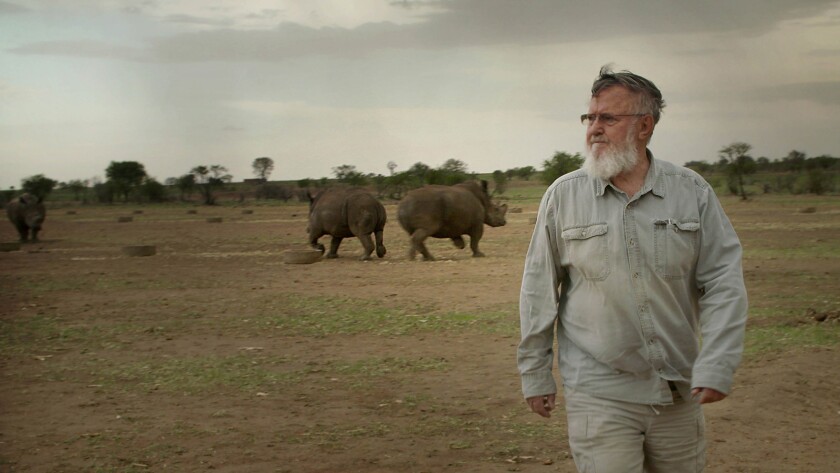
(Whining voice)
Oooooooh-hmph, do I have to review this? I don't want to .
(Frustrated sigh, normal voice)
Goddammit. So, here's a CNN-produced documentary called "Trophy". I was hoping it was about the country's obsession with giving out participation trophys, not that that isn't stupid on both sides of the equation too, but it would've been a lot more fun to discuss if that's what it was about. No, it's actually about the current debate over trophy hunting. Particularly those rich-ass millionaires who travel to Africa to shoot elephants and lions and post the images on their facebook before the collect the heads for truly misguided wall decorations.
Actually there's more to it than that... (Sigh) ; look this is actually a really complicated subject, and to be fair, the documentary does a pretty decent job of explaining why, but, as for me, I just don't care. Normally, I have some kind of preference or opinion on a subject, but I honestly don't think either side's perspective are particularly well-meaning or helpful anymore; I can make the arguments on both sides of this issue, but either way I feel like a chump when I do. I mean, if I'm really being honest, I really don't care as much about the plight of endangered species as I probably should. So, I guess, shoot away? And actually, it's more conservationist to actually do that in many cases. People forget that the first conservationists were actually hunters. They wanted to be able to continue to hunt, and people like Teddy Roosevelt decided to protect important spaces of land for nature through things like the National Parks act, in order to protect the land and the wildlife that makes the place their natural habitat and that practice is still alive and still valuable.
I know it sounds wrong-headed, but in places like Africa, where hunting and preservation is the biggest tourism moneymaker, the practice of hunting, even endangered species is what keeps the countries going. It provides job for people to, say raise and breeds rhinos and lions, even though, yeah, they're basically being bred to kill, but they're also being bred in a hospitable environment.
You can't suddenly let a bunch of tamed animals loose on civilization, or for that matter, even a more nature-based ecosystem; it can lead to disaster.
Getting rid of these would bankrupt countries but it would cause way more death than just a few big game hunters who accidentally kill the wrong lion one day. They certainly provide more than the poaching industry which is destroying that ecosystem, especially underground ivory and rhinohorn trade, which-, I genuinely have no idea why either of those, especially rhinohorn still exists. (Like, I know why it's coveted but that reason is genuinely stupid, and I'm not giving that piece of superstition the time of day.) One rhino breeders sells the horns legitimately, finding a way to, as best they can, remove the horns of the rhinos in as humane and docile a way as possible and it helps fund the sanctuary he runs.
That said, hunting doesn't help everywhere; it requires a non-corrupt business/government oversight and in the right location, because yes, unregulated, hunting can cause the the extinction and endangering of species.
Also, I just don't get the perspective of the trophy hunter? You want to go back to nature and kill animals like our ancestors did? Then why are you using a gun? And you know what, the humane side is right about their view too. One hunter who we follow confronts a pro-conservation protest and while that group, especially the extreme PETA people are annoying, they're right that while the funds from hunting may conserve the animals, or build up the education and schooling in some of the poorest parts of Africa, and one animal conservationist put it, to paraphrase, "why not just build a damn school for them, not spend a bunch of money hunting for sport?" I mean, they're not wrong there. Okay fine, they're a little wrong, their economy is based around the trophy-hunting tourism market and it creates jobs on top of building schools, but you can also start laying the groundwork for an alternative means to produce a stable economy; how about start a technological infastructure or something else? These hunters don't care about the sport or the romantic appeal of nature or the idea of preserving a tradition of hunting from our ancestors; they just want to legally be allowed to shoot and kill something. I get doing this when it's in the best interests of the ecosystem and environment but that's not why these people do it anymore. This isn't hunting for the sport or even the thrill, or real care about the environment; they want it protected because there aren't too many places left on Earth where they can and get their kicks off shooting things that are living without actually going to jail for it. Those original hunters were hunting for food, to survive; it wasn't something that was glorified, it was a necessity or survival, and even the original conservationists, they also had an appreciation of the outdoors and did indeed fear that technology would slowly eliminate this way of live and without an influx of larger and larger cities and communities an abundance of large and potential violent animals would intrude upon a growing industrial world.
(Sigh)
Like I said; I don't like reviewing this. The movie explores several of these aspects and follows the people involved in this fight on both side of today's version of this argument. I think in certain situations, trophy hunting can be a necessary evil that we need to just hold our noses and condone, because we know that it's actually better that they do that; like when it's those weird occasions when it's better to let a forest fire just burn and destroy so that the forest is more able to rebuild stronger. However, when it clearly isn't, then yeah, it should be fought pretty rigorously, 'cause these guys are often just pricks who enjoy this ability to kill legally and can afford to do this. Like I said, I don't have much sympathy for either side. "Trophy" is mostly just a reminder of why that it is, but I don't supposed I can knock it for that. It shows both perspectives pretty well, and makes solid points on both sides of the debate. I guess I should just let this go and arbitrarily give it a positive review just because of how it succeeds at it's objective. I don't know though, I did learn a few things, from both sides that I suspected even if I didn't exactly know about them before, but what the movie didn't give me was some kind of new insight. I mean, it went over the murder of Cecil the Lion and the backlash after that that put this issue back into the greater public consciousness for awhile.
(Shrugs)
Look, this movie isn't convincing either side one way or the other; it's not trying to, but that's the problem. I think I do wish it at least grabbed my attention enough. to try to convince me, or at least enough to make me care and stand up and at least think about doing something about this, if not actually take any action. I'm the one who's independent and undecided on this, at least try to convince me why one side is better or more right than the other?! Mostly though, the movie just reassured me that yes, I should stay out of this as much as I can, and just try to avoid people who care about this thing one way or another, whether their intentions are good or not.

