It's been a frustrating year.
That's basically been the continuous throughline of, nearly every one of these openings to my Movie Reviews. I'm kinda sick of writing them, but I haven't had much else to work with either, especially since I try to use this time partly as a semi-regular State of the Blog post.
I hate this. I hate that I often would rather vent and rage then simply try to dismiss everything as simple personal annoyances, but feel that I've done that often enough and fear, probably correctly, that there's no positive outcomes that comes from burdening the rest of the world with my burdens. I hate asking, without asking, everyone to read between the lines of what I say and why I'm saying it, without actually saying it. I'd so much would rather want to talk about film and television and all other art forms and entertainment that are supposed to be the temporary distractions from our own perils. I hope to keep doing that, and I will, but I gotta tell ya, it's been harder and harder to do that lately for me, not just in terms of technical and trivial disadvantages, but also because of a lack of desire to engage in entertainment and writing about it lately.
I hope that ends soon. And thankfully, there has been some works that have truly inspired me lately, and I'm happy for that, if nothing else.
THE BALLAD OF BUSTER SCRUGGS (2018) Directors: Joel Coen and Ethan Coen
★★★★★
Having not paid as close attention to newly-released Netflix films as I probably should've been doing, I was caught somewhat offguard to hear my mother and her boyfriend taling about some strange western film that started out strange, including in first-person musical form, something attune to the days of Roy Rogers and then she said that the movie really got weird and out there. So, intrigued, and going off of a suspicion I decided to jump it in my queue and see what all the fuss was about. Sure enough, once I did, it became clear that, yes, this is a probably a movie that might catch a lay-viewer offguard, for me, my initial instinct after the being introduce to the titular Buster Scuggs (Tim Blake-Nelson) the singing outlaw cowboy who's the fastest gun in the west as he blows up a poker game by causing somebody to shoot himself in the face multiple times, my response to the strange and odd film was simply, "Oh, hi Joel, hi Ethan, long time no see; haven't heard from you in a while."
Yep, it's a Coen Brothers movie.
It's also one of those anthology films that's more a collection of short films shoved together. I don't quite know how or why they decided to go this route, I guess they had a bunch of western ideas that they couldn't figure out a full feature or whatever. I don't care, I'm just happy it exists. The Coen Brothers, haven't done anything quite like this that I'm aware of before, although they did participate in one of the better anthology films in recent years, "Paris, Je T'Aime", but "The Ballad of Buster Scruggs", is way better than that film, because I'm not just getting multiple Coen Brothers films, but I'm getting all different kinds of films from there.
The titular and first story, is like a wonderful twisted subversion of an old cowboy musical, complete with a Roy Rogers-esque singing cowboy named Buster Scruggs (Tim Blake-Nelson) who is just the best gunfighter in the West, he'll sing about those who are dumb enough to cross this jovial white-hatted narrator. When then get a more surreal Leone-esque western in "Near Aldogones' where a Cowboy (James Franco) tries to rob the wrong bank with the wrong Teller (Stephen Root) in the wrong part of the open west. The third story feels like the Coens films sifted through Werner Herzog's mind in "Meal Ticket" a story about a traveling Impresario (Liam Neeson) who takes an no-arm, no-legged actor, Artist (Harry Melling) from small run-down one-horse town to another performing for the locals and outlaws until he starts losing customers to a chicken act. "All Gold Canyon" is practically a one-man show with Tom Waits as a Prospector who's determined to pan a mountain for gold. The best of the stories is the epic tragic-romance "The Gal Who Got Rattled" which tells the story of Alice (Zoe Kazan) a young girl who's traveling on the Oregon Trail only for her brother to pass away on the trail. He was supposed to have a job lined up in Oregon that may or may not have existed and now she's stuck on a trail with strangers, but she soon befriends a young man, Billy (Bill Heck) who she falls in love with, but the ghosts and promises of her late brother come back to haunt her on the trail, even after he's been buried. The final tale is a wonderful western ghost story that takes place entirely on a wagon train to Hell that's just a gorgeous and beautifully haunting end to the film.
"The Ballad of Buster Scruggs" is one of the early joys I've had the pleasure to experience in 2018's year in films so far, which, considering I'm still going through 2017's films, isn't much, but there's so much of everything weird and wonderful I want in a Coen Brothers film here. Twisted stories with evil back door twists with great acting and technical filmmaking and storytelling mastery.
THE RIDER (2018) Director: Chloe Zhao
★★★★
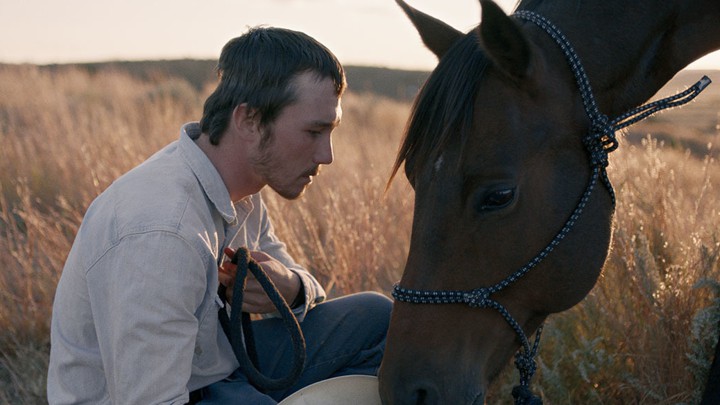
"The Rider" seems to be Chloe Zhao's version of "The Wrestler", or rodeo's verison anyway. Actually, it's more like, "The Jackie Robinson Story" to be honest, since this is a film where non-professional actors, more or less, play versions of themselves in this ethereal look at the life of an athlete who can no longer participate in the sport that they love.
This athlete is Brady Blackburn (Brady Jandreau), he's a Native American cowboy who was a major rodeo star until he received a severe traumatic head injury that essentially ending his career. I don't know how accurate the story is, but the actors that play his family have the same last name and him, and the film seems to be shot, basically in and around their own Dakota Plains area. Zhao shows Brady's homelife, and his work as an animal trainer. he still trains horses the best he can without riding them outright, and he has a natural feel for it. He knows he can't go rodeoing again, but every-so-often, he gets recognized at the local store where he occasionally works part time.
Rodeoing is a strange sport. It's very much apart of Americana, and it's bigger than people realize. Really, the National Finals Rodeo is actually one of the biggest weeks of the year for business in Las Vegas when it comes to town. That said, I don't really have too much knowledge of it, other than the fact that bullriding is by far one of the most deadly and dangerous sports out there. I'm actually amazed there's not more injuries from it.
Zhao's skill is showing that combination of all the levels of sadness that Jandreau goes through. Anger, sadness, defiance,... last I read is that, despite the metal plate in his head Jandreau has actually gone onto to compete again in rodeo. Zhao is one of film's most intriguing young directors. She's a Chinese-born director who's two feature deal with Native Americans who live in the plains area of the country. Her previous film, "Songs My Brothers Taught Me" was an episodic mosaic of a struggling Native American family, seen mostly through the point of view of the kids in a family that really doesn't have adult supervision anymore. She met Jandreau on that film set, before his injury, he taugh Zhao how to ride a horse. It's weird and strange that the most notable filmmaker of Native Americans these days is a Chinese female, but whatever her fascinating with this part of the American West that doesn't get told enough, I'm glad she's trying to tell it.
I still think she's got a great film in her and this isn't quite it yet; I couldn't get over the fact that she's more interested in observation and the scenery than narrative, and I'm serious with "The Wrestler" parallels; I'm actually surprised more critics haven't made that observation. That said, I ultimately got swept up in "The Rider". It's a beautifully poetic tale about a broken man who's desperate to become unbroken, even if he knows that ultimately he can't.
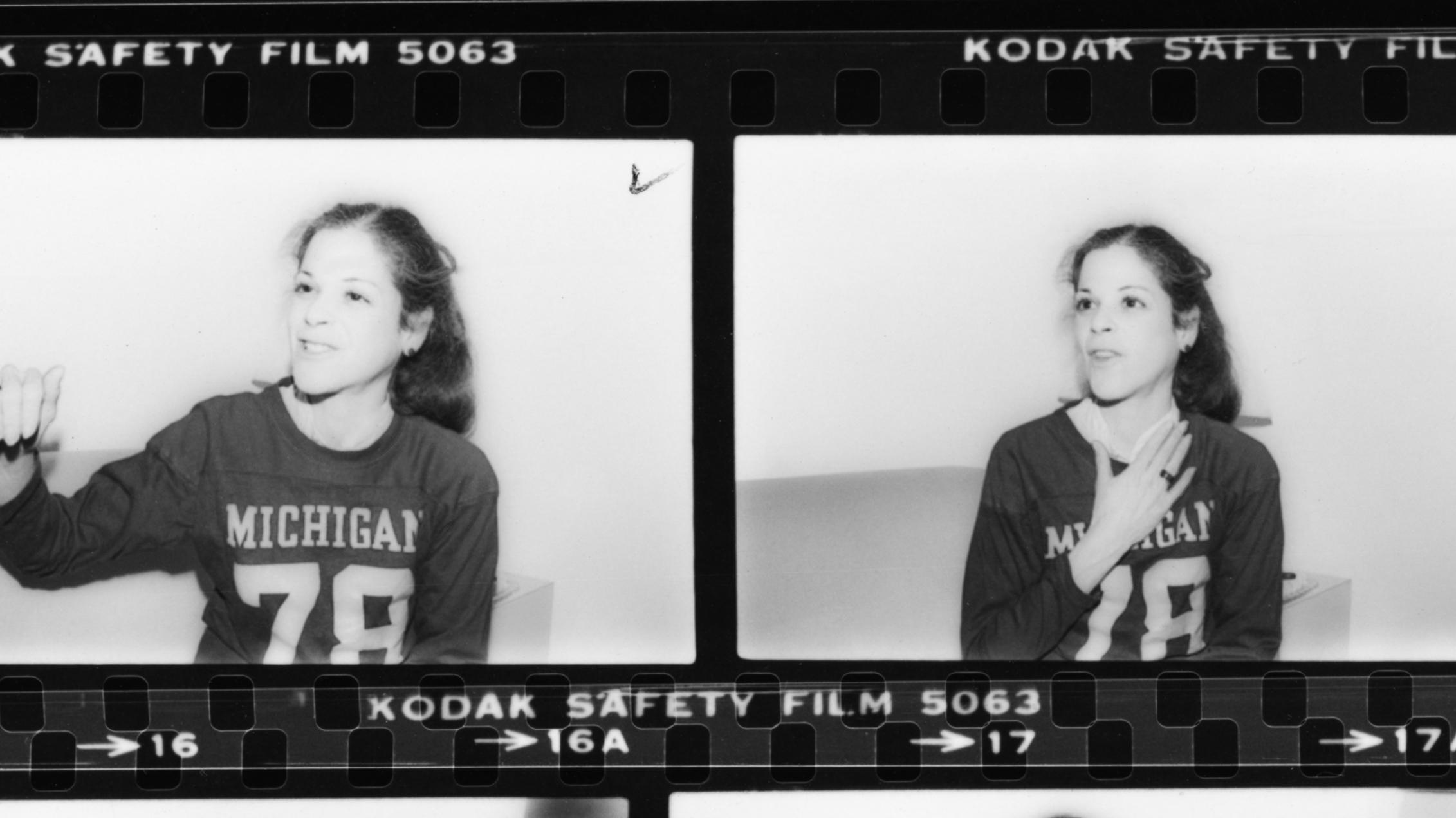
So, when I was in elementary school, I spent a lot of time in the school's library. I would often check books out, or if they were really long books, recheck them out, often before or after class I'd be there often. Anyway, there was a rotating metal shelf near the front entrance, that would have a lot of popular paperbacks at the time. Some Matt Christopher sports stories, “Animorphs”, “Goosebumps,” but as long as I was there, I would also always see Gilda Radner's autobiography among them. I think I might've tried reading it once or twice, but I was always more interested in all the other things most kids like me were interested in, like sports or world geography so I didn't finish it, and I do regret that now, but it still always seemed weird that it was always there. It was always there that it was there at all. It was an older elementary school library, but they usually had new books fairly regularly and honestly, I think I was of the only people in school at that time who even knew who she even was. It was the mid '90s, she had passed way too young, way too long ago, for kids between 5-11 to really remember her. I barely remembered her at the time myself; There were reruns of “SNL” on TV somewhat regularly, but they were more likely to show the eighties episodes much more than the original cast.
I, TONYA (2017) Director: Craig Gillespie
★★★★1/2

This was a frustrating watch for me. For me, and I suspect nearly everybody who remembers this goddamn thing.
And if you can into "I, Tonya" not remembering or you're too young to have experienced the whole Tonya Harding (Oscar-nominee Margot Robbie) thing, then-um, don't talk to me. Shut up. In fact don't talk to anybody, period. You're officially, too young to matter; this is where I draw the line. Fine, we have to have about nine documentaries on the L.A. Riots, I'll deal with it, four movies on O.J., okay, but this, this is where I draw the line. I literally cannot talk to you, if you didn't experience this.
I know, I'm supposed to be facetious when I say stuff like that, I-, I-, I-, I'm not sure I totally am. This is really, genuinely the line for me, for some reason. Maybe you had to be there, or perhaps you're lucky you weren't. However, let me put this into context, the '94 Olympics Women's Figure Skating competition, remains one of the most watched sporting events of all time. Seriously, the ratings on this top most Super Bowls, at the time, it was the 3rd most-watched sporting even of all-time and that's just in America. And yes, the event was like, even more surreal than it's shown in the movie. Not that, any of this was normal to begin with.
The movie's shot in a fascinating interview-like style full of complex, contradictory statements from nearly everyone involved and tries it's best to show everyone's point of view. Honestly, I completely forgot about Harding's mother in all of this, but yeah, lost in everything else, LaVona Harding (Oscar-winner Allison Janney) was a piece of work herself. I didn't forget much about the story, but I did seem to overlook her. I definitely will forever remember the name of Jeff Gillooly (Sebastian Stan), Harding's ex-husband. and seemingly one of the orchestrators of the,- third or fourth strangest-ass thing to happen in the sports world of the '90s. (Seriously, between this, the O.J. trial and chase, eh, Fan Man in the second Bowe-Holyfield fight, Tyson biting Holyfield's ear, the '90s in sports were fucking weird. The #1 female tennis player in the world got stabbed by a deranged fan during a match and it's barely a footnote of strange shit in '90s pro sports in the '90s.) And I also remember, the bodyguard, Shawn Eckhardt (Paul Walter Hauser) who's apparently the one who set up the hit on Nancy Kerrigan. (Caitlin Carver)
They don't show much of Nancy here, although they do bring up a little bit about the bizarre contrasts between the two, that was actually more of an image the public built. They also show how Harding was an innovator in the sport. Long before I was complaining about how every performer at the Olympics was skating to rock'n'roll songs, which was unusual even five years ago, she was performing to rock'n'roll and didn't fit a perfect image of the American skating princess. I don't know if it's completely fair to say that Harding was screwed over by judges because of her redneck image, she was often competing with greats like Kerrigan, Kristi Yamaguchi, Michelle Kwan early in her career, but Kerrigan was just as blue-collar as Harding was. And yeah, whatever was Harding's role in setting up the attack the day before the Olympic tryouts, and I tend to believe the movie, it was probably more likely the husband and bodyguard, which-, yeah in hindsight, why did she need a bodyguard. I mean, yeah, she was a world-renowned figure skater, but like many Olympic athletes still had to take other jobs to pay rent, at least until she landed the triple axel in competition.
That's Harding's positive claim-to-fame that nobody can take away from her, she was the first American woman, only 2nd ever, to land a triple axel, a jump that's difficult for many male skaters to do, (It's arguably as difficult to do as a Quad is) and she's one of only eight women to ever pull the move off in competition.
"I, Tonya", reminds us of a crazy, insane, bizarre situation and takes us inside the crazy in a way that I think people like me who lived through the damn thing will appreciate more than most. I mean, do have, only in interviews a performance by Bobby Cannavale as a "Hard Copy" reporter, thankfully they left out the part about how they got ahold of her sex tape (Yes that happened too.); "Hard Copy" was,- kinda the TMZ of it's day, only much more tabloid-y but, yeah, that's some of the details that people who lived it remember and will catch and if you're me, will groan in agony. After years of trying to forget all this, I have to imagine that this is about as close as a movie could get to portraying how bizarre this whole thing was.
Director Craig Gillespie's an interesting and erratic director and this is by far his most interesting work, and I enjoy Steven Rogers's screenplay although I think Margot Robbie is probably the true auteur on this project. The movie's style is clearly reminiscent of some of Scorsese's best films like "Goodfellas", "Casino" and most notably, "The Wolf of Wall Street", which Robbie also acted in. (The movie also has little stylistically with anything else Gillespie's done until now) This is her most expansive performance yet, and the cinematography and editing are particularly great, along with the costume design. I mean, I saw some of the skating outfits and I was instantly transformed to those figure skating contests I watched back then, and still distinctly remember. (Yes, I, and everybody else was watching back then. I can underestimate this, this was a major thing. It had a 43.9 rating, last year's Super Bowl was a 47.4, and ratings represented more viewers back then.)
If you don't know the story, I think people will be fascinated from "I, Tonya"; I knew it and was more intrigued than I wanted to be. It takes a truly idiotic story from our tabloid modern past and finds the best and probably only way to properly retell it. The movie opens with warnings that everything that happened actually happened, as though a lot of people didn't know that it did. Oh, do I wish that were the case. My unconscious twitch aside from the mere mention and memory of everything and everyone surrounding this incident, I do think that Tonya Harding is somebody who truly does deserve to have a movie made about her. (Something I can't say for every film subject I've reviewing this post) She was born into a world of Hell, and somehow was blessed with a talent that allowed her to somewhat stumble her way out of it, if only she was capable or surrounded herself with people who could manage to guide her out of it, and instead of landing gracefully, she fell flat into it.
THE DISASTER ARTIST (2017-NO! NO!, hold on.
(Frustrated sigh, frustrated breaths)
God-fucking-dammit.
(Sigh)
I've been putting this off for, well 15 or so years I guess- Alright, alright, I guess I have to finally get to it now. Alright, let's get this over with.
THE ROOM (2003) Director: Tommy Wiseau
RATING? WHY WOULD I BOTHER WITH A STAR RATING?! THERE'S NO POINT IN RATING THIS MOVIE; I'M NOT GONNA SAY ANYTHING NEW OR CHANGE ANYONE'S MIND, OR INTEREST ANYONE WITH THIS REVIEW OF THIS PIECE OF CHINESE-FINGER TORTURE DISGUISED AS A MOTION PICTURE...-
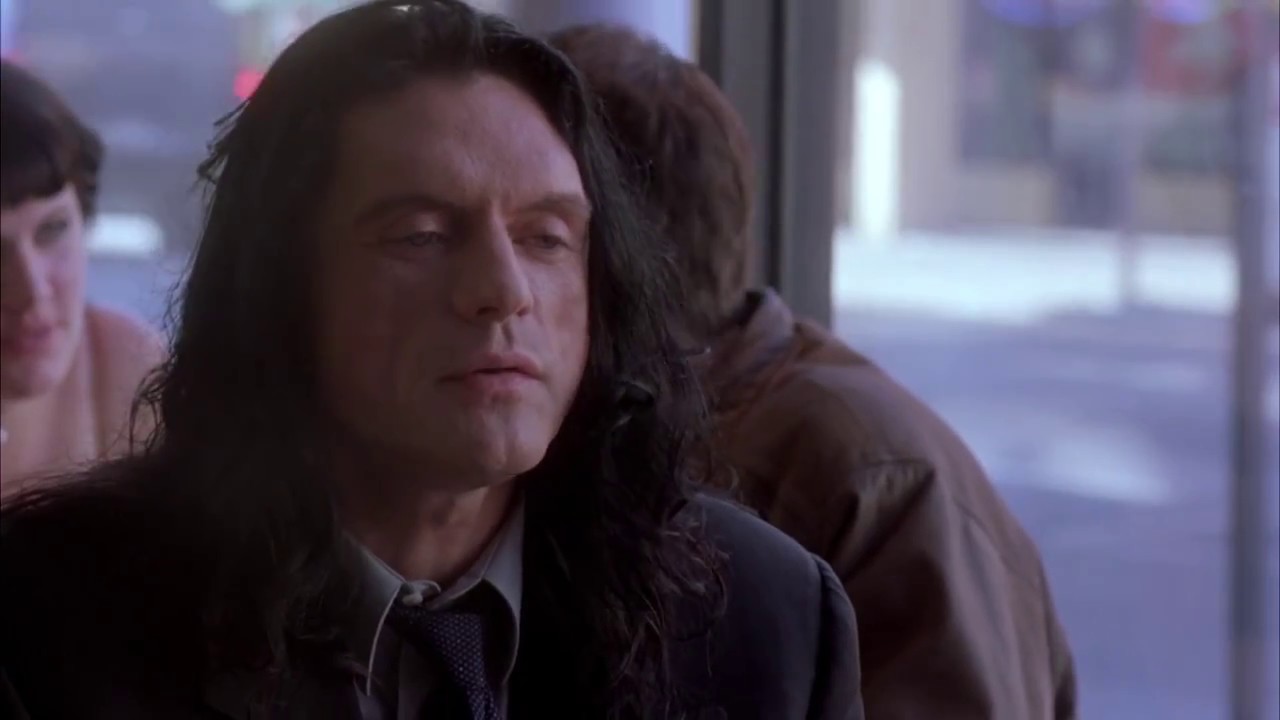
I had managed to avoid watching "The Room" until now, and no, I didn't get around to reading "The Disaster Artist" either. I certainly heard about them. I've been hearing about Tommy Wiseau and "The Room", almost non-stop for the last nine-hundred and seventy-five years since it came out. I've seen several reviews of the film, some of them multiple times. Even one of my favorite reviewers, Kyle Kallgren, did a recent video essay about the film, declaring Tommy Wiseau "The Last Auteur". I've seen people take this film seriously, I've seen people hating and dismissing on the film as inept garbage, and the movie get a ridiculous amount of fans as a midnight, so-bad-it's-good movie. In fact, here's an anecdote I'll tell, when I was live tweeting the Golden Globes at the beginning of the year and James Franco won the Actor in a Comedy Film Award and Wiseau was invited on stage, and I tweeted negatively about it, 'cause frankly I didn't want to put up with him at an awards show, even a fake one like the Globes, and I got called a "hater" for it, by some friends of mine who I generally respect.
So, since I can't add anything new to this, let's just get to it; is "The Room" actually that bad? Um, yes it is, kinda, but, I don't really think it's entertainingly bad. I certainly can see how people can see that and make fun of it, but I think just because something's weird and bad, doesn't make it entertainingly bad automatically. It's definitely got moments that seem funny so I can understand that impulse, but I can also kinda understand where he's coming from, being inspired by people like Tennessee Williams to create a personal narrative, but Tennessee Williams, who I'm not really a fan of to begin with, he certainly knew how to write great characters and great dialogue. Okay, yes, he wrote women a little too condescendingly, so I guess he and Wiseau have that in common but they were still really well-written characters and he knew storytelling. Repositioning the movie as a black comedy doesn't make it better either, it's clearly not intended as one. It's just an ineptly-made, horrible, bad movie, and just because the guy himself is as strange a paradox as the film is, doesn't mean the film is also an interesting strange paradox. If that makes me a hater, than so be it; I'm not glorifying a shitty movie just to bring a guy who, happens to be a little weird and mysterious in ways that, frankly I don't find particularly fascinating or endearing, to the forefront of our minds. (And frankly I find some of the so-called "appealling" things about him to be quite disturbing.)
And no, I'm not gonna indulge in the pseudo-pretentious serious analysis of him as an artist either. Hell, I'm not even gonna give him credit for not being aware enough of himself and how he comes off to be an unrealistic romantic emotional lead, 'cause that's not an excuse either. I can give you a list of good love stories and narratives with non-traditional-looking romantic male leads, even Tennessee Williams wrote a few of them. This is not a premise of a story that's a failure in conception, it's a failure of execution because Tommy Wiseau is terrible as a filmmaker. Honestly, "The Room" is just not as funny to me as it just makes me angry, and it makes me angry that people enjoy it on that level of, "Look at this guy, he thinks he's the lead, that he's the victim, or..., blah, blah, blah..., how can this strange Frankenstein-ish figure...."-, yeah, that's not fair. I hate him mostly for being a waste of film. My biggest issue isn't the way he is, it's that he's not a good filmmaker.
Alright, those were my thoughts, now let's get to the real movie.
THE DISASTER ARTIST (2017) Director: James Franco
★★★1/2

So, having now tortured myself and finished watching "The Room", I embark on "The Disaster Artist". This is the movie from the screenplay of the book about a guy who meets a Tommy Wiseau (James Franco). The guy is a young struggling actor named Greg (Dave Franco, James's brother, or as I remember him, the weird annoying guy from that "Scrubs: Med School" season that only I liked.) He meets Wiseau in an acting class, and is immediately infatuated with him. He does stand out. Wiseau, is a strangely charismatic guy, a mysterious figure who apparently has loads of money but nobody's sure where he comes from or what his origins are. He claims that his accent is from New Orleans; something everybody laughs at because it's clearly not true. (Or, at least, not the source of his accent.) Tommy and Greg become friends, I guess, or whatever Wiseau seems to contemplate or consider what friendship is. He then reveals that he has an apartment in L.A. and invites the still-teenage Greg to come live with him as they both start their Hollywood dreams of headshots and auditions.
Greg starts to get a little work, but Tommy is,- mostly just-, I mean, they portray him as being glaringly unaware of himself and the presence he portrays and makes for others. I mean, I guess based on the real Tommy Wiseau, the film is not wrong, but I get the feeling I'm supposed to empathize or think that his unweariness is cool? It's occasionally funny, but he's not exactly Fonzi or anything. Anyway, Greg also gets a girlfriend in Amber (Alison Brie) but still doesn't breakout quickly enough, at least not for Wiseau. So, he writes his own movie and begins directing, shooting and acting in his film.
He clearly doesn't know anything about filmmaking, or much of anything for that matter, for instance, he buys his equipment instead of renting them. He also shoots both on film and digital, I'm not sure why anybody would do that, but he tries it. He manages to get a professional crew and I guess he casts the movie, I don't know, okay enough. I mean, it's a disaster. He doesn't provide water at some point and a cast member actually passes out, he can't direct, he can't act, he seems to think something's funny that he wrote when it wasn't. he thinks that because Kubrick abused his actors for a greater goal that he should be abusing his actors too.... Huh. It's title-appropriate more than anything.
Look, I'm coming into the film a little blind, I didn't read the book and frankly I don't get why I'm supposed to like or be fascinated by Wiseau as a person. I don't find him, endearing in any way. I do empathize with him though. In fact, I'll bare my soul a bit here; I see a lot of myself in him, both him in real life and in Franco's performance. I'm a guy who's struggled at times to fully incorporate myself in real life and am not as self-aware of my appearance and presence as others, and I have long hair and an older guy who often hangs around people younger than me, at least, when I was in film school, especially my later years in film school and I was one of the oldest ones there. I look a little like Wiseau. I can totally understand some of his behavior; he actually triggers a lot of my biggest fears to me, that I would end up like him. And there's a part of me that relates to his blind ambition and daring. In another version of me, I can easily see myself becoming another Tommy Wiseau.
However, just because I can empathize doesn't mean I can endorse. I'm not gonna pan the movie outright, "The Disaster Artist" is funny and for a movie about moviemaking, it is actually quite instructive and interesting. I think I still prefer Tim Burton's "Ed Wood" for a movie about a horrible film and filmmaker, but "The Disaster Artist" is pretty good. However, I do get the feeling from this movie that Wiseau is a weird guy who other weird guys have taken to iconizing when it's not really worth it. They say that his mysterious origins and endless supply of money, enough to spend eight digits or so on a terrible vanity project film is endearing; I find it disturbing. Sure, he embraced it, and has made money from it, but from what, being weirder than everyone else?
(Sigh)
I don't know; I think Tommy Wiseau has gotten much more than he has ever deserved from the film industry and this movie is hopefully the peak of that, and it's a better movie than he deserves as well. I hope we stop getting infatuated with him, or he begins to come up with stuff that helps him deserve to be famous and for stuff that's genuinely good. For me though, "The Disaster Artist" is mostly just making fun of a guy because he isn't willing or able to let us know him better, or his friends and collaborators aren't willing to try to get to seriously know him better, so they just accept him as, some weird guy. (Sigh) I guess they made good comedy out of it, but I find it mostly suspicious.
THE GREATEST SHOWMAN (2017) Director: Michael Gracey
★★★

So, I know it's not terribly en vogue at the moment, but right around the time last year when Ringing Bros. & Barnum & Bailey's Circus closed, I actually happened to watch Cecil B. DeMille's film "The Greatest Show on Earth". The film is nowadays, rudely and I would say inaccurately regarded as one of the worst films to ever with the Best Picture Oscar, but honestly if you haven't seen it, it's worth seeking out. It's actually a very good film and if nothing else, watch it because of the great time capsule it is. The film does have it's fair share of actors and great performers, James Stewart in particular has one of his best and most underrated performances in the film, but really, the movie is great and special because of how it captures the spectacle and awe of a real circus and their performers, back in a time when the circus coming to a small town was indeed the greatest show you could find.
I totally understand the idea of turning P.T. Barnum's (Hugh Jackman) life and career into a musical based around the eclectic group and mix of castaways and outcasts, hell, using the circus isn't new to the musical, it's not even the first P.T. Barnum musical, and hell, a revival of "Pippin'" that was based around the circus was a big Broadway hit just a few years ago. If anything, the idea is kinda too obvious, it's a spectacle genre being used to tell the story about a spectacle genre. I can also totally see why this movie received heavily mixed reviews across the board, especially if some of the "La La Land" haters out there who might already be getting tired of Justin Paul and Benj Pasek's shitck for their contrived musicals based around, artists. I liked the music though, and good music can make up a lot from the deficiencies of a story. Sure, maybe the movie could've benefitted from, eh, maybe one or two more rewrites and edits.
If you're familiar with the life of P.T. Barnum, then nothing in the film will surprise you, especially since most of it is barely accurate at best. His real life is far more interesting than the movie even lets on. He was a member of the Connecticut legislature, pushed for ratifying the 13th Amendment, his museum was a lot bigger and more popular way before he started turning it into a circus, which by the way, didn't happen until, much later in his life than the movie inclines. He did sponsor Jenny Lind's (Rebecca Ferguson) American tour, and he did marry a girl named Charity (Michelle Williams), but basically everything else is historical revisionism and re-imagining, and I'm certain he'd be happy about that. What the movie gets right is that Barnum was a master of manipulating the public, a consumate salesman, a promoter, a showman, a guy who could sell and convince anybody of everything and his little oddities shop and museum was basically the popular spectacle of it's day. I have no idea if James Bennett (Paul Sparks) was as disinterested and dismissive of his show as portrayed in the movie; I think that strawman critic is mainly brought in just to justify the idea of the circus as being a place for the outcasts of society to run away to and have a career. Honestly, I kinda wish there were circuses around that I could run away and join sometimes anymore. I mean, I do know people who work in the circus, well, the "Circus Circus," circus, which is surprisingly still around and still popular despite being a relic of it's former self and still on the far end of the bad part of the Strip...-, that's another story, but the people who do work there are pretty cool still. And the circus is a place for societal's outcasts and oddities to thrive and fit in.
The movie is more concept-album than a movie, or even a musical at times. I like the romance between Philip and Anne (Zac Efron and Zendaya), a producer who Barnum convinces to buy into his circus enterprise and an African-American trapeze artist, again this was a just a few years after the Civil War, but it could still use some flushing out as a story. A lot of the movie is paper thin; it's barely a story and a plot held together with musical numbers. They're good musical numbers, and they mostly fit in with the subject matter, although I suspect I'd enjoy them more outside of the musical and movie itself.
"The Greatest Showman" is a celebration of itself more than anything, but I enjoyed it as that. That's all a circus ever really is either, so why would it be deeper. I like the performances, I like the songs, the directing is fine, it's a first-time feature director in Michael Gracey who's more well-known for visual effects until now, that's often a warning flag for me but he does a serviceable-enough job.
Jenny Bicks and Bill Condon's story and screenplay are the weak points; but I'm giving them a little slack. They picked a tough subject matter to find a cohesive narrative of any kind around, much less a musical, but then again, I don't know if I want one anyway. P.T. Barnum occupies the same headspace to me as, say Mark Twain, one of those personalities who's wit, image and creativity has basically overshadowed their original work at this point and seem more like iconic characters of pop culture and pop history to me than actual living breathing men, men who's company I probably wouldn't enjoy as much as I'd like to imagine I would if I ever really met or got a chance to hang out or have dinner with them. (Although a dinner between Mark Twain and P.T. Barnum...-, well, that's going into my screenplay idea book.) "The Greatest Showman" is entertainment for entertainment's sakes, and I think Barnum wouldn't have it any other way.
MARSHALL (2017) Director: Reginald Hudlin
★★★★

Thurgood Marshall (Chadwick Boseman) is a personal idol of mine and I can't imagine that he isn't an idol to most. There's several films with and about him, my personal favorite are actually the TV movies "Separate But Equal" about the Brown v. Board of Education case and starring Sidney Poitier, and a film version of Laurence Fishburne's one-man play, "Thurgood". "Marshall" is the latest biopic, although this one takes it's inspiration from one of the lesser-remembered cases he was involved with. In fact, he's not even the one doing the defending in this one. Denied by the judge the right to talk or try the case, the courtroom scenes are dominated by Sam Freidman (Josh Gad) a local Jewish attorney who's mostly known in the movie for insurance law, (In reality Friedman was a great trial lawyer at the time, read Roger Friedman's piece about him to learn more about him.:
https://www.showbiz411.com/2017/10/11/review-reginald-hudlins-marshall-doesnt-tell-the-real-story-of-my-late-great-uncle-and-thurgood-marshall)
but now Thurgood has to look on as he has to defend a Black chaffeur, Joseph Spell (Sterling K. Brown) who's accused of raping his employer Eleanor Strubling (Kate Hudson).
When I say "local", I mean, Greenwich, Connecticut. It's easy to think of most cases and incidents regarding the NAACP and the fights for Civil Rights in the courtroom to be in the South, but the North had it's fair share as well. This one caught up in the modern zeitgeist somewhat recently because of Marshall's involvement, and also because of where it took place and the case itself. Basically, it's a he-said she-said, about whether or not Mrs. Strubling had an affair or was crying rape. She was found with beaten and torn clothes after climbing out of a river after apparently being thrown off a bridge.
SPOILERS: She lied.
Look, this is one of those movies that I really liked as I was watching it, despite really being conscious of how, sort-, not bad, but I think the general consensus is that the film isn't that much different or greater than you'd expect from a great TV movie or a "Perry Mason" episode, at least in terms of a courtroom drama. That shouldn't be too surprising though, Director Reginald Hudlin has a few feature films in his filmography, (Shrugs) I didn't hate "The Great White Hype", I guess, but he hasn't made a feature film until now since 2002's forgettable "Serving Sara", and has mostly become a producer and TV director since and you can definitely tell by the film. That's not a negative, btw, it means he's great at making quality work efficiently and on a budget, and "Marshall" outside of the subject matter is efficient. It does help that this is a fascinating real-life trial and story, and while I doubt the the courtroom scenes are truly accurate, I definitely suspect that they're accurate enough, and for entertainment purposes; I was entertained watching the film.
I don't think I'd be that highly of it, if the story wasn't about something associated with Thurgood Marshall, although I think I'd still enjoy it for what it is. It's one of those of movies you watch, and you enjoy, but unless you end up running into it on cable TV or something, you're basically gonna otherwise forget it. I think that's all I was looking for myself, but yeah, I had plans to really sell this film in my review after I first saw the movie, but in hindsight, it's hard to bring up the energy for it. I still want to recommend it though. I think I just wanted a good, well-done courtroom drama, especially after sitting through a terrible lawyer drama like "Roman J. Israel, Esq.", recently.
"Marshall" was very much a pallette cleanser for me, almost specifically for me. It's a well-made good story with a historical figure I'll bend over backwards to find more material on, and I was looking for something that was just solid and good. (Shrugs) I got what I wanted out of "Marshall", and I guess that's a recommendation.
OBIT. (2017) Director: Vanessa Gould
★★★

"Obit." is one of those movies that I suspect the professional critics, most of whom either still do, somehow, or once upon a time strive to or actually worked at a newspaper, and the New York Times is still the premiere paper. Hell, it's the paper I look to first and most often for film reviews among other thing, although I rarely look at the obituaries. Not that I mind reading them or anything, but it's not something I've ever intended to look at, at least not without purpose, like if I know there's somebody in the obits who's life I want to read about, then I might glance at it. Other than that, though..., (Sigh) I mean, I don't know if there's anything positive that ever comes out of reading the Obits.
Especially as a struggling writer like myself who now only thinks about that exercise that some people do where they write their own obituaries. As my performed monologue "Rest, Peacefully" proves, I'm better at writing eulogies than obits. I have written a couple obits here and there, honestly I think I mostly write them imagining Brian Williams reporting on the passing.
Passing, and other euphemisms for death aren't used in obits for the Times articles. I always thought about the Obits section as a solitairy section of the paper, but at least at the times, there's several writers there. We see them interviewed, we see them writing and we see them discussing the subjects they're writing on currently and some of the memorable ones they've written on the in past. They only somewhat show us the pre-written obits that are notoriously written ahead of time although there's not as many as you'd think. The most fascinating one was of a female stunt pilot back in the '30s, the golden age of aviation, her obit was written in the thirties but she lived into the 20th Century, but so many of those performers died young that they planned them ridiculously early.
Honestly, I enjoyed these writers and loved looking deeper at the process of how they wrote and the structuring and research of lives they go through, and some of their themselves are interesting, and I guess in another aspect, I can be how compelling somebody dealing with death on a regular basis could be intriguing, although they're mostly just interesting and different people. I can totally understand Director Vanessa Gould's interest in recording and capturing this group of writers and the NYT's Obit section for posterity. That said, I feel like I've seen so many of these good-feeling nice documentaries about things like the Living Section of the newspaper that I'm kinda just immune to it's charms at this point.
I think I had the ennui feeling about "California Typewriter" recently, a good documentary about the glory of typewriters. "Obit." seems to ironically have a longer life span than the typewriter seems to have at the moment, but the feeling is the same. I'm interested enough in the subject to recommend the film, but it's light charming for the sake of light charming. Maybe in a better mood, I might've appreciated it more, but even still, best case scenario, I read the obits, and I get sad, and I feel old, and then I feel angry or sad some more, depending on the death. I guess, I'm happy for the light-hearted touch in that case for this film, but eh, now I'm just mostly thinking about how my obit would read if I died now, and I get even sadder and angrier.
That's basically been the continuous throughline of, nearly every one of these openings to my Movie Reviews. I'm kinda sick of writing them, but I haven't had much else to work with either, especially since I try to use this time partly as a semi-regular State of the Blog post.
I hate this. I hate that I often would rather vent and rage then simply try to dismiss everything as simple personal annoyances, but feel that I've done that often enough and fear, probably correctly, that there's no positive outcomes that comes from burdening the rest of the world with my burdens. I hate asking, without asking, everyone to read between the lines of what I say and why I'm saying it, without actually saying it. I'd so much would rather want to talk about film and television and all other art forms and entertainment that are supposed to be the temporary distractions from our own perils. I hope to keep doing that, and I will, but I gotta tell ya, it's been harder and harder to do that lately for me, not just in terms of technical and trivial disadvantages, but also because of a lack of desire to engage in entertainment and writing about it lately.
I hope that ends soon. And thankfully, there has been some works that have truly inspired me lately, and I'm happy for that, if nothing else.
THE BALLAD OF BUSTER SCRUGGS (2018) Directors: Joel Coen and Ethan Coen
★★★★★
Having not paid as close attention to newly-released Netflix films as I probably should've been doing, I was caught somewhat offguard to hear my mother and her boyfriend taling about some strange western film that started out strange, including in first-person musical form, something attune to the days of Roy Rogers and then she said that the movie really got weird and out there. So, intrigued, and going off of a suspicion I decided to jump it in my queue and see what all the fuss was about. Sure enough, once I did, it became clear that, yes, this is a probably a movie that might catch a lay-viewer offguard, for me, my initial instinct after the being introduce to the titular Buster Scuggs (Tim Blake-Nelson) the singing outlaw cowboy who's the fastest gun in the west as he blows up a poker game by causing somebody to shoot himself in the face multiple times, my response to the strange and odd film was simply, "Oh, hi Joel, hi Ethan, long time no see; haven't heard from you in a while."
Yep, it's a Coen Brothers movie.
It's also one of those anthology films that's more a collection of short films shoved together. I don't quite know how or why they decided to go this route, I guess they had a bunch of western ideas that they couldn't figure out a full feature or whatever. I don't care, I'm just happy it exists. The Coen Brothers, haven't done anything quite like this that I'm aware of before, although they did participate in one of the better anthology films in recent years, "Paris, Je T'Aime", but "The Ballad of Buster Scruggs", is way better than that film, because I'm not just getting multiple Coen Brothers films, but I'm getting all different kinds of films from there.
The titular and first story, is like a wonderful twisted subversion of an old cowboy musical, complete with a Roy Rogers-esque singing cowboy named Buster Scruggs (Tim Blake-Nelson) who is just the best gunfighter in the West, he'll sing about those who are dumb enough to cross this jovial white-hatted narrator. When then get a more surreal Leone-esque western in "Near Aldogones' where a Cowboy (James Franco) tries to rob the wrong bank with the wrong Teller (Stephen Root) in the wrong part of the open west. The third story feels like the Coens films sifted through Werner Herzog's mind in "Meal Ticket" a story about a traveling Impresario (Liam Neeson) who takes an no-arm, no-legged actor, Artist (Harry Melling) from small run-down one-horse town to another performing for the locals and outlaws until he starts losing customers to a chicken act. "All Gold Canyon" is practically a one-man show with Tom Waits as a Prospector who's determined to pan a mountain for gold. The best of the stories is the epic tragic-romance "The Gal Who Got Rattled" which tells the story of Alice (Zoe Kazan) a young girl who's traveling on the Oregon Trail only for her brother to pass away on the trail. He was supposed to have a job lined up in Oregon that may or may not have existed and now she's stuck on a trail with strangers, but she soon befriends a young man, Billy (Bill Heck) who she falls in love with, but the ghosts and promises of her late brother come back to haunt her on the trail, even after he's been buried. The final tale is a wonderful western ghost story that takes place entirely on a wagon train to Hell that's just a gorgeous and beautifully haunting end to the film.
"The Ballad of Buster Scruggs" is one of the early joys I've had the pleasure to experience in 2018's year in films so far, which, considering I'm still going through 2017's films, isn't much, but there's so much of everything weird and wonderful I want in a Coen Brothers film here. Twisted stories with evil back door twists with great acting and technical filmmaking and storytelling mastery.
THE RIDER (2018) Director: Chloe Zhao
★★★★
"The Rider" seems to be Chloe Zhao's version of "The Wrestler", or rodeo's verison anyway. Actually, it's more like, "The Jackie Robinson Story" to be honest, since this is a film where non-professional actors, more or less, play versions of themselves in this ethereal look at the life of an athlete who can no longer participate in the sport that they love.
This athlete is Brady Blackburn (Brady Jandreau), he's a Native American cowboy who was a major rodeo star until he received a severe traumatic head injury that essentially ending his career. I don't know how accurate the story is, but the actors that play his family have the same last name and him, and the film seems to be shot, basically in and around their own Dakota Plains area. Zhao shows Brady's homelife, and his work as an animal trainer. he still trains horses the best he can without riding them outright, and he has a natural feel for it. He knows he can't go rodeoing again, but every-so-often, he gets recognized at the local store where he occasionally works part time.
Rodeoing is a strange sport. It's very much apart of Americana, and it's bigger than people realize. Really, the National Finals Rodeo is actually one of the biggest weeks of the year for business in Las Vegas when it comes to town. That said, I don't really have too much knowledge of it, other than the fact that bullriding is by far one of the most deadly and dangerous sports out there. I'm actually amazed there's not more injuries from it.
Zhao's skill is showing that combination of all the levels of sadness that Jandreau goes through. Anger, sadness, defiance,... last I read is that, despite the metal plate in his head Jandreau has actually gone onto to compete again in rodeo. Zhao is one of film's most intriguing young directors. She's a Chinese-born director who's two feature deal with Native Americans who live in the plains area of the country. Her previous film, "Songs My Brothers Taught Me" was an episodic mosaic of a struggling Native American family, seen mostly through the point of view of the kids in a family that really doesn't have adult supervision anymore. She met Jandreau on that film set, before his injury, he taugh Zhao how to ride a horse. It's weird and strange that the most notable filmmaker of Native Americans these days is a Chinese female, but whatever her fascinating with this part of the American West that doesn't get told enough, I'm glad she's trying to tell it.
I still think she's got a great film in her and this isn't quite it yet; I couldn't get over the fact that she's more interested in observation and the scenery than narrative, and I'm serious with "The Wrestler" parallels; I'm actually surprised more critics haven't made that observation. That said, I ultimately got swept up in "The Rider". It's a beautifully poetic tale about a broken man who's desperate to become unbroken, even if he knows that ultimately he can't.
LOVE, GILDA (2018) DIrector: Lisa D'Apolito
★★★★1/2
So, when I was in elementary school, I spent a lot of time in the school's library. I would often check books out, or if they were really long books, recheck them out, often before or after class I'd be there often. Anyway, there was a rotating metal shelf near the front entrance, that would have a lot of popular paperbacks at the time. Some Matt Christopher sports stories, “Animorphs”, “Goosebumps,” but as long as I was there, I would also always see Gilda Radner's autobiography among them. I think I might've tried reading it once or twice, but I was always more interested in all the other things most kids like me were interested in, like sports or world geography so I didn't finish it, and I do regret that now, but it still always seemed weird that it was always there. It was always there that it was there at all. It was an older elementary school library, but they usually had new books fairly regularly and honestly, I think I was of the only people in school at that time who even knew who she even was. It was the mid '90s, she had passed way too young, way too long ago, for kids between 5-11 to really remember her. I barely remembered her at the time myself; There were reruns of “SNL” on TV somewhat regularly, but they were more likely to show the eighties episodes much more than the original cast.
That's said, once I finally did start seeking out Gilda's work and life, I would get swept up in her comedic greatness. “Love, Gilda” has brought me back into that feeling once again of discovering her amazing talents. And to that autobiography, "It's Always Something." The movie begins with some of the modern greats, Amy Poehler, Maya Rudolph, Melissa McCarthy, Bill Hader among other including her close friends and family, looking through her own handwritten notes and words like their gospel. It's easy to see why when one sees her material. Gilda wasn't a classic beauty, but she was attractive. She was tall and langley, her body seemed to stretch and bend in such strangely exaggerated ways who that she had some strange control over that allowed her to become play some of the greatest sketch characters ever created. It's strange how thin she was, because she was chubby in her youth and I learned in this movie, that she probably suffered from an eating disorder and spent time in treatment for it. This was back when we really didn't know about eating disorders, and she had become so big and really didn't get into movies until much later in her career, so she became a little overworked and stressed on SNL. Come to think, it is truly amazing how many great memorable characters she has. They go through most of them, Judy Miller, Roseanne Roseannadanna, Baba Wawa, Emily Litella, my favorite Candy Slice; she has more than most even among those of the time, certainly more memorable characters than, literally every other female I can think of on the show. Hmmm.
Gilda Radner eventually got over her disorder and after a couple failed marriages, including a strange one to G.E. Smith, SNL's famed drummer and music coordinator for many years, she met and married Gene Wilder. I had a teacher in film school who knew Gene Wilder, and said that after her passing from ovarian cancer, he never fully recovered; I believe her. Wilder was always amazing, but he seemed to work less and less over the years and even when he was amazing, like his Emmy-winning work on "Will & Grace", his last screen appearance, well over a decade after her passing, he still seemed to be so morose and sad, like something was still missing from him.. After appearing in "Haunted Honeymoon", Wilder's film that notoriously bombed, one of Radner's few disappointments, she only had one other notable film/TV appearance, an Emmy-nominated guest spot on "It's Garry Shandling's Show", where Garry asked where she'd been she said, "Well, I've had cancer, what did you have?". She made cancer funny even as her life was her most tragic.
Radner's life was so short and tragic in the end, it's amazing just how funny her work still is. How influential her work still is; any sketch comic, especially female sketch comics. Amy Poehler practically admits to basically stealing all her characters, and of course, why wouldn't you? I would've loved to see what she would've come up with now, or what she would've been doing. What she left was so endearing. Few women sketch comediennes, even Carol Burnett's material seem as wide-ranging and as shockingly inward-looking in hindsight as her, and stretch a wide range of sides, personalities and characters. Her "It's Judy Miller Show" sketch feels surprisingly poignant to me nowaday. It's really just her, playing a little girl version of herself, just using her imagination and playing the way kids do when they're alone. Loud, free, bouncing off the walls, unafraid of letting her imagination go wild and revealing only to stop when her parent yells up about what she's doing and simply responds, "Never mind." It's so poignant metaphor for her great career, but let's be honest, it's also just, the kinda stuff that I would do when I was Judy Miller's age as a kid too, including saying "Never mind". (Tearing up)
I should really go seek out that autobiography of hers.
I, TONYA (2017) Director: Craig Gillespie
★★★★1/2
This was a frustrating watch for me. For me, and I suspect nearly everybody who remembers this goddamn thing.
And if you can into "I, Tonya" not remembering or you're too young to have experienced the whole Tonya Harding (Oscar-nominee Margot Robbie) thing, then-um, don't talk to me. Shut up. In fact don't talk to anybody, period. You're officially, too young to matter; this is where I draw the line. Fine, we have to have about nine documentaries on the L.A. Riots, I'll deal with it, four movies on O.J., okay, but this, this is where I draw the line. I literally cannot talk to you, if you didn't experience this.
I know, I'm supposed to be facetious when I say stuff like that, I-, I-, I-, I'm not sure I totally am. This is really, genuinely the line for me, for some reason. Maybe you had to be there, or perhaps you're lucky you weren't. However, let me put this into context, the '94 Olympics Women's Figure Skating competition, remains one of the most watched sporting events of all time. Seriously, the ratings on this top most Super Bowls, at the time, it was the 3rd most-watched sporting even of all-time and that's just in America. And yes, the event was like, even more surreal than it's shown in the movie. Not that, any of this was normal to begin with.
The movie's shot in a fascinating interview-like style full of complex, contradictory statements from nearly everyone involved and tries it's best to show everyone's point of view. Honestly, I completely forgot about Harding's mother in all of this, but yeah, lost in everything else, LaVona Harding (Oscar-winner Allison Janney) was a piece of work herself. I didn't forget much about the story, but I did seem to overlook her. I definitely will forever remember the name of Jeff Gillooly (Sebastian Stan), Harding's ex-husband. and seemingly one of the orchestrators of the,- third or fourth strangest-ass thing to happen in the sports world of the '90s. (Seriously, between this, the O.J. trial and chase, eh, Fan Man in the second Bowe-Holyfield fight, Tyson biting Holyfield's ear, the '90s in sports were fucking weird. The #1 female tennis player in the world got stabbed by a deranged fan during a match and it's barely a footnote of strange shit in '90s pro sports in the '90s.) And I also remember, the bodyguard, Shawn Eckhardt (Paul Walter Hauser) who's apparently the one who set up the hit on Nancy Kerrigan. (Caitlin Carver)
They don't show much of Nancy here, although they do bring up a little bit about the bizarre contrasts between the two, that was actually more of an image the public built. They also show how Harding was an innovator in the sport. Long before I was complaining about how every performer at the Olympics was skating to rock'n'roll songs, which was unusual even five years ago, she was performing to rock'n'roll and didn't fit a perfect image of the American skating princess. I don't know if it's completely fair to say that Harding was screwed over by judges because of her redneck image, she was often competing with greats like Kerrigan, Kristi Yamaguchi, Michelle Kwan early in her career, but Kerrigan was just as blue-collar as Harding was. And yeah, whatever was Harding's role in setting up the attack the day before the Olympic tryouts, and I tend to believe the movie, it was probably more likely the husband and bodyguard, which-, yeah in hindsight, why did she need a bodyguard. I mean, yeah, she was a world-renowned figure skater, but like many Olympic athletes still had to take other jobs to pay rent, at least until she landed the triple axel in competition.
That's Harding's positive claim-to-fame that nobody can take away from her, she was the first American woman, only 2nd ever, to land a triple axel, a jump that's difficult for many male skaters to do, (It's arguably as difficult to do as a Quad is) and she's one of only eight women to ever pull the move off in competition.
"I, Tonya", reminds us of a crazy, insane, bizarre situation and takes us inside the crazy in a way that I think people like me who lived through the damn thing will appreciate more than most. I mean, do have, only in interviews a performance by Bobby Cannavale as a "Hard Copy" reporter, thankfully they left out the part about how they got ahold of her sex tape (Yes that happened too.); "Hard Copy" was,- kinda the TMZ of it's day, only much more tabloid-y but, yeah, that's some of the details that people who lived it remember and will catch and if you're me, will groan in agony. After years of trying to forget all this, I have to imagine that this is about as close as a movie could get to portraying how bizarre this whole thing was.
Director Craig Gillespie's an interesting and erratic director and this is by far his most interesting work, and I enjoy Steven Rogers's screenplay although I think Margot Robbie is probably the true auteur on this project. The movie's style is clearly reminiscent of some of Scorsese's best films like "Goodfellas", "Casino" and most notably, "The Wolf of Wall Street", which Robbie also acted in. (The movie also has little stylistically with anything else Gillespie's done until now) This is her most expansive performance yet, and the cinematography and editing are particularly great, along with the costume design. I mean, I saw some of the skating outfits and I was instantly transformed to those figure skating contests I watched back then, and still distinctly remember. (Yes, I, and everybody else was watching back then. I can underestimate this, this was a major thing. It had a 43.9 rating, last year's Super Bowl was a 47.4, and ratings represented more viewers back then.)
If you don't know the story, I think people will be fascinated from "I, Tonya"; I knew it and was more intrigued than I wanted to be. It takes a truly idiotic story from our tabloid modern past and finds the best and probably only way to properly retell it. The movie opens with warnings that everything that happened actually happened, as though a lot of people didn't know that it did. Oh, do I wish that were the case. My unconscious twitch aside from the mere mention and memory of everything and everyone surrounding this incident, I do think that Tonya Harding is somebody who truly does deserve to have a movie made about her. (Something I can't say for every film subject I've reviewing this post) She was born into a world of Hell, and somehow was blessed with a talent that allowed her to somewhat stumble her way out of it, if only she was capable or surrounded herself with people who could manage to guide her out of it, and instead of landing gracefully, she fell flat into it.
THE DISASTER ARTIST (2017-NO! NO!, hold on.
(Frustrated sigh, frustrated breaths)
God-fucking-dammit.
(Sigh)
I've been putting this off for, well 15 or so years I guess- Alright, alright, I guess I have to finally get to it now. Alright, let's get this over with.
THE ROOM (2003) Director: Tommy Wiseau
RATING? WHY WOULD I BOTHER WITH A STAR RATING?! THERE'S NO POINT IN RATING THIS MOVIE; I'M NOT GONNA SAY ANYTHING NEW OR CHANGE ANYONE'S MIND, OR INTEREST ANYONE WITH THIS REVIEW OF THIS PIECE OF CHINESE-FINGER TORTURE DISGUISED AS A MOTION PICTURE...-
I had managed to avoid watching "The Room" until now, and no, I didn't get around to reading "The Disaster Artist" either. I certainly heard about them. I've been hearing about Tommy Wiseau and "The Room", almost non-stop for the last nine-hundred and seventy-five years since it came out. I've seen several reviews of the film, some of them multiple times. Even one of my favorite reviewers, Kyle Kallgren, did a recent video essay about the film, declaring Tommy Wiseau "The Last Auteur". I've seen people take this film seriously, I've seen people hating and dismissing on the film as inept garbage, and the movie get a ridiculous amount of fans as a midnight, so-bad-it's-good movie. In fact, here's an anecdote I'll tell, when I was live tweeting the Golden Globes at the beginning of the year and James Franco won the Actor in a Comedy Film Award and Wiseau was invited on stage, and I tweeted negatively about it, 'cause frankly I didn't want to put up with him at an awards show, even a fake one like the Globes, and I got called a "hater" for it, by some friends of mine who I generally respect.
So, since I can't add anything new to this, let's just get to it; is "The Room" actually that bad? Um, yes it is, kinda, but, I don't really think it's entertainingly bad. I certainly can see how people can see that and make fun of it, but I think just because something's weird and bad, doesn't make it entertainingly bad automatically. It's definitely got moments that seem funny so I can understand that impulse, but I can also kinda understand where he's coming from, being inspired by people like Tennessee Williams to create a personal narrative, but Tennessee Williams, who I'm not really a fan of to begin with, he certainly knew how to write great characters and great dialogue. Okay, yes, he wrote women a little too condescendingly, so I guess he and Wiseau have that in common but they were still really well-written characters and he knew storytelling. Repositioning the movie as a black comedy doesn't make it better either, it's clearly not intended as one. It's just an ineptly-made, horrible, bad movie, and just because the guy himself is as strange a paradox as the film is, doesn't mean the film is also an interesting strange paradox. If that makes me a hater, than so be it; I'm not glorifying a shitty movie just to bring a guy who, happens to be a little weird and mysterious in ways that, frankly I don't find particularly fascinating or endearing, to the forefront of our minds. (And frankly I find some of the so-called "appealling" things about him to be quite disturbing.)
And no, I'm not gonna indulge in the pseudo-pretentious serious analysis of him as an artist either. Hell, I'm not even gonna give him credit for not being aware enough of himself and how he comes off to be an unrealistic romantic emotional lead, 'cause that's not an excuse either. I can give you a list of good love stories and narratives with non-traditional-looking romantic male leads, even Tennessee Williams wrote a few of them. This is not a premise of a story that's a failure in conception, it's a failure of execution because Tommy Wiseau is terrible as a filmmaker. Honestly, "The Room" is just not as funny to me as it just makes me angry, and it makes me angry that people enjoy it on that level of, "Look at this guy, he thinks he's the lead, that he's the victim, or..., blah, blah, blah..., how can this strange Frankenstein-ish figure...."-, yeah, that's not fair. I hate him mostly for being a waste of film. My biggest issue isn't the way he is, it's that he's not a good filmmaker.
Alright, those were my thoughts, now let's get to the real movie.
THE DISASTER ARTIST (2017) Director: James Franco
★★★1/2
So, having now tortured myself and finished watching "The Room", I embark on "The Disaster Artist". This is the movie from the screenplay of the book about a guy who meets a Tommy Wiseau (James Franco). The guy is a young struggling actor named Greg (Dave Franco, James's brother, or as I remember him, the weird annoying guy from that "Scrubs: Med School" season that only I liked.) He meets Wiseau in an acting class, and is immediately infatuated with him. He does stand out. Wiseau, is a strangely charismatic guy, a mysterious figure who apparently has loads of money but nobody's sure where he comes from or what his origins are. He claims that his accent is from New Orleans; something everybody laughs at because it's clearly not true. (Or, at least, not the source of his accent.) Tommy and Greg become friends, I guess, or whatever Wiseau seems to contemplate or consider what friendship is. He then reveals that he has an apartment in L.A. and invites the still-teenage Greg to come live with him as they both start their Hollywood dreams of headshots and auditions.
Greg starts to get a little work, but Tommy is,- mostly just-, I mean, they portray him as being glaringly unaware of himself and the presence he portrays and makes for others. I mean, I guess based on the real Tommy Wiseau, the film is not wrong, but I get the feeling I'm supposed to empathize or think that his unweariness is cool? It's occasionally funny, but he's not exactly Fonzi or anything. Anyway, Greg also gets a girlfriend in Amber (Alison Brie) but still doesn't breakout quickly enough, at least not for Wiseau. So, he writes his own movie and begins directing, shooting and acting in his film.
He clearly doesn't know anything about filmmaking, or much of anything for that matter, for instance, he buys his equipment instead of renting them. He also shoots both on film and digital, I'm not sure why anybody would do that, but he tries it. He manages to get a professional crew and I guess he casts the movie, I don't know, okay enough. I mean, it's a disaster. He doesn't provide water at some point and a cast member actually passes out, he can't direct, he can't act, he seems to think something's funny that he wrote when it wasn't. he thinks that because Kubrick abused his actors for a greater goal that he should be abusing his actors too.... Huh. It's title-appropriate more than anything.
Look, I'm coming into the film a little blind, I didn't read the book and frankly I don't get why I'm supposed to like or be fascinated by Wiseau as a person. I don't find him, endearing in any way. I do empathize with him though. In fact, I'll bare my soul a bit here; I see a lot of myself in him, both him in real life and in Franco's performance. I'm a guy who's struggled at times to fully incorporate myself in real life and am not as self-aware of my appearance and presence as others, and I have long hair and an older guy who often hangs around people younger than me, at least, when I was in film school, especially my later years in film school and I was one of the oldest ones there. I look a little like Wiseau. I can totally understand some of his behavior; he actually triggers a lot of my biggest fears to me, that I would end up like him. And there's a part of me that relates to his blind ambition and daring. In another version of me, I can easily see myself becoming another Tommy Wiseau.
However, just because I can empathize doesn't mean I can endorse. I'm not gonna pan the movie outright, "The Disaster Artist" is funny and for a movie about moviemaking, it is actually quite instructive and interesting. I think I still prefer Tim Burton's "Ed Wood" for a movie about a horrible film and filmmaker, but "The Disaster Artist" is pretty good. However, I do get the feeling from this movie that Wiseau is a weird guy who other weird guys have taken to iconizing when it's not really worth it. They say that his mysterious origins and endless supply of money, enough to spend eight digits or so on a terrible vanity project film is endearing; I find it disturbing. Sure, he embraced it, and has made money from it, but from what, being weirder than everyone else?
(Sigh)
I don't know; I think Tommy Wiseau has gotten much more than he has ever deserved from the film industry and this movie is hopefully the peak of that, and it's a better movie than he deserves as well. I hope we stop getting infatuated with him, or he begins to come up with stuff that helps him deserve to be famous and for stuff that's genuinely good. For me though, "The Disaster Artist" is mostly just making fun of a guy because he isn't willing or able to let us know him better, or his friends and collaborators aren't willing to try to get to seriously know him better, so they just accept him as, some weird guy. (Sigh) I guess they made good comedy out of it, but I find it mostly suspicious.
THE GREATEST SHOWMAN (2017) Director: Michael Gracey
★★★
So, I know it's not terribly en vogue at the moment, but right around the time last year when Ringing Bros. & Barnum & Bailey's Circus closed, I actually happened to watch Cecil B. DeMille's film "The Greatest Show on Earth". The film is nowadays, rudely and I would say inaccurately regarded as one of the worst films to ever with the Best Picture Oscar, but honestly if you haven't seen it, it's worth seeking out. It's actually a very good film and if nothing else, watch it because of the great time capsule it is. The film does have it's fair share of actors and great performers, James Stewart in particular has one of his best and most underrated performances in the film, but really, the movie is great and special because of how it captures the spectacle and awe of a real circus and their performers, back in a time when the circus coming to a small town was indeed the greatest show you could find.
I totally understand the idea of turning P.T. Barnum's (Hugh Jackman) life and career into a musical based around the eclectic group and mix of castaways and outcasts, hell, using the circus isn't new to the musical, it's not even the first P.T. Barnum musical, and hell, a revival of "Pippin'" that was based around the circus was a big Broadway hit just a few years ago. If anything, the idea is kinda too obvious, it's a spectacle genre being used to tell the story about a spectacle genre. I can also totally see why this movie received heavily mixed reviews across the board, especially if some of the "La La Land" haters out there who might already be getting tired of Justin Paul and Benj Pasek's shitck for their contrived musicals based around, artists. I liked the music though, and good music can make up a lot from the deficiencies of a story. Sure, maybe the movie could've benefitted from, eh, maybe one or two more rewrites and edits.
If you're familiar with the life of P.T. Barnum, then nothing in the film will surprise you, especially since most of it is barely accurate at best. His real life is far more interesting than the movie even lets on. He was a member of the Connecticut legislature, pushed for ratifying the 13th Amendment, his museum was a lot bigger and more popular way before he started turning it into a circus, which by the way, didn't happen until, much later in his life than the movie inclines. He did sponsor Jenny Lind's (Rebecca Ferguson) American tour, and he did marry a girl named Charity (Michelle Williams), but basically everything else is historical revisionism and re-imagining, and I'm certain he'd be happy about that. What the movie gets right is that Barnum was a master of manipulating the public, a consumate salesman, a promoter, a showman, a guy who could sell and convince anybody of everything and his little oddities shop and museum was basically the popular spectacle of it's day. I have no idea if James Bennett (Paul Sparks) was as disinterested and dismissive of his show as portrayed in the movie; I think that strawman critic is mainly brought in just to justify the idea of the circus as being a place for the outcasts of society to run away to and have a career. Honestly, I kinda wish there were circuses around that I could run away and join sometimes anymore. I mean, I do know people who work in the circus, well, the "Circus Circus," circus, which is surprisingly still around and still popular despite being a relic of it's former self and still on the far end of the bad part of the Strip...-, that's another story, but the people who do work there are pretty cool still. And the circus is a place for societal's outcasts and oddities to thrive and fit in.
The movie is more concept-album than a movie, or even a musical at times. I like the romance between Philip and Anne (Zac Efron and Zendaya), a producer who Barnum convinces to buy into his circus enterprise and an African-American trapeze artist, again this was a just a few years after the Civil War, but it could still use some flushing out as a story. A lot of the movie is paper thin; it's barely a story and a plot held together with musical numbers. They're good musical numbers, and they mostly fit in with the subject matter, although I suspect I'd enjoy them more outside of the musical and movie itself.
"The Greatest Showman" is a celebration of itself more than anything, but I enjoyed it as that. That's all a circus ever really is either, so why would it be deeper. I like the performances, I like the songs, the directing is fine, it's a first-time feature director in Michael Gracey who's more well-known for visual effects until now, that's often a warning flag for me but he does a serviceable-enough job.
Jenny Bicks and Bill Condon's story and screenplay are the weak points; but I'm giving them a little slack. They picked a tough subject matter to find a cohesive narrative of any kind around, much less a musical, but then again, I don't know if I want one anyway. P.T. Barnum occupies the same headspace to me as, say Mark Twain, one of those personalities who's wit, image and creativity has basically overshadowed their original work at this point and seem more like iconic characters of pop culture and pop history to me than actual living breathing men, men who's company I probably wouldn't enjoy as much as I'd like to imagine I would if I ever really met or got a chance to hang out or have dinner with them. (Although a dinner between Mark Twain and P.T. Barnum...-, well, that's going into my screenplay idea book.) "The Greatest Showman" is entertainment for entertainment's sakes, and I think Barnum wouldn't have it any other way.
MARSHALL (2017) Director: Reginald Hudlin
★★★★
Thurgood Marshall (Chadwick Boseman) is a personal idol of mine and I can't imagine that he isn't an idol to most. There's several films with and about him, my personal favorite are actually the TV movies "Separate But Equal" about the Brown v. Board of Education case and starring Sidney Poitier, and a film version of Laurence Fishburne's one-man play, "Thurgood". "Marshall" is the latest biopic, although this one takes it's inspiration from one of the lesser-remembered cases he was involved with. In fact, he's not even the one doing the defending in this one. Denied by the judge the right to talk or try the case, the courtroom scenes are dominated by Sam Freidman (Josh Gad) a local Jewish attorney who's mostly known in the movie for insurance law, (In reality Friedman was a great trial lawyer at the time, read Roger Friedman's piece about him to learn more about him.:
https://www.showbiz411.com/2017/10/11/review-reginald-hudlins-marshall-doesnt-tell-the-real-story-of-my-late-great-uncle-and-thurgood-marshall)
but now Thurgood has to look on as he has to defend a Black chaffeur, Joseph Spell (Sterling K. Brown) who's accused of raping his employer Eleanor Strubling (Kate Hudson).
When I say "local", I mean, Greenwich, Connecticut. It's easy to think of most cases and incidents regarding the NAACP and the fights for Civil Rights in the courtroom to be in the South, but the North had it's fair share as well. This one caught up in the modern zeitgeist somewhat recently because of Marshall's involvement, and also because of where it took place and the case itself. Basically, it's a he-said she-said, about whether or not Mrs. Strubling had an affair or was crying rape. She was found with beaten and torn clothes after climbing out of a river after apparently being thrown off a bridge.
SPOILERS: She lied.
Look, this is one of those movies that I really liked as I was watching it, despite really being conscious of how, sort-, not bad, but I think the general consensus is that the film isn't that much different or greater than you'd expect from a great TV movie or a "Perry Mason" episode, at least in terms of a courtroom drama. That shouldn't be too surprising though, Director Reginald Hudlin has a few feature films in his filmography, (Shrugs) I didn't hate "The Great White Hype", I guess, but he hasn't made a feature film until now since 2002's forgettable "Serving Sara", and has mostly become a producer and TV director since and you can definitely tell by the film. That's not a negative, btw, it means he's great at making quality work efficiently and on a budget, and "Marshall" outside of the subject matter is efficient. It does help that this is a fascinating real-life trial and story, and while I doubt the the courtroom scenes are truly accurate, I definitely suspect that they're accurate enough, and for entertainment purposes; I was entertained watching the film.
I don't think I'd be that highly of it, if the story wasn't about something associated with Thurgood Marshall, although I think I'd still enjoy it for what it is. It's one of those of movies you watch, and you enjoy, but unless you end up running into it on cable TV or something, you're basically gonna otherwise forget it. I think that's all I was looking for myself, but yeah, I had plans to really sell this film in my review after I first saw the movie, but in hindsight, it's hard to bring up the energy for it. I still want to recommend it though. I think I just wanted a good, well-done courtroom drama, especially after sitting through a terrible lawyer drama like "Roman J. Israel, Esq.", recently.
"Marshall" was very much a pallette cleanser for me, almost specifically for me. It's a well-made good story with a historical figure I'll bend over backwards to find more material on, and I was looking for something that was just solid and good. (Shrugs) I got what I wanted out of "Marshall", and I guess that's a recommendation.
OBIT. (2017) Director: Vanessa Gould
★★★
"Obit." is one of those movies that I suspect the professional critics, most of whom either still do, somehow, or once upon a time strive to or actually worked at a newspaper, and the New York Times is still the premiere paper. Hell, it's the paper I look to first and most often for film reviews among other thing, although I rarely look at the obituaries. Not that I mind reading them or anything, but it's not something I've ever intended to look at, at least not without purpose, like if I know there's somebody in the obits who's life I want to read about, then I might glance at it. Other than that, though..., (Sigh) I mean, I don't know if there's anything positive that ever comes out of reading the Obits.
Especially as a struggling writer like myself who now only thinks about that exercise that some people do where they write their own obituaries. As my performed monologue "Rest, Peacefully" proves, I'm better at writing eulogies than obits. I have written a couple obits here and there, honestly I think I mostly write them imagining Brian Williams reporting on the passing.
Passing, and other euphemisms for death aren't used in obits for the Times articles. I always thought about the Obits section as a solitairy section of the paper, but at least at the times, there's several writers there. We see them interviewed, we see them writing and we see them discussing the subjects they're writing on currently and some of the memorable ones they've written on the in past. They only somewhat show us the pre-written obits that are notoriously written ahead of time although there's not as many as you'd think. The most fascinating one was of a female stunt pilot back in the '30s, the golden age of aviation, her obit was written in the thirties but she lived into the 20th Century, but so many of those performers died young that they planned them ridiculously early.
Honestly, I enjoyed these writers and loved looking deeper at the process of how they wrote and the structuring and research of lives they go through, and some of their themselves are interesting, and I guess in another aspect, I can be how compelling somebody dealing with death on a regular basis could be intriguing, although they're mostly just interesting and different people. I can totally understand Director Vanessa Gould's interest in recording and capturing this group of writers and the NYT's Obit section for posterity. That said, I feel like I've seen so many of these good-feeling nice documentaries about things like the Living Section of the newspaper that I'm kinda just immune to it's charms at this point.
I think I had the ennui feeling about "California Typewriter" recently, a good documentary about the glory of typewriters. "Obit." seems to ironically have a longer life span than the typewriter seems to have at the moment, but the feeling is the same. I'm interested enough in the subject to recommend the film, but it's light charming for the sake of light charming. Maybe in a better mood, I might've appreciated it more, but even still, best case scenario, I read the obits, and I get sad, and I feel old, and then I feel angry or sad some more, depending on the death. I guess, I'm happy for the light-hearted touch in that case for this film, but eh, now I'm just mostly thinking about how my obit would read if I died now, and I get even sadder and angrier.

