Thursday, December 21, 2017
WHY BINGE WATCHING ISN'T HOW TO ANALYZE/CRITICIZE TELEVISION! (aka The "TWINS PEAK: THE RETURN" issue) Just because you can binge it, doesn't mean it's suddenly not a TV show.
So, "Twin Peaks" is back in the news lately. Now, this is for a few reasons, and I'll get to that big one in a minute, but I should note that I planned this blog awhile ago, and wasn't prepared for what is undoubtedly the stupidest, most elitist, moronic debate going on in the cinephile world right now, but this happens to be a show that I find myself debating with a few Facebook friends of mine on occasionally.
Not the new sequel series; I haven't seen that, and I'm not reviewing it; in this case I'm talking about the original series.
You see, I remember when "Twin Peaks" was around originally, and I thought it sucked back then. I was around, six, so I figured "Maybe my analysis was off," so I tried to re-watch it recently. And lo and behold, it turns out that...-, ehhhh, no, I was right the first time; it sucks. It-, it really sucks; I mean, I guess there's worst, but this-, this is still a really bad television show.
Others, like some friends of mine, they obviously disagree. I'm pretty much in the critical minority on this, and before you ask, I love David Lynch, he's one of my favorite directors. Hell, when I did my Top Ten lists for each year of the aughts decades, he had two films that I listed as the best movies of that year, and he only made two feature films that decade. My standing on his genius has already long-been established. And I love most of his other work, including "Twin Peaks: Fire Walk with Me", I saw that recently too, and yeah, it's wonderfully Lynchian in all the best ways. Doesn't change the fact that the TV show sucked thought. Although, yeah, it's interesting that I hated a TV show, but loved the movie prequel of that series, while the sequel of that series is being debated over whether it's a movie or a television show. I see the irony.
Before we get into, why I think people are watching and misreading the greatness of the original "Twin Peaks", (Which will lead into my real reason for bringing up the original "Twin Peaks" which is binge watching's negative effect on television criticism) let's deal with this stupid argument as quickly as we can:
(Clears throat)
NO! "Twin Peaks: The Return" is not a movie! I don't care how much you like it, it's a TV show, and any argument made insinuating that "Twin Peaks: The Return" is a movie, or should be judged as a movie, is the stupidest goddamn argument I've ever heard. "It was intended to be seen like a movie?" Then, why did it air on television? Not even as a TV movie, it was at most a miniseries, and there's talk of a second season, so even that claim is fishy. Fine, it's pay-cable, that's still television. "It was shot like a movie, so therefore it's really a movie!" WHAT!?!? Single-camera shooting on television has been around since "The Andy Griffith Show", hell, longer than that. Basically since they realized they can air something on television that wasn't live, this has been around; it's not new, it doesn't make it a movie! "They shot out of order!" Okay, what favorite example should I pick for this one? Um, "Law & Order" does that all the time, but let's instead go with "My Three Sons", which constantly shot multiple episodes at once, because they worked around Fred MacMurray's film career; so they'd shoot all his scenes, parts of like four or five different episodes on one day and then, spent the rest of the time shooting the others scenes, or shooting around where he was supposed to be in the scene, until they got him back and recorded his stuff. Yeah, I haven't seen it, but I guarantee you, whatever you think is yours, Cahiers du Cinema's or whoever else's stupid reasoning for calling "Twin Peaks: The Return" a movie instead of a television series, is just simply, wrong. The only argument I can even remotely, possibly consider for this, is that, you live in a country where "Twin Peaks: The Return" was shown in movie theaters originally (And not just at film festivals either, got a theatrical release/screening, before it was on teelvision) and then, in that country, yes, I would concede that that would then be a feature film, there, and only there. That does happen btw, all the time too, that's why in America Spielberg's debut is "The Sugarland Express" and why in Europe it's "Duel" for example, and vice-versa, in America "The Decalogue" is a film, and in Europe it's a miniseries there's examples and precedents for that on both sides, even for something as recent and high-profile as "Behind the Candelabra". That's definitely not the case here in most situations it seems, and is also, truly the most elitist goddamn thing I've ever heard. I know, there's little difference between films and television from a production standpoint, but as an audience member, a critic or a viewer, the medium the project is shown in originally, is a big difference. Think about what this implies when someone says that "Twin Peaks: The Return" is comparable to movies, what that is essentially saying is that, everything else that has ever been on television, all 60+ years of everything that's ever been produced or aired by television, finally, there's something that's as good as a film? What a bunch of bullshit. So, what, you're telling me that "The West Wing" is lesser than "Deuce Bigalo: Male Gigalo" because "Deuce Bigalow..." was a movie? Or that, "WKRP in Cincinnait" isn't a TV series that lasted 90 episodes, it's an ambitious 45-hour multi-narrative slice-of-life comedy movie feature that details the struggles of a struggle midwest FM station in the mid-seventies, that everyone agrees has that weird 24-minutes section where they're playing a softball game that nobody thinks is any good, but otherwise ranks among the great comedy films of all-time? My favorite is the obnoxious, "Don't think of "The Sopranos" as a drama series, think of it as 86 fifty-minute short movies?" Or think of it, like it's a drama series, 'cause it's a goddamn drama series, you nitwits! Just because, GASP! something on television, is good, doesn't mean it's a movie! That's just blatantly offensive to literally all of television before "Twin Peaks: The Return", including the original "Twin Peaks"! And btw, that would never happen in reverse. You would nev-ver, ev-ver, hear somebody say that, "So-and-so movie is so great, it's better than 'I Love Lucy'!" or, literally any comparison to television, that's remotely positive. You would never watch a movie see it ranked on Top Ten lists of the best TV shows of that year, and if you did, people would freak out ten-fold compared to me pissed off at the trend right now!
Yeah, whatever that argument is all about is some idiotic idea that somehow because it's David Lynch, therefore it's not really television. To that argument I'd say, "HE CREATED "TWIN PEAKS" YOU FUCKING PRETENTIOUS ASSHOLES!" He also created "On the Air" which only I remember, and was a better show btw, but.... (Shrugs) the medium isn't above Lynch and he's not above the medium. He might be the greatest artist alive, and maybe this new "Twin Peaks" is great, I don't know, again, I haven't seen it, I'm not judging the quality or accuracy of the critical reception of this new series, but even if this is the best thing ever to air on television, seriously go fuck yourselves. You want to call it the best show on TV, fine, but don't give me this, "It's so good it's equal to movies," bullshit. Oh, some TV shows these days are better than movies....-" they've been as good as movies, since the days of Paddy Chayefsky, people; I guess some of you might've not noticed 'til now, but...., sorry you missed it.
(Deep breath)
Now, back to what I really wanted to talk about, which ironically is probably the thing that I suspect most people who love "Twin Peaks: The Return" are doing, 'cause it's the same thing that most of the people who love "Twin Peaks", that I end up arguing with say they've done, and that's binge watch it.
Now, I'm not anti-binge watching, I don't do it regularly; not usually new shows, I'm often streaming series I've seen many times before, 'cause I've seen them, and now I can really dissect them through binge watching them, which makes sense. First you see or consider them as they air, as they're meant to be shown, and then you binge to be able to catch more of the details better. Sure, occasionally something's come along that made me sit down and watch and keep watching, despite that, but that doesn't mean, binge watching is how those programs should be analyzed.
So, to give a simple example here's how this debate with the friends of mine who are "Twin Peaks" fans usually plays out and I'm generalizing here but,...
ME
Look, I love Lynch and I'm okay with surrealism and dream-logic, but you can't do that for a prolonged continous-narrative television series. Your audience will fall asleep, and worst than that, they'll change the channel. Besides that, it's a mystery, wrapped in a riddle, trapped in an enigma, that never fucking gets solved! Television is a long-form narrative structure medium, if you're gonna create a problem that needs to be solved, you gotta pull the trigger and solve it eventually, or else, you're gonna get annoyed. Too much pushing and pulling in multiple directions is not sustainable unless we finally get somewhere, and "Twin Peaks" never does. We're not going more deeply into the realm of the surreal, we're just dragged around like a rag doll!
FAN
Well, it does get solved and it does go places, but you're just not paying attention...-
ME
Trust me, I've paid enough attention-
FAN
No you haven't! And "Twin Peaks" is a different structure and narrative; it was ahead of it's time, highly influential to many other series now...-
ME
Most of those series suck as well, but alright, go on....
FAN
No they don't! And it isn't about the solving of Laura Palmer's murder, it's about the depths of the mind that the characters go through as they continually explore this world that, at all first glance seems like a rather typical small town that turns out to be something different. What rule with television says that everything has to be cut-and-dry and things need to be solved? The murder is our entry into the world, it doesn't matter if it's never solved! (Which it is, btw, and you damn-well know that) And why can't surrealism work in television...-
ME
(Annoyed sigh)
Okay, surrealism can work in television, and it has before and since, but not like this. When you're in a movie theater, it's okay to be stuck in a dream, 'cause it's emulating the length of a dream; it's like a taking a nap for a couple hours, but after 22 hours straight, you better fucking wake up! That's not a dream, that's a coma! And this show is divided weekly, and again, I'm not stuck in a theater. The biggest distinction TV has to movie is options. I don't want to see a movie, I have to get up and leave a theater and get a refund, or buy a new ticket, or sneak into another film. At home, I got a remote control, the second I'm bored or tired or confused with Lynch's metaphorical bullshit, I can watch about 100 different things on, almost none of them are gonna annoy me the way this takes away an hour of my life a week. And when they did solve it by the way, the show was canceled shortly after and rightly so! They ruined the show the other way, 'cause now the whole MaGuffin that the show is based around, doesn't exist anymore, cause it wasn't about the town or the neighbors, it was about the solving of the crime. You can get away with being ambiguous with stuff like that in movies, but there's a new episode next week, you can't keep doing that! You either got solve it eventually or never solve it and either way, the show was fucked!
FAN
Okay, but that was back then, when it was new and unique for the time, and long before DVDs and streaming were a thing, but now, we can easily watch it the way it was intended. On our own time and it's in entirety, without having to take a week or longer break, where we can really get engrossed and really pay attention to the details of the series. Catch the clues and the minutia and see the other real story that Lynch is telling. Okay yes, the murder is a MaGuffin,...-
ME
Thank you-
FAN
but it's also our entry into the town and learning about the real story of the show, the fascinating, detailed and complex lives of these characters; plenty of shows have used a murder as an entry point to learning about their characters, before and after "Twin Peaks" and have done it just as well. Television isn't restricted by the TV Guide schedule like that anymore, you can watch anything anytime and any way you want it and some shows work better when you binge them, especially ones that don't follow the more cliche traditional, procedural television narratives that you see in more sitcoms or dramas.
ME
Jesus Christ, in order to enjoy this to it's fullest, instead of an hour at a time once a week, I gotta sit through this dream, in full swoop, 30 hours of this goddamn thing! Not counting the movie! Even if you're right about this, which, fine it's better when you watch it like that, but how exactly does that make it a good TV show!? You can't sit down and convince somebody that,- "Don't worry, I know you're confused, but if you stick through to the end of it in two+ years, it'll make sense! First of all, when you're making a television show, you don't know that, and the audience isn't gonna sit around and wait that long to find out, and if they do, there's no guarantee that they're gonna like that, or even that it'll be any good! You're gonna get people really pissed if that happens! "I sat around all this time, and this is the result!" Fine, it was canceled, it wasn't Lynch's true vision, whatever, but this is still not conducive to television; it certainly wasn't back then, and it isn't now. And it's not like "Twin Peaks" is not an episodic program. It was back then, and it is now!
Even stretching the constraints of the television narrative, this is asking too much of an audience that can easily change the damn channel, whenever the hell it wants. "Twin Peaks" can't just exist in it's own vacuum; it's competing against, at least four other shows on, and we're not even counting cable.
FAN
It was back then, but it isn't now! Why hold it to the strict standards of network television at the time when you don't have to...-
ME
It was a network, why shouldn't I hold it to such standards; it's the same standards they were in to begin with...-! Which by the way haven't changed, just because you binged it, doesn't mean it stopped being episodes!
(Deep exhaustive breath, excessive panting...)
It basically goes on and repeats itself endlessly from there, until one of us tires out. The meat of the disagreement, is how to read the series, within the confines of a television series, or to read "Twin Peaks" , as it's own thing, and binge watching is basically what sparked on this debate. To be completely fair, it's not like my friends are entirely wrong. (Well, they are, but, (sigh) well, I'll say they don't, not have a decent argument) In the age of Amazon, Netflix, HBOGo, etc., a lot of the constraints of television are being wiped away. Some shows do build their story or narrative, around the idea of their series being binged-, (or marathon'd as it used to be called, and is a much more dignified name, that doesn't invoke alcohol poisoning.) and not just series with continuous narratives, series like "Family Guy" have, for years realized that their DVD audience is as-, if not more lucrative than their TV audience and even know to throw in several aspects of their show on DVD that don't make the air for one reason or another, to help enhance the experience.
However, should that mean we should judge shows this way? I mean, just because they're binge-able and maybe even are on a streaming service of some kind that not only promotes or even produces their series to be binged, does that mean that we should throw out all the basic thoughts on television shows because we can and are in some cases supposed to watch them in one swoop to follow the continuous narrative?
Well, let's start with the faulty part of that statement, the part where only now we've created series that have continuous bingeable narratives, 'cause that's not true at all. One of the reasons I brought up "WKRP in Cincinnati" before, is because that's a show that's actually got a really strong narrative thread that when you watch it continuously whether that's through reruns, or through binging or marathoning it that actually is quite powerful when you really watch it. It's not necessary for the series to be great, but it's nice to see and know, and they're not alone with that. It's not new to that show, or anything else. Basically, ever since "I Love Lucy", said, "Hey, you know that time Lucy was pregnant and had a kid, let's say for this next episode, she still has it..." series have had long-form narratives even if you didn't realize it, until it becomes more obvious on repeated viewings much later, often usually in binge-form. (And I'd be re-missed if I didn't bring up soap operas either)
So I find that notion faulty for two reasons, one being that judging a show solely based on how it plays when binged is wrong, 'cause it isn't the appropriate presentation for how to analyze a television series, by definition, it's broken into episodes, so that's how you analyze it, as episodic series, but also, it's faulty, 'cause the best shows should hold up either way, whether they have a deeper narrative when watched all at once or not.
Sure, it's rewatchability and bingeable factor is something to consider but however you first watch and analyze a show, it should be considered firstly within the confines of television, 'cause that's what it is; a television show. I'm sorry "Twin Peaks" fans, you don't get to change the rules, because new technology came around. "Twin Peaks" still isn't a good TV show, and it deserved to be canceled when it did, especially if you check what it was up against usually, it doesn't hold. Seriously, It was up against, "Cheers", "Seinfeld" "Wings", "Falcon Crest" and "Beverly Hills 90210", and even if you weren't watching "Cheers" and "Seinfeld" against it, there were legit alternative options that somebody can argue were more worth the time, and it still had to split time with "Gabriel's Fire" which is itself a cult TV series that had quite a bit of acclaim, but besides the bad scheduling, just because we can binge it now,...-
Actually, how much are we actually binging? Yeah, let's talk about this too, because-eh, I think I'm in the majority when it comes to binge watching, in that, I'm nut sure most people actually do that? Supposedly, we do, Netflix's model in particular basically insists on it. It promotes how the majority of their programs are released, a season's worth, in one big lump, just so we can stream it. Them, Amazon as well, they're pushing pretty hard this idea that we watch shows in this format, but do we actually do that? "Twin Peaks: The Return" was on Showtime; it wasn't released in it's full 18 episodes right away. (Another reason it's not a movie! Grrr.) People seemed fine with that. Made the time every week to see, or stream it weekly. Several shows are like that in fact. Even streaming shows are like that; anybody think it's a little interesting that the first streaming network series to win the series Emmy was Hulu's "The Handmaid's Tale", a show that, got released one episode a week, and not in a full lump season? I don't have the ratings or streaming numbers in front of me, but Netflix, for instance counts binging as two hours straight of one series...- you know, I grew up on TV Marathons of shows, especially reruns. If a new series joined the Nick at Nite lineup or something, it's be on for, what-seemed-like forever, and I watched a lot of shows that way. I was introduced to a lot of shows that way in fact. "Barney Miller", "Welcome Back, Kotter", "Get Smart", "Dragnet" to name a few. DVD's too, eh, "Louie", eh, "Dallas", "Hill Street Blues", "Dexter" I originally marathon'd on DVD, I was sucked in and addicted almost immediately. Hell, I've binge watched reality shows like "Top Chef" and "Project Runway" more times than I can count.
Honestly, two hours should be nothing when it comes to streaming, if the show's any good at all. It's more natural than people think to watch the same thing over and over again, ask that poor UK parent who keeps streaming "Bee Movie" 'cause he ten month old won't quiet down without it. (And don't look at her like you didn't have shows like that at that age. I wore out VHS tapes of the goddamn "Popples"among other things when I was that young. Think "Bee Movie"'s bad, go find old "Popples" cartoons, see how badly that hasn't held up) I mean, if we can sit through an average two hour movie regularly, then, a few hours of a TV series, should not be difficult.
It shouldn't be difficult, if television, was meant to be watched that way....
Observe, the clip below:
Okay, this is "Afterbuzz TV's GLOW After Show". Afterbuzz TV is a network devoted solely to superfan aftershow discussion of television shows. I fucking hate this shit. Yeah, I know, Chris Hardwicke did "Talking Dead" and everybody loves that,- (Eye roll) for some reason and sure, I don't mind it if, you know, "What the Flick" does these episode reviews as much, but those are critics, when you brings fans into this....- yeah, my lack of patience with fandom is more long established than my love of David Lynch and this- I might have more to talk about with dilapidated genre of fan-based aftershows at some point in the future, maybe, if it's worth the time...- (Shrugs) but, they did one for "GLOW", which, whether you like it or not, has to be one of the easiest shows to binge watch that they have. Ten episodes, five hours at most it flows really quickly, it's a great show, it's a mostly light, funny show, that really breezes by. If I had to pick a show that, was probably the most easily bingable on the streaming sites right now, this would be it.
So, they did five episodes Afterbuzz..., It was Netflix, the show, was on in it's entirety, right from the beginning. People, needed a break, to talk about it, in chunks, not after seeing it in one binge? Two binges most? That's what implied by the existence of this? I mean, I know, I sound a bit like an asshole here,- I'm not trying to, but if this is the argument, that in this world of binge watching, television shows, especially streaming series, or shows that are intended to be seen or considered as one piece of art as a season or show or something, then, we should get one of those, right? Not five? or dozens in some series' cases? Sure this is for "Superfans", but it's the fans who are making the argument for binging, so...? Are we really binging as much as it seems? Maybe the most hardcore fans are, but, generally, the evidence indicates that that trend is a minority, and by Netflix's own count, the most binged shows are genre-based cult series with huge fanbases who are more likely to binge than the rest of the populace. "The OA", "13 Reasons Why", those are the top binged shows, "GLOW" as delighfully bingy as it is, is not at the top of their list. The shows that supposedly need to be viewed in this format, they're not always, in fact they're generally not.
Look, I picked on "Twin Peaks" a lot here, maybe somewhat more than it deserves (Not too much, but somewhat...), it's by no means the only example I've seen of this, positively and negatively; I'm using that a microcosm example, but I'm really skeptical of this idea that this is the proper way to analyze television. It's already leading to people trying to declare that a TV show is a movie, because with binging it seems more like a film than television to them. Ignoring how offensive and derogatory to the medium that is, you can't ignore the medium entirely. You just can't; I don't care what show it is; it's television.
Like,-, let me-, bare with me with this example, but I had a terrible, middle school science fair project once, about testing whether the different sized sports balls would knock over dominoes at a faster or slower rate,- it was stupid, but the real reason it was stupid and ultimately why I got an F on that project was because I purposefully decided not to measure the mass of the balls. Purposefully,- I was told several times to do so, and that's the thing I was literally measuring in this project, who much mass has impact! But I thought, in my clever mind, that it would be better and more interesting to not look that up and do the experiment that way, like it was a secret that I was getting to, figuring that, if I knew the mass, than I'd know which ones would knock of the dominoes faster or something...- (Sigh, headslap) I was trying to add mystery to a science experiment! Man, I was stupid-, I've never been that great at science, but boy was I really being obnoxiously stupid back then, and this is the same thing. The most important aspect of how to analyze a piece of work, is the medium it's presented in. You don't take a book and then talk about how it holds up compared to a painting, do you? No you don't, and you can't just take the mass out of the equation, no matter how similar or different two mediums seem to each other! Even if it's streaming, if it's meant to be a TV show, structured like a TV show, separated into episodes like a TV show, promotes itself as a show....
I'm not saying don't binge watch, I'm saying, if you're gonna binge watch a television show, whether it's brand new or decades old, you still gotta consider it, as a TV show, as it was made, as it was shown at the time. What you might consider as ten hours or so of binging material, was 2 1/2 months went most of it aired. Does it hold up episode by episode, aired once a week, against other shows on at the time? Or would it hold up now if it was on the air? And same with streaming shows, if it wasn't streaming would it work in a lineup, compared to a lineup. That still matters, 'cause it's still picking one show to watch, over others, one network over others, all these factors still matter, that's how we still predominantly watch television, even streaming for most of us, it's episodes at a time, not series as a whole. You can't eliminate that fact, just to say it's good. (Or to say something's bad either.)
(Holds up remote control)
This remote might be for my Roku, but it's still a remote, and I'm still the one in charge of what I watch on the TV, and there's more options than ever before that every show's competing against. Remember, it's the one great benefit of television criticism and analysis, and just being an audience member, it's the show's job to make sure I don't change it, it's not my job to force my way through it because I bought a ticket. It's really just, "Is this good enough, to not make me use this?"


Friday, December 15, 2017
MOVIE REVIEWS #143: "BEAUTY AND THE BEAST (Condon)", "MUDBOUND", "THE BIG SICK", "THE MEYEROWITZ STORIES (NEW AND SELECTED)", "FRANTZ", "STRONG ISLAND", "ALIVE AND KICKING", "CERTAIN WOMEN", "DENIAL", "FREE STATE OF JONES", "KATE PLAYS CHRISTINE", "BORN TO BE BLUE", "MAGGIE'S PLAN", "FRANCOFONIA", "FOR THE LOVE OF SPOCK", "MIDDLE SCHOOL: THE WORST YEARS OF MY LIFE", "TRESPASS AGAINST US", and "ALWAYS SHINE"!
So, a lot going on in the entertainment industry right now. Award season, Disney's trying to buy FOX, net neutrality under attack again...., oh and yeah, more and more and more sexual harassment. As to my positions on all those things, I'm fairly against them. (Well, I guess I'm for net neutrality, but anti the process of eliminating it-, I don't know, I'm tired, joke fell flat.) Anyway, right now, I've got a lot of work to get to, and some big blogs to prepare for. Oh, and-eh, apparently there's a holiday coming up, or something...- whatever, anyway, let's go through some movies I didn't get a chance to review real quick.
Really like "Meadowland' a indy about two parents and their struggles after their kid suddenly disappears one day, reminded me a lot of Kieslowski's "Blue" actually. I also really enjoyed "A Royal Night Out" about V-D Day and Princess Elizabeth and Princess Margaret escaping their chaperones for the night and having a night on the town. I'm an American, I love seeing the royal family during their private time, especially when they're getting into trouble, I can't help it.Also go to a few older films, the Czech New Wave feature, "A Report on the Party and Guests" that's an interesting, good one, 'cause had a Bunuel feel to me. I got around to Neil Jordan's "Breakfast on Pluto", finally; that's been on my damn Netflix forever and I rather liked it. You forget how good an actor Cillian Murphy can be sometimes, and he was impressive there. I'm also periodically catching up on my older Hitchcock and I finally got around to "The Farmer's Wife", eh, not my favorite old one of his, but it was still a pretty good one. I'm definitely still more of a later-Hitchcock guy, but I can appreciate that one.
Alright, let's get to it; let's kick off this latest edition of our MOVIE REVIEWS!
BEAUTY AND THE BEAST (2017) Director: Bill Condon
★★★1/2

(Annoyed sigh)
So, we're really doing this, Disney? Okay, let's fuck with perfection, shall we, not like there's anything better to do, I guess? Let's dig into this live-action bastardization of the best Disney's offered, "Beauty and the Beast", or as I call it, "Beauty and the Beast: The Vindication of Lefou" (Josh Gad)/
Yeah, I have not been that enthralled with some of Disney's attempts at digging up their past works. I mean, conceptually I get it, but for a critic like me, this has been a process that's mostly gotten erratic-but-dwindling returns. That said, I haven't complained about it too much until now. Of course, until now, they've not chosen to adapt anything that's-, (sigh) this might be somewhat sacrilegious to say, but, they haven't gone after any of their really special properties, until now. I'm sorry, I've never thought "Sleeping Beauty" was that great, and despite it's flaws, I think I actually prefer "Maleficient', and "The Jungle Book" has really never been particularly good to me, and boy did I think making a live-action version was the wrong choice. (That nearly made my Worst Film List) But, you know, at least they tried to improve it. That said, of all of Disney's hand-drawn works, not only do I consider it Disney's best of it's Renaissance, I think it's the best film Disney's done, period. (Which I always thought was the consensus, but apparently, there are some people who really like "The Lion King" out there #Shoutout #GeekCastRadio.) So, let's get to the big stuff first, the bad changes.
First off, we see the opening sequence with the Old Woman and the Rose, which makes particularly strange and nonsensical in hindsight. Second, the whole town is apparently caught up in this spell, not just the castle. Actually, that's not a horrible change, but it does lead to a really bad loophole in the script involving Gaston (Luke Evans) who's treatment of Maurice (A wonderful Kevin Kline) is particularly troubling in this version. (Yeah, shouldn't be jailing Gaston, after it turns out their is a Beast (Dan Stevens)?) Next bad thing, way too much emphasis on the Castle staff, especially in terms of how he's linked the story. There's some scenes in this movie, that shouldn't just be taken out because in the wrong light, you can read Belle's (Emma Watson) love of the Beast, partially coming out from her desire to free the staff, and I don't think that's right. The whole point of the story is that Belle and Beast are to see each the real person within them and fall in love on their own, despite everybody and everything else, and they come this close to basically eliminating that almost entirely at some points. This almost means the romance is a little more quickened than it should've been, and certain parts of the movie, differ enough from the original to annoy, because they're not getting the effect the original.
That said though, I'm still recommending the film. It's got problems, but it also has some interesting nice additions. Yeah, I'm not above adaptation, hell, it's "Beauty and the Beast", there's dozens of adaptations of this story, hundreds even; I don't even think Disney's is the best one, that belongs to Jean Cocteau still. I like that Maurice is more of an artist and not just an inventor, and I like that we actually get a bit of a look as to Belle's past and what happened to her mother.
As an adaptation, it's fine. It tries some things, they don't all work, but they're adapting a classic, and you know, I'm more angry because of the unnecessary aspects of it. Honestly, I think where it falters most is when they're doing something that I think would probably be a better fit for the stage than on screen. I know, there's all the special effects character, but the way they did, say Gaston's song, felt more like, how that might be done on the stage, instead of on film. Some of the additions story-wise feel that way too, including my allusion to Lefou's inner conflict over Gaston's actions. That feels like it would fit on the stage moreso than here. I wonder how much of this was inspired by the Broadway musical version actually? (Shrugs) Anyway, I don't think this is great or anything, and I would be showing kids the animated version before I'd show them this one, but, it's not awful or anything. Sure, it's "Beauty and the Beast" how bad could it be, but still,....
MUDBOUND (2017) Director: Dee Rees
★★★★1/2
Dee Rees has quietly become one of the most important voices in filmmaking over the last few years. Her debut feature film "Pariah", about a teenage African-American lesbian struggle with coming out to her family was, probably underrated by most, including myself, and I admired that movie a lot; I probably should go back to that one honestly. Her last work was the TV movis biopic "Bessie" about the great blues legend Bessie Smith, and now comes a sweeping tragic epic called "Mudbound", that examines two families, one white and one black, and the struggles they both go through living in the Jim Crow South, both before and after World War II.
Plotwise, I'm gonna skip to the middle of the story, 'cause it doesn't quite get going until then, but after World War II, two soldiers in the families come home. For the McAllen's, led by a struggling business agriculturalist Henry (Jason Clarke) and his intellectual bookish wife Laura (Carey Mulligan) Henry's younger brother Jamie (Garrett Hedlund) comes home from being a bomber pilot over Europe. Later, when the Jackson's, Hap and Florence (Rob Morgan and Mary J. Blige) the tenet farmers who take care of Henry's land, son Ronsel (Jason Mitchell) comes home from being a tank commander under Patton, these two more free-spirited members of their families meet for the first time. Both of them, lost and home, find a connection as they struggle to figure out what to do with the rest of their lives. Both begin by working on the families' farm, but both have personal and professional ambitions elsewhere. There's other narratives going on, all through the edges of the story. Other characters who seem to drift in and out of their lives, and perspectives. The movie, based on a novel by Hillary Jordan, switches between several different narrators, not quite randomly, but just enough to a larger sense of the Mississippi Delta and the personal thoughts and lives of these characters. More than that, you get different viewpoints, and I think that's why this is done, because, ultimately, this movie comes down to perspective. How people see things and how people look at the world.
Both are black sheeps to the heads of their households, and both have seen more of the world. Henry's had a crush on Laura from moment one, and she's more cultured and empathetic than her husband, both mostly, even before the war, he was a natural drifter, making them the ire of the family patriarch, his father Pappy (Jonathan Banks), a mean old racist bastard who, somehow still managed to keep a hold over the family and the community even. Ronsel meanwhile, thrived in a world where people weren't judged on the color of their skin, but on their character, and he left more than a part of himself over there, knowing that somehow he would eventually return, even if that meant the dreams of his father of running a farm, were sketchy at best, but he was already struggling over the crops and had to rent a mule to finish on time, which meant he was more in debt to the McAllen's than he'd like to be, and his wife would take a second job with them, helping Laura raise and keep the kids healthy. (She was already a midwife on the side, this was a more permanent position.)
One thing that I think is clear, is how the truly racist aspects, of the people, are only situated into an insufferable few, who demand that conditions be kept at status quo. That doesn't mean that all the white people aren't racist, Florence, in one of her monologues even notes how Laura's changed her mind on that belief, but how the extremes of the few, becomes the way of the world for all, and just how many people exactly get punished for their sins.
The title comes from a scene in the beginning involving the two brothers, who nearly get caught trapped in a mud-soaked grave of a slave they were digging, when the other managed to just barely bring him back up, and the movie is about how everyone in the area, is inevitably, "Mudbound", whether they earn or deserve it or not. "Mudbound", like that metaphor is powerful, albeit, probably somewhat too lofty in it's goals. but in terms of creating a real sense of a-, well, what me and most everybody else presumed had died long-ago, but America has a way of remembering the past as being a lot farther away than it is, which is probably why movies like "Mudbound" that remind us that it isn't, hit so powerfully.
THE BIG SICK (2017) Director: Michael Showalter
★★★★1/2
At first, I was somewhat dismissive of "The Big Sick". I had heard that the story was based on Kumail Nanjiani's real life romance with Emily Gordon, who co-wrote the script with him, but in the beginning I had feared that we were going into some well-worn territory. I saw the sequence where the parents, Azmat and Sharmeer (Anupar Kher and Zenobia Shroff) were having several young Pakistani women, "dropping by" every time Kumail was home for dinner, all set-ups in an attempt to arraigned a relationship and preferably a marriage, and all I could think of was that same sequence from "My Big Fat Greek Wedding". I know, it's a cheap shot, but that was my first instinct and, eh, yeah, I don't know how many of you have gone back to see that movie recently, but it doesn't hold up on multiple viewings as much as people would think. The parallels are definitely there, pressure from family meets conflicts with love and romance, plus they're both personal stories based on the creators' own lives.
Then, the story took a turn, one that,- well, for one thing, it made me understand the title, but also, made this film a lot more deeper and poignant than it probably had any real right to be. Kumail (Nanjiani) meets Emily (Zoe Kazan, 'cause perfect casting) at a comedy club where he performs and she heckled him nicely for a moment, and they had a slight connection. She studied to be a therapist and is very not-Pakistani. So much so, that Kumail doesn't tell his family about her, and they continue to set him up with the latest drop-ins, some of whom, would probably be pretty decent partners as well, but they're starting to fall in love, and then they have a bad breakup. Everything seems like it's a normal roadblock and then he gets a phone call from a friend of Emily's, informing him that she's sick, like, really sick, and is in the hospital, and at some point, the doctors are forced to put her in a medically-induced coma, while they try to figure out the best way to fight the infection.
After Kumail signs a form allowing the doctors to do that, in a very well-written scene, he contacts her parents, Terry and Beth (Ray Romano and Holly Hunter) and they fly in from North Carolina and essentially take Kumail's place waiting at the hospital, but Kumail decides to stay anyway. At first, they were apprehensive about it, they knew about him and their daughter and they're not sure why he's even there. That said, shared trauma has a way of knocking down emotional walls, as well as putting up and rebuilding new ones and eventually as Emily's condition becomes more and more unclear, they begin to bond, and both the parents and Kumail have to confront some emotional truths that they've let build up for awhile. It's subtle how it's done, and sure there's some explosions in their behavior and inopportune times, but the moments were deserved and it all worked.
Kumail Ninjiani is most famous for his work on "Silicon Valley" although he's also a strong stand-up and here's a wonderful little rom-com that's about a clash of cultures in ways that I haven't seen done before and are done incredibly well. The acting is strong across the board, Holly Hunter's getting some Oscar buzz for the role; I'd be happy to see that. Ray Romano is also really good here; he doesn't get the credit for being a good actor a lot and he really is. "The Big Sick" is just really well-crafted and well-made. It's the kind of smart rom-com I would've expected James L. Brooks to make back in the '80s and '90s, and I'm glad to see it come back. I hope this couple have more than one good story in them, but if it the only one, I'll take it.
THE MEYEROWITZ STORIES (NEW AND SELECTED) (2017) Director: Noah Baumbach
★★★★1/2
"The Meyerowitz Stories (New and Selected)" only falters when compared to the film that it clearly is most inspired by. It's the latest from Noah Baumbach, who has just been making good movie after good movie for awhile now; lately it's been with actress/writer Greta Gerwig, who's off writing and directing on her own films now, but he's also worked heavily with the master of the quirky family film these days, Wes Anderson, and "The Meyerowitz Stories..." I can't help but feel like it's a Baumbach re-working of Anderson's "The Royal Tenenbaums". That's not a negative by the way, but it's pretty clear and some of the comparisons are pretty uncanny. You got three siblings, who each have been effected heavily by their matriarch father, each sibling has some connection to the arts, there's a lot going on and there's some really great performance holding this together. First we meet Danny (Adam Sandler, once again proving that under somebody else's supervision than his own, he can be a talented actor.) a recently-divorced house husband, whose daughter Eliza, (Grace Van Patten) is attending The Bard, which is where his father, Harold (Dustin Hoffman) taught sculpture for decades, only recently retiring. He's married to latest wife, Maureen (Emma Thompson) who's mostly a walking mess, which is slightly better and less annoying than Harold, who's...- well, I'm not sure how to describe Harold exactly. In fact, describing any of these characters, separately, is difficult. They each have some of their own distinctive quirks, and yet all these characters are quite similar to each other. The parallels are obvious, and they become more obvious as the movie goes on. Like how Danny is far more like Harold than he'll ever realize, even to the point of insisting that his continued limp that he suffers through is nothing and he doesn't have a the time and energy to have it checked out, even when he's literally in a hospital, 'cause Harold's in a coma, after he put off getting checked after a dog attacked him, which led to a delayed reaction, with him not knowing that his brain was bleeding. Danny's sister Jean (Elizabeth Marvel) is probably the closest to Harold, as she's constantly the one that's the closest, both emotionally, and geographically, but she's also arguably the strangest of the bunch. Like her brother, she's artistic, making movies for her office mates in her spare time, making her the emotional link to Eliza who's turning into quite an accomplished avant-garde student filmmaker.
Danny and Jean grew up together although with their mother Julia (Candice Bergan in an extended cameo) mostly, not their father, who was raising their half-brother Matthew (Ben Stiller) who became the outcast of the family as he went into financial planning instead of art, although he works with a lot of artists. (If this movie had any real problem, it's that it needed more Adam Driver cameo) He's got the weird dynamic of being the really successful member of the family, but the outsider 'cause he was and is the beloved one of the father, but he didn't follow in the artistic footsteps. Neither did anyone else though. Danny was a talented pianist although he never pursued it, and is basically a version of Harold who never took a career path and is now in the middle of a mid-life identity crisis, and doesn't have the natural instincts to push himself through it.
"The Meyerowitz Stories...", might be Baumbach's variation on Wes Anderson's theme, but that's more than enough. These are really interesting characters, all of them well-written, especially well-acted; honestly- Anderson's not the best example to compare, maybe in plot and structure it is, but in terms of tone, this reminds more of like, a great Mike Leigh movie, like "Another Year" or "Secrets & Lies" or something like that, where we get family confrontations at the center of the screen, but then other subtler aspects at the corners, This film, takes a family and examines it's dynamics between them, and that's what the film's about. And sure, things happen, some characters come in and out, I should mention Judd Hirsch has a good supporting performance as well, as Harold's longtime friend and more famous rival in the sculpture world, but that's substantial only in the fact that we see and observe how everybody reacts to them and to each other. That's a difficult concept to pull off, but you write well, you get the right actors, this can be pulled off well, and it was.
FRANTZ (2017) Director: Francois Ozon
★★★★

Francois Ozon's latest, "Frantz" is a rare remake from him; it's based on the 1932 Ernst Lubitsch film "Broken Lullaby", which is firstly a good reminder that I need to watch more Ernest Lubitsch films. (Yeah, "Broken Lullaby" is one I haven't seen yet, so the story could've been new to me, frankly.) Come to think of it, Lubitsch and Ozon have a quite a bit in common, come to think of it. His films, from the limited sample of "Ninotchka" and "The Shop Around the Corner" that I've seen, his films do feel like the kind of complex but charming character pieces that Ozon's most noted for. Ozon's probably a little more eccentric and random, part of me has still never forgiven him for "8 Women", but most of the time, he these fascinating character pieces, some more quirky than others, arguably one of his best films "Ricky" is his strangest, about parents who give birth to a literal angel, but Lubitsch had fun too between the more serious stuff like, "Under the Sand" about a woman, who's husband very suddenly disappears. I think most know his breakout feature as "Swimming Pool", an erotic mystery thriller that played some twists of the ideas on muses and attractions, while also, having enough twists for fans of the then-popular puzzle movies trend to appreciate. I've like his last two films as well, "Young & Beautiful" a nice movie about a young woman who goes from losing her virginity to working as a call girl in an effort to explore her sexuality, and I really liked "The New Girlfriend" about a woman who help her late friend's husband transition to being a woman.
"Frantz" is a little more artistic, mostly shot in black & white, and doesn't slip the veil too much on what were, I suspect, the more subtle aspects of the story that,-, well, the original was Pre-Code actually, so maybe I better not judge until I see that one,...- Anyway, "Frantz" is the name of Anna's (Paula Beer) dead husband; he was killed in action; this was a couple years after World War I, and he was a German soldier. She's a young widow who still grieving, but curiously, she finds out that somebody's other than him, has been laying flowers at his grave. The man, is a Frenchman, Adrien (Pierre Niney) who was also a soldier during the war, and has traveled a long way to do this. At first, he's not accepted, mostly for being French, as the German wounds we're still not healed. However, it's revealed that they were friends back in College; Frantz had studied in Paris, and the two hung out together, and eventually Adrien becomes an accepted part of the extended family. Essentially, a sort of a, piece of Frantz that's been accepted.
Then, for reasons I'm not gonna explain, they have a falling out fight before he heads off back to Paris. It's then that the movie shifts as Anna journeys to Paris, not only to find Adrien, who's suddenly become missing, but also to connect with Frantz, through visiting his favorite places and hangouts he enjoyed when he was there. "Frantz" is a touching movie about how a person's death can help you find out stuff about them, and oneself that they otherwise didn't know before, and it explores it intellectually, and emotionally. well. I can see this story would still hold up on a remake some eighty+ years later. I would've liked a little more of a modern touch perhaps, there's still quite a bit to like here. Good performances at the core help pull off this material better than it's probably written, and Ozon's on a bit of a roll here, which I'm glad to see from someone's whose got a history of being somewhat inconsistent.
STRONG ISLAND (2017) Director: Yance Ford
★★★1/2

It feels somewhat weird talking about "Strong Island" shortly after having watched "The Witness". I'm not saying documentary is better than another, and they're both good, but their different approaches is highly noticeable. Both are films that look into a New York City from years earlier and from the perspective of the victim's family member, but "The Witness' has a much more, investigatory and detached feel to it; it's way more interested in investigating, and trying to piece together what exactly happened so many years ago. "Strong Island" takes the exact opposite approach. It hints at the fact that, there may have been something off-kilter going on, with a case where an all-white Grand Jury felt there wasn't enough to indict Mark Reilly, a white car mechanic for the murder of William Ford, Jr. an aspiring young African-American youth from a Black neighborhood in Long Island, despite there, seeming to be, very clear indication that the crime, was indeed, cold-blooded murder, but the movie doesn't get to the bottom of anything. Instead, Yance Ford, the younger queer brother of William, decided to focus in on himself and his family. On who William was, on his mother, and her thoughts and fears, on Yance himself, who we often see in close-up in front of a dark background. This motif becomes crucial, particularly late in the film, when there's an effect, involving, what seems to be a black screen, until it isn't.
"Strong Island" seems far more, enclosed and claustrophobic. It doesn't seek out truth, and frankly it doesn't care. Normally that's a bad thing, but it isn't looking for truth, 'cause they know it already. The truth is that one minute they had a talented, smart young man, who had aspirations and was educated with some amazing goals, and the next moment, they didn't. The mother, during one of her several interviews, talks about thinking about him during the funeral, determined that they would get their day in court. Of course that never happened. We suspect why, but we don't know for sure. There's a phone interview with a detective who didn't suspect that the Grand Jury made the wrong call, and there's a piece of information Yance himself reveals late about a previous meeting between Reilly and Ford, that perhaps is what swayed the Jury. That still doesn't explain why, some members of the Grand Jury were apparently reading or in some other way distracted during the mother's testimony. Still though, there's several parts about the murder that still seem suspicious. One second, William enters the garage, following Reilly in and the next, there's a shot heard and the next, he's dead. They claim self-defense. Based on what I can tell, sure seems like murder to me, honestly. They don't seek out to find any of the Grand Jurists, I noticed; I'm not sure how possible that would even be, but I would've liked to have heard their side of the story. And there's certainly no interview with Reilly, who I'm not even sure is still alive to defend himself or not.
But I get it, he's too close. What could he have said that Yance would've believed or cared to hear? Would he even have bothered to put it in? Why, what good would his side do. The thing that makes "Strong Island" so fascinating is it's bias, and how it's about that. It's stuck in these feelings and emotions, and truths that Yance and his family feel and know, forever surrounded in the darkness of grief and everything that that loss incurs on you. "Strong Island" is a deep personal expression of pain more than anything, and for that I recommend it.
ALIVE AND KICKING (2017) Director: Susan Glatzer
★★★

"Alive and Kicking" is pretty much the perfect DVD documentary extra for those who loved "La La Land", a little too much.
Actually, in all seriousness, if I were to ever be a dancer, let's presume, I'm in alternate universe where I'd suddenly be physically capable of making that happen, I would've probably look into Swing music. Swing, which, there's a lot of variants of, more than you'd think, but originated from a style called Lindy Hop, in 1920-'30s Harlem believe it or not, has got to be the most fun and sexy dancing there is. You don't usually get both of those, you usually only get one or the other, but Swing, is way more loose and fun. You have be in shape and athletic to do it, especially if you want to start working on aerials and flips and all, but it looks incredibly fun. And the people seem nice.
"Alive and Kicking" documents the people who keep swing dancing alive through competitions and teaching throughout the country and even the world and traces it's origins and evolutions as far as back as it can. It even got one of the last interviews with Frankie Manning, who was the dancer and choreographer for the very first swing movie, "Hellzapoppin'", or the first one that really showed swing music at it's African-American roots. Sure, the music itself is inspired by the syncopation of jazz, but when you and I are jump, jivin' and wailin', or imagine people doing it, it usually isn't African-Americans; and the subculture itself feels more associated with the sockhop than the chitlin circuit. It's a cult thing nowadays, but it spreads the world. Korea and Sweden in particular have begun being major players in competitions.
The competition circuits are actually fun too, since rules are particularly laxed in most of them. And most performances during competition, even the most extravagant ones are improvised, which makes some sense, when you realize dancers aren't aware of the music they get for instance. There's definitely sexual attractiveness for most of the pairings, although strangely not with their typical dance partners. Flirtatious yes, this is a dance style commonly associate with loose floating skirts after all, but it's also aggressive and active. Swing dancing involves, swing your partners towards and away from you constantly, that's tiring. So, I get it. Chemistry on this dance floor, is probably fun, but probably doesn't translate to the bedroom as much as we'd like to imagine.
Anyway, there's a few personal stories, a couple people using swing to help battle cancer for instance, and some people, well into their '90s or '100s, who still swing dance regularly and remain in great shape, keep the art form alive, and there's one odd motif of people bringing up how disconnected we are with the digital world, and how dancing brings us together. I'm not sure how compelling that last part is, that seems like complaints from the old-times to me, including the younger dancers, but "Alive and Kicking" is just a fun little documentary about a dance style, that frankly could use another comeback. I still have my old Brian Setzer Orchestra albums somewhere, and frankly I prefer this style of dancing to a lot of the more modern approaches, so.... yeah, sure, bring back the Lindy Hop, and really get this party started.
CERTAIN WOMEN (2016) Director: Kelly Reichardt
★★★★1/2
Kelly Reichardt's "Certain Women", (Sigh) bad title aside, begins with a sequence that is probably the most inportant of-the-moment scene in film today. It begins with a lawyer, who's talking to a client. The client's been injured and keeps trying to setup a personal injury claim, but he's already taken money from the company so he's not able to sue. The lawyer, keep trying to explain this to him, but he won't accept it. Finally, they both go to someone local, more prominent, and he explains the same thing to him, and he simply says, "Okay" and gets up and leaves quietly. I didn't mention that the lawyer was played by Laura Dern, did I? Well, yeah, when he hears the same result from a man, he accepts it, and yet he hassles her as though there's something that she should be doing but isn't, and presumes that she's not capable enough for the job.
Based around three short stories from Malie Meloy and tells three stories about women living in and around Montana, and like many of her other films, Reichardt's tells her stories as much with landscape as anything else. I've been give-or-take with her in recent years, for instance, I'm not a fan of her breakthrough film, "Wendy & Lucy" about a homeless woman struggling to raise her beloved dog and take care of herself, but I think I might've underrated "Meek's Cutoff" which was about a family travelling the Oregon Trail. As a story, there isn't much there, but I think I read the film wrong and now recognize that it's the experience of the lethargic pace, and the rustic settings of the western story that I should've focused in more on. I also quiet enjoyed her previous film, "Night Moves" a story about a group of environmental terrorists who plan to blow up an hydroelectric dam. "Certain Women" is definitely my favorite of her works I've seen so far.
The Laura Dern story continues on, when later, her client, Fuller (Jared Harris) raids a building and holds a hostage. in an attempt to rob his old employer, and she's the one who has to talk him out. The second story, is the most disjointed from the other two. It involves a young family, led by it's matriarch Gina (Michelle Williams) who's currently in the process of building her family a dreamhouse, and has takes her husband Ryan (James Le Gros) and daughter Guthrie (Sara Rodier) out camping in the backwoods for a couple days, as she meets with her father, Albert (Rene Auberjonios). Her family's already somewhat dismissive of her, but she continues on, asking her father to collect a bunch of limestone that's lying out on his front yard and has been there for years, as she plans to rebuild her house, using the limestone to construct a wall. Her father's not quite as there as he used to be, and she wants him to be sure to remember when she brings workers to pick it up in a few weeks. The story seems to not make much sense at first, but there's a profound sense of loss and irony in the tale, about trying to build a home out of the remnants of a past one that's still in use. There's a yuppie-ish undertone to it that feels like a progressive of the first story, both being about women in the modern world struggling to make their way through a world control and defined by the actions of men.
This is why the third story is the most interesting, which involves two women in masculine roles, one's a younger lawyer, Elizabeth (Kristen Stewart), who is travelling across the state once a week to teach a class of teachers about law, basically to inform them of the students' rights and what they're allowed to do and not. However, the story's told from the perspective of a character only listed as "The Rancher" (Lily Gladstone) who sat in on the class, for some reason and she and Elizabeth begin having a slight, subtle relationship, once a week at least. It's not a romance, necessarily, but she's infatuated with her, and she starts taking her out to dinner after class every night, and making some small but lovely romantic gestures towards her, albeit unrequited. When she quits the part-time teaching position early, she journeys across the state on a whim, in an effort, just to see her one more time. Two male struggling at lonely male-dominated jobs, that take over their world so much that actual love and romance are barely recognizable to them, and are at best, just out-of-range of their outstretch arms.
"Certain Women", like most of Reichardt's films, has a sense of synecdoche that's both meditative in it's approach, but slice-of-life in it's execution, despite the fact that all three of these stories and all of these characters are distinctive and unique to themselves, separately the events, seem way more blase and typical than they should. A reflection of a modern Americana in tone, if not in actions. This is one that makes you think for awhile afterwards, and for that alone, it's easily worth recommending, and makes you hope more movies that combine short stories like these would be made.
DENIAL (2016) Director: Mick Jackson
★★★1/2

You know what gets me about denial, not the movie, but the act itself? It's that it's really such a petty behavior, when you get right down to it. It's basically the exact opposite of logical and complex thought. It's completely instinctual; it's our initial instinct in fact; when something really bad happens, to outright, refuse to accept the fact that it occurred. And it's not even remotely a complex one either, it's the first stage of grief, it's the most childish of reactions. It's an exaggerated expression of "No, I didn't!" said in exactly the way that make it obvious to everybody that you're guilty as hell, and yes, you actually did.
That's what makes it so frustrating to see this behavior and perspective elevated in such heinous, and unfounded ways. "No, we we're not descended from apes, we're children of God; it's just a theory; it shouldn't be taught in schools!", and other such bullshits. And this biggest piece of bullshit of all, Holocaust denial; the most egregious example of Anti-Semitism disguised as historical anthropology. For those unaware of this case, and admittedly, I wasn't terribly knowledgeable about it going in, it's about a famous British libel case, where Holocaust denier David Irving (Timothy Spall) sued a History sued Holocaust Studies professor Deborah Lipstadt (Rachel Weisz) and Penguin Books claiming that in her book, "Denying the Holocaust" where she claimed that he was a Holocaust denier, harmed him in a way that made it impossible for him to make a living. Yeah, bullshit, but what he's actually doing is putting the Holocaust on trial. See, his claim, as absurd as it is, and him, suing in a British court, not an American one, means that she has to prove that her words are completely accurate; so she has to prove the Holocaust happened.
Yeah, I told you "Denial" is petty; it's easier to have somebody else present a case and then to poke holes than it is to prove a fact. That's what deniers do, by the way, they find something that might just be questionable in the right light, and then they take that, and distort and pervert the evidence, in an effort to justify their prejudices, so as claim them as fact. The lawyers who are taking the case for Deborah, a solicitor Anthony Julius (Andrew Scott), who was famous at that time for defending Princess Diana in a case, where, as he puts it, she was "trying to get a divorce", and the barrister Richard Rampton (Tom Wilkinson) who's actually the one at trying the case in court,.The thing that's somewhat interesting is how they approached the trial. They don't have Lipstadt testify herself, and they also refuse to have survivor's testify, they don't want to setup what Irving wants, the ability to debate and battle a Survivor, and perhaps win. (Again, it's easier to claim a negative and distort and bend the truth...) Oh, Irving, like all fool's-for-clients didn't have a lawyer and defended himself.
"Denial" is not a perfect film; Rachel Weisz, was probably miscast here; I'm sure she's got Lipstadt's voice and mannerisms right, but it's rough to sit through. but also because she's sort of the main perspective in a story that ironically, doesn't involve her too much. A lot of the scenes are about her battling with her lawyers on the strategy of the case, moreso than the actual case to some extent. Still, this is an important story that, more-than-ever needs to be told. I don't think this movie was intended to exist in a world where a U.S. President actually defended Nazis but, yeah, this sort of story needs to be told and the truth about denialers like Irving need to be brought up. Is there a better way to tell this story? I suspect so, but I'll take this. The rest of the performances are spot-on and as a courtroom narrative, it's good enough, and you know what, I like the talk of strategy and the fascinating technicalities involved with the British system of law, as well as the fascinating strategies they have to use, and then, seeing it in action and working, and how. This is a story about proving somebody is a fake, by proving that the Holocaust was real; I'm sure for those swept up in denial, it will not be enough for a court of law to make such a declaration, but frankly I don't see any value in pandering to them, and the best thing to do, was what the Solicitor Rampton did, even when confronting and talking Irving, he never looked at him in the eye, once. If they're pervert history to justify someone as less-than-human, than might as well treat them like that.
FREE STATE OF JONES (2016) Director: Gary Ross
★★★
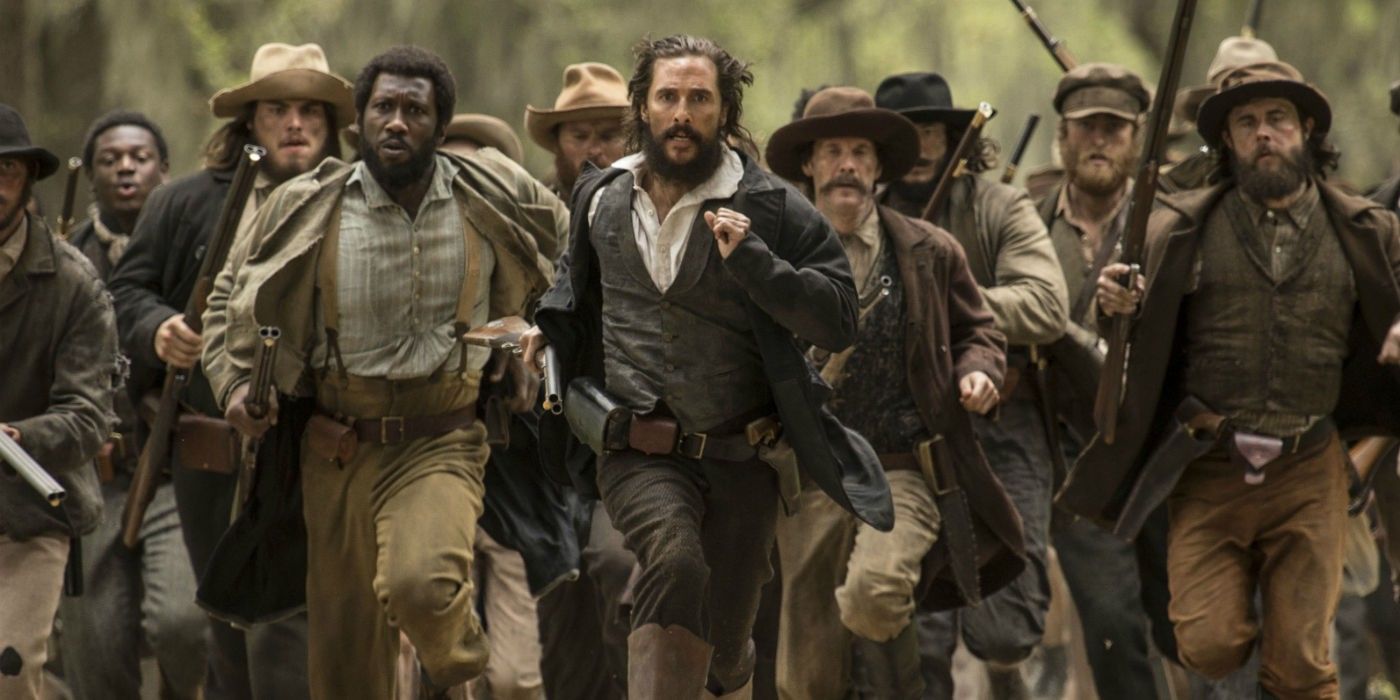
So, being a bit of a history and geography buff, I had somewhere heard a story about Jones County, Mississippi succession from the Confederacy, but I mostly recalled it as a curious little blip on the history of our country, and frankly, I wasn't completely sure how real the story was. But, yes, the "Free State of Jones", succeeded from the Confederacy, led by Newton Knight (Matthew McConaughey) a deserted Confederate soldier who led a group of other Confederates as well as some runaway slaves, led a rebellion against some of the Confederates soldiers, who were basically raping the poor of civilians of both their men and their property, seizing ten percent of food, and everything else. This was upsetting to Knight, for several reasons, not the least of which that, the rich in the South actually didn't send their men to war.
The film was directed by Gary Ross, who's one of my favorite directors normally although he's been erratic in recent years, but I don't think he's ever been bad. It's clear that he's made note of as much of the actual history as possible, and he even brings this up mentioning it's accuracy to events as close as he can. Still though, the movie falters with some of the more boisterous elements, the numerous speeches got on my nerves at times. There's a lot of them, and while there's a lot of action and sorting out the politics, and laws of the world, and a look at some of the infighting. It's ultimately exciting in the moment, but not as memorable afterwards. You do get the sense that this story might be more interesting and nuanced if it was, say an "American Experience" documentary episode or something.
The Free State, actually remained in power well past the Civil War and it wasn't until the end of Reconstruction did things really start to slow down and, well the progress would get reversed, and then it turns into a more accurate portrayal of "The Birth of a Nation", the D.W. Griffith one. (Sigh) History sucks sometimes, but still, for a good decade there was a small sliver of Mississippi where Blacks and Whites, men and women, fought side-by-side with each other and held off, technically two countries and managed to keep itself running as a microcountry under some of the most progressive laws of the area. It's accomplishment worthy of a film, and I'll take this one. There's some great performances all around, I particularly liked Gugu Mbatha-Raw and Mahershala Ali's work in the film.
KATE PLAYS CHRISTINE (2016) Director: Robert Greene
★★★★
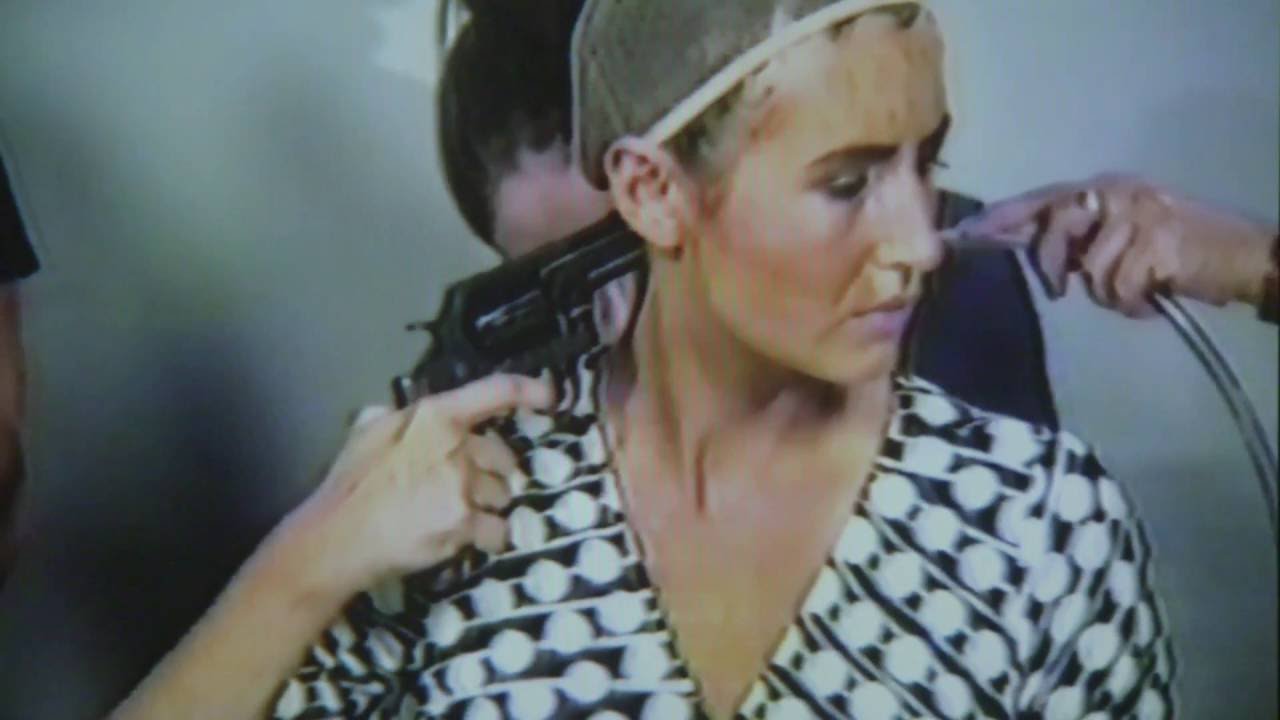
“As far as what Christine did that afternoon, it was a total waste of time, total waste of one good bullet and total waste of the people that continued to talk about it, because it accomplished nothing….” ---SNN Broadcaster John Hill
That statement's made near the beginning of "Kate Plays Christine," a movie that I, was not looking forward to. Some of you might remember my review of "Christine" a little while back, a movie that, despite, for all-others intensive purposes, was technically, I couldn't force myself to give a positive review to, partly because of it's subject matter and how it was treated. The movie was a profile of Christine Chubbuck, the infamous local news broadcaster known for being the first person to commit suicide on live television. I didn't write a normal review for that matter, I more or less wrote a dissertation, on frankly, why we shouldn't make a movie about her, on why the modern fascination with her, is frankly just perverse. I'm not gonna retype the whole thing, but you'll find it, at the link below:
http://davidbaruffi.blogspot.com/2017/09/movie-reviews-140-la-la-land-fantastic.html
And you should read that review, 'cause a lot of my thoughts are echoed in this strange documentary, "Kate Plays Christine", which coincidentally does something that I happened to have at one point strangely did, look deeper into Christine Chubbuck. It's done through the perspective Kate Lyn Shell an indy actress most known for her work on shows like "House of Cards" and "The Girlfriend Experience", here, she's been hired to play Christine Chubbuck and she goes down to Sarasota, Florida, to investigate her and her life, and what she means in the industry, including interviewing people who knew her personally or professionally. Anything that gets her to dive into the character. What surrounded her, things about her, etc. She gets a tan to look like her; we see her adjust her hair and costume, practice lines with other members of the cast, possibly shoot some scenes. She visits the places she lived and frequented. Still, a few things are off. The movie talks extensively about how she was the influence for the movie "Network", which , no, she wasn't, but they mention it a lot. There's also a lot brought up, about video footage. Not the suicide footage, but just, any footage of her that exists. This, confused me a bit, 'cause while it is hard to find some footage of her, just reporting, it's not impossible; it takes a search or two, but there's several clips of that running around. She finds some eventually, from a fellow reporter who she interviewed, but I did find that somewhat confusing at first. For one thing, that would be the first thing I would've looked for as an actor, if you're portraying someone in real life, find footage of them; it seems weird that that would take so long.
The movie seem to collapse and basically turn into another-albeit-different meditation on Chubbuck life and image than the other film was, and I was ready to pan this film as well, for basically the same reasons I panned the other one. And, then, it got to the end scene. The scene where Kate has to do the suicide scene.... I'm trying hard not to give this away, and, I was legitimately mouth-open, shocked at what happened next. I don’t care how difficult this is, stick around for the last two minutes of this movie; it’s probably the best twist ending I’ve seen in years. I’m not gonna say how, they did this, but they do it. Maybe, part of this, is that it's somewhat pandering to my perspective on Christine Chubbuck, but I bought into it, and perhaps, it's because the filmmakers came to the same conclusion I did, but, I came out of this movie smiling. It's a cheap trick, storytelling-wise, but it's done elaborately well, and you know, if it's true that the best way to criticize is to make another movie, or to criticize anything is to make a movie, this movie, does that, very well. Unexpectedly well. I gotta give it credit for that.
BORN TO BE BLUE (2016) Director: Robert Budreau
★★★

"Born to Be Blue"is one of the stranger biopics I've seen. I'm still not sure, it completely worked, but it is fascinating enough in the attempt that it makes me think about it. Of course, that could just be the performances, Ethan Hawke's performance as West Coast Jazz pioneer Chet Baker received some Best Actors critics prizes sporadically throughout the 2016 Awards season, and I can understand why. This is a charismatic performance about a character who's arguably more important aspect of his success was his charisma. The movie begins, kinda in a similar way to Kevin Spacey's biopic on Bobby Darin, "Beyond the Sea", where the character is starring in a biopic film about himself, although, that actually almost occurred in real life, however, and the movie, uses that fact, and presents us with an alternative reality where they got at least part of the movie done, and Chet begins a relationship with Jane (Carmen Ejogo, also really good here) the actress who's playing a composite of several other Chet's previous wives and girlfriends. So she's acting as several characters as we zig-zag through his life from the fifties and sixties and then we see the two of them together in "real life" struggling with Chet's latest aspect of his stalled career. This latest one being, having most of his teeth knocked out, after being attacked by a former drug dealer of his. That's a severe career backslide for one of the best trumpeter's alive.
I'm not overly familiar with Chet Baker's work as a musician, which I think benefitted this film, 'cause it wasn't as focused on the music as other music biopics are, although the music is prevalent and from what I heard, I loved, and I liked seeing him struggle to regain his abilities after losing them, something that had happened before as he once upon a time, loss a front tooth when he was a teenager and spent a year regaining the use. The movie's main focus however was on his heroin addiction, something the movie informs us, he never got over. He actually became pretty big as a vocalist for a bit as well, and later in his career, while not big in the pop culture, critically, his last comeback that stretched the '70s and '80s 'til his death made him legendary. This film, focuses on that struggle to regain his skills. It's an imagined version, with aspects like working at a gas station for years for money while he recovered and taking any job he could, including the most demeaning of work before he was ready to enter the jazz scene again are interesting and funny.
There are several other projects on Baker, both in the works and previously that one could look at film-wise to learn more. It does feel like this is the right approach to Chet Baker's life. There's the classic image of cool from his beginnings constantly clashing with the real aging junkie who's in constant comeback and struggle mode, and I think the movie does about as good as it could in trying to piece together these sides in something that-, not necessarily coherent, but just tries to piece it together as some sort of narrative. I doubt if it's a definitive look on Baker, and, I'm not even sure this approach even really works, as an approach to filmmaking, but I think it's interesting enough. Compared to the other non-traditional jazz biopic from this year, "Miles Ahead", with Don Cheadle as Miles Davis; I think I prefer that one, but there's a lot here as well. It's worth a watch, just to see what you think about it.
MAGGIE'S PLAN (2016) Director: Rebecca Miller
★1/2
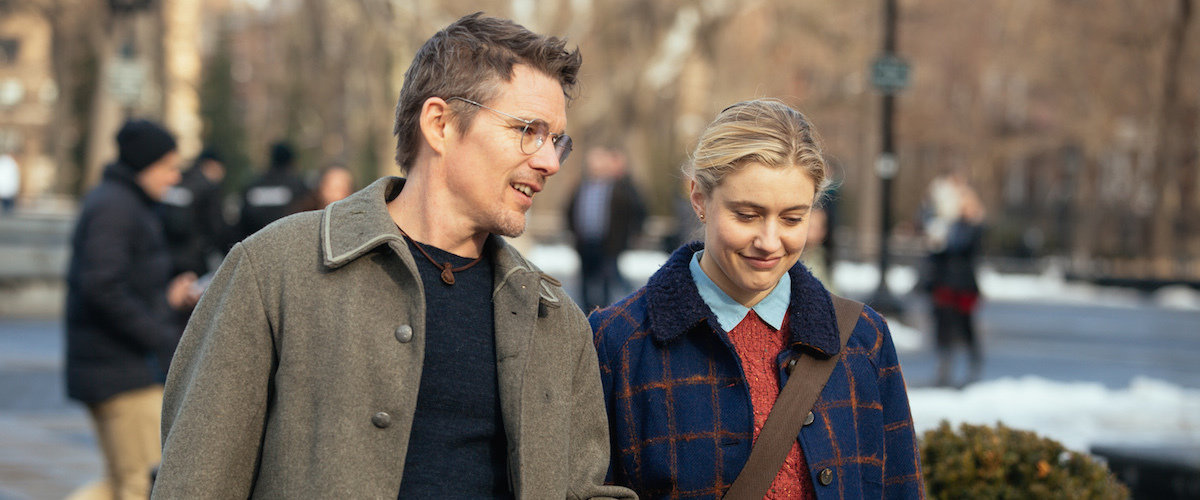
"Maggie's Plan" is not quite the idiot plot, but it is fairly stupid.
(Sigh) Okay. so Director Rebecca Miller is one of those jack-of-all-trades, master of none types in Hollywood. She's somebody who's always around, but you're not sure what she's gonna do next. It's often just as likely for her to write a novel or act as it is to direct a movie. (In fact, she has a small role in "The Meyerowitz Stories..." that I failed to mention in that review) About the only person who shows up more irregularly than her is Daniel Day-Lewis, who happens to be her husband, so, yeah, they're perfect for each other. I think this is her first, straight-up comedy; she's usually makes something much more dramatic, in some way. I, ironically happened to mention her film, "Personal Velocity" recently, which was based on a book of hers. "Maggie's Plan" is her script, but not her story; that's from the Karen Rinaldi book, "The End of Men", although this feels like she could've taken a crash course in Woody Allen and Nicole Holofcener and spewed this out. There's maybe a little Noah Baumbach in there too.
So, Maggie (Greta Gerwig) is a single post-grad who works at an administrative position at The New School. However, she's getting up in age, and is still very single. However, right at the time, she decides that that will remain her fate, she meets John (Ethan Hawke), who's got one of those specialties I'm certain only exists in movies like these, he's one of the world's foremost "ficto-critical anthropologists." (Long thinking pause, [shrugs]) Based on the rest of his characteristics, I think it means, he's writing a book, which he always is, a very long book that Maggie reads and finds fascinating. Soon enough, she's pregnant, and he's now left his boring and uninterested wife, Georgette (Julianne Moore) and they soon get married and she's now staying at home, watching both her kids and her two stepkids who've moved in while his wife becomes famous on her work.
So, at some point, Maggie realizes that John is still in love with Penelope and finally goes to meet with her, and they concoct a plan that will entice John to leave Maggie on his own and go back to Penelope. How? (Sigh) I'm not explaining it, it's too dumb, and it's exactly what you would think it is anyway. I've seen quite a few people recommend this film, quite heavily in fact, and I'm just not sure what they're thinking with this one. There's so many better versions of this idea, of these characters, this story, even this sorta dumb idea of people scheming in order to emotionally cripple their lovers, that goes back to Shakespeare times, and it was dumb then, but it was also done better then.
When we see characters like these, in some of the other filmmakers who use these motifs, the characters, are usually more depthful, usually more observant and self-aware, actually are knowledgeable of their behaviors, and often are, if not stands-in or representatives of something or someone greater, they were usually believable or serious enough that, while some of these movies, might be comedies, they would be believable characters if the story, was a comedy or a drama, and this is a narrative, that can be done, both ways, the material's there and can be twisted either way. Hell, that's something that might've improved this narrative actually, "Melinda and Melinda" this, but instead, you end up with, kinda half-way between both and neither being, acceptable.
There's good aspects, like around this movie, Maya Rudolph and Bill Hader have some good performances at the edges of the screen, and none of the performances are bad, but if you think about the idea and the perverse execution of it, it's so bizarre that, you don't quite know what to make of it. This is another one of those movies, that, on the surface seems harmless, but the longer it seeps in, the less tolerable it becomes.
And, it's not interesting or funny that the kids is a mathematics expert at the end, and I didn't mention that whole prologue, but,- I mean, what am I supposed to learn or care about that for?
FRANCOFONIA (2016) Director: Aleksandr Sokurov
★

So, I've found that people are usually surprised when I hate something that's quote-unquote "popular", I don't know why; there's a whole field of criticism out there that analyzes the backlashes to popular movies and other forms of entertainment, although, mostly I'm naturally skeptical of something being popular to begin with, and usually when there's something that there's a backlash too, I was probably the one yelling about it at the time about how lousy it was, and everybody eventually just caught up with me; so, yeah, that's a dumb form of criticism. It's when something's criticalyl huge that I don't think was any good, that I actually think is far more interesting. One film that I've always dismissed that's huge in critical circles was Aleksandr Sokurov's "Russian Ark". The reasons it's typically considered a masterpiece is the technical achievement of it; the movie was shot entirely in one take, taking place at the Russian State Hermitage Museum and was a journey through Russia's past. It's the first movie that had, no cuts in it it all, just one long take, something that, previously was not possible beforehand. Now, I always liked things with that formula, or attempts at that formula, Hitchcock's "Rope" comes to mind, and more recently the underrated German film "Victoria" pulls this off amazingly well, but I hated "Russian Ark". I'm normally a history and museum buff, but this was just boring. One you get used to the effect, it wasn't much more than a meditation on Russian history, which..., well, let's be fair, it's not the best history for meditation purposes.
France, on the other hand, is a better country for that, and the Louvre is a more obvious museum for such a journey, and while Sokurov chose not to use the one-take gimmick here, I despise this movie for the same reasons. I saw it, directly after I posted my Top Ten Worst Films List, was immediately annoyed that I didn't see this earlier, 'cause it would've made the list. (So to all those people pissed at me for "Popstar..." being on there, consider yourselves vindicated, although you're all still, being way too lenient on that movie.)
I tried to appreciate "Russian Ark", but just because somebody does it first doesn't mean they're doing it best, and I get what he's trying here, but he's so fascinated on pontificating on the history of, well, history, that I can't really read his work as informative or intriguing, at least to us, I want to be compelled to learn and instead, but...- the way he takes footage and narrates this tale about the history of the Louvre and how it was constructed and protected through time and it's a good story, but it's not well-told. It's like he's telling it, because he wants to tell it, not, to teach or instruct or inform, or worst than not doing any of that, not in an entertaining way.
This is the kind of movie that gives the term, "Meditation on" a bad name. That's not a negative term, inherently, some of my favorite documentaries are tonal poems of meditations on something, the small and minor details and sometimes it's on parts that reflect the greater world, and it can be so enthralling and enlightening to go through something like that,..-
And then you get a movie like "Francofonia", where, you're not meditating, you're just putting up with the damn thing until it stops!
Does he have an opinion on the Louvre? He cares about art, Sokurov, and the preservation of it, but if he actually has an interest and something to say on the subject, he's not doing it well. I love geography, that's a preference subject of mine, but I don't try to express my affection for geography by listing off a bunch of facts about geographical places and calling it a movie. That's masturbation, that's not entertainment; that's basically the different between art and pretentiousness, in fact.
I mean, compare this to something like, Frederick Weisman's "National Gallery", which I didn't particularly love either, but it helped you gain a sense of that museum by humanizing, to it's bare bones, it was through behind-the-scenes aspects that help you truly appreciate the details that go into a piece of art, but you can do that, by exploring it's history as well but Sokurov seems to just want to mythologize art, Try to piece it in it's place in history without being able to truly appreciate the present it's left us. He's the annoying guy in the museum who pontificates forever and does nothing but talks and talks about the painting, but has never actually picked up a paintbrush and tried to make a piece of art of his own. That's the same way I felt about "Russian Ark" and that goes double for this movie, which doesn't have an interesting gimmick to fall back on and justify
Sokurov's most famous quote is as follows:
"There are no geniuses in film. It's not that sort of art form where you can create a perfect masterpiece. Literature, yes; music, probably yes; but never, ever film."
I hate to go with the obvious put-down, but.... No, he's wrong, there are geniuses in film; it's just that he's not one of them.
FOR THE LOVE OF SPOCK (2016) Director: Adam Nimoy
★★★
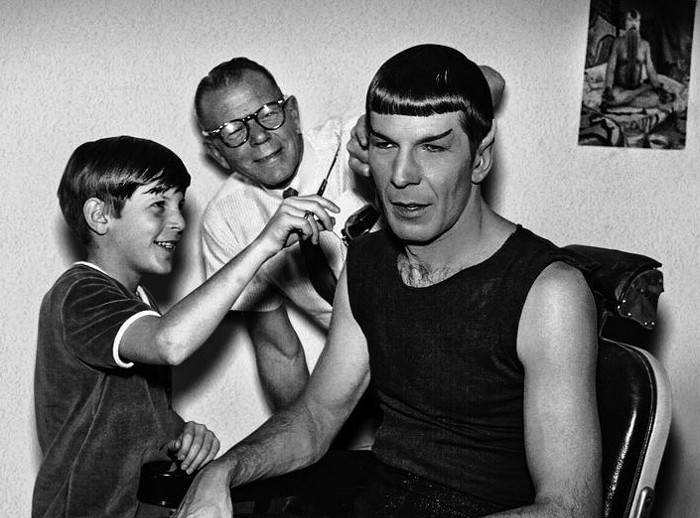
The only real insight I've ever gotten into Leonard Nimoy came secondhand when, I attended a guest lecture from James Orr, who wrote, among other things wrote the screenplay for "3 Men and a Baby" and he had a funny story about having to talk Leonard Nimoy into directing that film, which he did, and it, actually holds up by the way. Although the way Mr. Orr described it, it seemed like, their was tension on the set, and Nimoy, really wanted to play the Tom Selleck role. That's about the one singular take I got from "For the Love of Spock" as well, a love letter from Nimoy's son. There's other things too, of course. The movie originally was intended firstly as a, sort of a bio-documentary on Spock, not Nimoy, but after his father's passing, the project changed, and became both a look at the man as well as the character that he's most known for. It's a shame that he's most-known for Spock; it probably has damaged his acting career, even though, he worked regularly and extensively for most of his career. He never seemed dismissive of his most famous role, although he sued for royalties as his image and the popularity of his character continued to grow. Personally I actually admired some of his "Mission: Impossible" stuff, and his stage work is rather impressive as well. He took any job he could, even if it was some demented children's TV musical whatever-the-hell-that-was where he was singing the story of "The Hobbit". I suspect that he had greater range than we ever really got to see, but he also had a wider range of talent and skill though. I didn't know he had a prolonged music career, that frankly wasn't half-bad. For those love Nimoy and Spock, they'll get hat they're looking for out of "For the Love of Spock"; it's a wonderful personal film, of a son's tribute to his father, and it does that well.
I am amazed at how many different ways people relate to Spock, ways I never thought of; although I was always more a Data guy, so maybe that was only intrinsically appealing to me, since I never pondered Spock as much before. (Shrugs)
MIDDLE SCHOOL: THE WORST YEARS OF MY LIFE (2016) Director: Steve Carr
★★★

Well, (Shrugs) points for title accuracy. I think we can all pretty much agree that middle school was awful, right? Elementary school's is okay, high school is for the most part, fun, Middle School is just hell. It's feels like it's pointless (It basically is), there's an abundance of strict rules and behaviors, everybody's at their most awkward, everybody's going through a wide array of emotions that they're all confused about...; there's a reason you don't see too many movies detailing those years. Pretty much the only movie I ever thought was remotely accurate about Middle School or Junior High, and some obnoxious schools in my area insisted on being called, (I'm told there's a difference, but I'll be damned if I know what the hell it is.) was Todd Solondz's "Welcome to the Dollhouse", which I really need to get around to re-watching at some point.
Ah, "Middle School: The Worst Years of My Life" isn't that nuanced however. This is basically a Nickelodeon movie and everything good and bad that that entails. (Or, I guess, today it would be considered a Disney Channel movie, but this feels more Nickelodeon to me. The Disney Channel I grew up with was much more refined back then. [Who remembers "Under the Umbrella Tree", am I right?]) The story centers around Rafe (Griffin Cluck) this franchise's Ramona, a creative young man, who draws characters and worlds in his notebook, to take his mind off his struggles at home. Which include his single mother Jules (Lauren Graham) who's constantly working; she's a chef, and when she's not, she's constantly falling for the wrong man, this latest one is called Bear (Rob Riggle) who's horrible in all the cliche ways. His real conflight however, ends up with the Middle School Principal, Principal Dwight (Andrew Daly), this film's Warden Norton. He a corrupt hypocrite who's a stickler for the rules, and who's got no sense of humor for parody. Eventually, he decides to basically "Home Alone" the situation and begins spending all his sabotaging the Principal, who he correctly perceives as being against him, but of course, he's got all the leverage, since Rafe's a troubled student and this is the last Middle School he's allowed to go to, or else it's military school for him, according to Bear.
Apparently this is based on a popular young adult series from James Patterson and Chris Tebbets, and-, wait, wait-, James Patterson? That James Patterson? Really? (Google searches) Okay, yeah, that James Patterson. Huh. Oh-kay; that's kinda like finding out Stephen King was secretly the author of "The Babysitters Club", but alright, whatever. Honestly, I don't quite know what to make of the movie. I don't normally judge a movie based on whether-or-not it's "For me", but yeah, I have a difficult time imagining I'd ever voluntarily seek this film out again. For what it is though, it's kinda fun I guess. There's some good performances, some of his prank ideas are actually quite creative and inventive, and despite this being a total fantasy of Middle School, I kind like how it does subliminally take a shot at the institution It kinda works on that note. I'll give it a pass; I guess it's fine. I still think there's some most justifiable shots to take at the Middle School institution, but, oh well... some other movie I guess.
TRESPASS AGAINST US (2016) Director: Adam Smith
★1/2
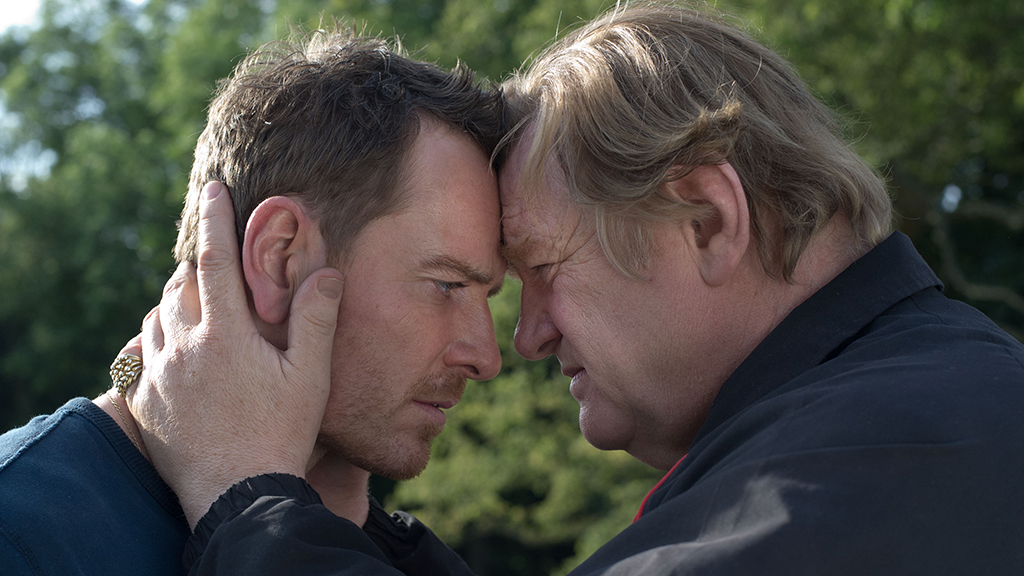
Jesus Christ, am I finding some bad reviews of this film. It's technically got a 56 on Rotten Tomatoes and has split the Top Critics, but man, the negative reviews I'm reading are really going after it. I'm not saying they're wrong, it is shit, but, boy, I'm not sure this movie deserves this much venom. A lot of it stems from the fact that across the pond in North America, anyway, it made it's debut at the Toronto film festival which is generally considered by most to be the beginning of Oscar season, so yeah, putting that up against things like "Moonlight" and "Paterson" and "Nocturnal Animals", sure, the movie's flaws become more apparent, and I can tell you from experience there is nothing worst than missing a good movie being screened at a film festival because you were there in the middle of a screening of a bad one.
That said, "Trespass Against Us" is just more misguided than anything else. The movie is about the Cutler family, a multi-generation group of thieves, who somehow seem to be constantly be able to evade the law and have several dozen family members living in some secluded area of the woods that apparently, no one can find. My guess is that, this is supposed to be a sort of Robin Hood-like structure family unit, or something romantic like that, that maybe isn't supposed to be literal, but- well, first of all, these aren't exactly thieves in the name of good; they're just criminals. They're led by an aging patriarch, Colby (Brendan Gleeson) and the main drama is centered around his son Chad (Michael Fassbender) who's trying to, I guess get out into the world. His kids are in a regular school for instance, so he's trying to escape, but he's sorta still with the family. Basically, the father's educated in some way, but he's kept the family dumb, so they basically only know this lifestyle and they're a little blocked when it comes to manipulating the modern world. At least, that's how I read it.
I guess there's some kind of communal, "You Can't Take It With You", also going on, but I think that was supposed to be the major through-line.
Eh, it's a nice idea, the director has some talent and ability; it's Adam Smith's debut feature, although like a lot of first-time British director, they're more well-known for directing television, most notably, the miniseries, "Little Dorrit", based on the Dickens novel, but, I think a better version of this kind of narrative is "Captain Fantastic", which also had more interesting and unique characters. Honestly, none of these characters are really that compelling. They're well-acted, sure, but Gleeson and Fassbender in particular, the biggest names in the film,they're basically playing versions of other more interesting roles they've played, so it's at a disadvantage.
It is a bad movie, and it does get worst the more I think about it, but I think I'm giving it a slight pass comparatively, 'cause it was just a failed experiment, to try to take a narrative that's better-suited for a more fantasy-based story, and trying to place it into a modern setting. There's ways to do that, but I think here, the allegorical attempts just fall out of the tree, here.
ALWAYS SHINE (2016) Director: Sophia Takal
★★★

I guess a demeaning-albeit-accurate alternative title for "Always Shine" could be "Actresses", but I'd rather focus on the real actresses' performances 'cause that's the reason the movie works at all. The main characters are Anna (Mackenzie Davis) and Beth (Caitlin Fitzgerald). They're 20-something best friends who are struggling actresses in Hollywood. Beth, can't get any work at all at the moment, while Anna is getting a lot of parts and publicity, although, it's mostly role that are only marginally better than Naked Dead Girl (Such as Naked Girl Who Gets Killed, so you know, lines...), but it's work, and she's beginning to get noticed. Anna, is jealous of it. She's purportedly more talented, but she doesn't have the look that Beth has. Even though they're both blonde ingenues-types, that, are pretty similar-looking... Things come to ahead when they go up to Big Sur for a week-long getaway and slowly-but-surely these two characters start to collide and change with each other.
If the movie is sounding a bit familiar, there are some very obvious films that the movie is referencing, most notably, Ingmar Bergman's "Persona", and yes, this is a movie, you could claim that there's a personality-switch between. You know, come to think of it; I'm not sure why that idea keeps working, especially in film, but in a strange way, it really does, and there's a lot of different takes on it. "Single White Female", "Mulholland Dr." for example. The one I found myself thinking about most in terms of tone and approach, oddly, was Robert Altman's "3 Women", one of his best and most underrated works; I'm a Canon of Film written on it, if you want to seek that out. That one's not about actresses, but it is about jealousy and wanting to take somebody ideal life and personality and adapt it as their own, and it takes place in somewhere out of the way of the big city, and without giving anything away, slowly jumps into the surreal by the end; and "Always Shine" is basically a modern version of that narrative. Smaller scale, sure, it's got lesser-known actors; I've read some people call this a "Mumblecore" film..., eh, I think that's iffy, but I get it. And I've seen other attempts at mumblecore that have fallen a little flatter, and this one's more conceptual more ambitious, more reliant on the acting, really being strong, and for the most part it succeeds.
I wish it went, a little further, however. Despite everything else, this movie is basically about jealousy and a couple love triangles and they don't really go anywhere with it. It's two characters, who's lives and careers can very easily be reversed, and, they show that, and that's basically all that this is, and when you think back on those other movies; there's so much more going on, but I'm gonna recommend this. This is the second feature from Sophia Takal, who is mostly an actress herself, working in and on a lot of these low-budget movies in small roles. This apparently is a spiritual sequel to her debut feature "Green", which has a lot of the same actors and people behind the scenes. I haven't seen that one, so I can't be positive, but she seems like the female poor-man's Tom McCarthy right now, and I'm definitely in favor of that. Sometimes you have to play dead whore in a few pieces of crud in order to make the movie you want to make and some don't want to do that, and... (Shrugs) that's the acting world, unfortunately, and sometimes you need a film like this to rebel and complain about it Totally understandable.
Really like "Meadowland' a indy about two parents and their struggles after their kid suddenly disappears one day, reminded me a lot of Kieslowski's "Blue" actually. I also really enjoyed "A Royal Night Out" about V-D Day and Princess Elizabeth and Princess Margaret escaping their chaperones for the night and having a night on the town. I'm an American, I love seeing the royal family during their private time, especially when they're getting into trouble, I can't help it.Also go to a few older films, the Czech New Wave feature, "A Report on the Party and Guests" that's an interesting, good one, 'cause had a Bunuel feel to me. I got around to Neil Jordan's "Breakfast on Pluto", finally; that's been on my damn Netflix forever and I rather liked it. You forget how good an actor Cillian Murphy can be sometimes, and he was impressive there. I'm also periodically catching up on my older Hitchcock and I finally got around to "The Farmer's Wife", eh, not my favorite old one of his, but it was still a pretty good one. I'm definitely still more of a later-Hitchcock guy, but I can appreciate that one.
Alright, let's get to it; let's kick off this latest edition of our MOVIE REVIEWS!
BEAUTY AND THE BEAST (2017) Director: Bill Condon
★★★1/2
(Annoyed sigh)
So, we're really doing this, Disney? Okay, let's fuck with perfection, shall we, not like there's anything better to do, I guess? Let's dig into this live-action bastardization of the best Disney's offered, "Beauty and the Beast", or as I call it, "Beauty and the Beast: The Vindication of Lefou" (Josh Gad)/
Yeah, I have not been that enthralled with some of Disney's attempts at digging up their past works. I mean, conceptually I get it, but for a critic like me, this has been a process that's mostly gotten erratic-but-dwindling returns. That said, I haven't complained about it too much until now. Of course, until now, they've not chosen to adapt anything that's-, (sigh) this might be somewhat sacrilegious to say, but, they haven't gone after any of their really special properties, until now. I'm sorry, I've never thought "Sleeping Beauty" was that great, and despite it's flaws, I think I actually prefer "Maleficient', and "The Jungle Book" has really never been particularly good to me, and boy did I think making a live-action version was the wrong choice. (That nearly made my Worst Film List) But, you know, at least they tried to improve it. That said, of all of Disney's hand-drawn works, not only do I consider it Disney's best of it's Renaissance, I think it's the best film Disney's done, period. (Which I always thought was the consensus, but apparently, there are some people who really like "The Lion King" out there #Shoutout #GeekCastRadio.) So, let's get to the big stuff first, the bad changes.
First off, we see the opening sequence with the Old Woman and the Rose, which makes particularly strange and nonsensical in hindsight. Second, the whole town is apparently caught up in this spell, not just the castle. Actually, that's not a horrible change, but it does lead to a really bad loophole in the script involving Gaston (Luke Evans) who's treatment of Maurice (A wonderful Kevin Kline) is particularly troubling in this version. (Yeah, shouldn't be jailing Gaston, after it turns out their is a Beast (Dan Stevens)?) Next bad thing, way too much emphasis on the Castle staff, especially in terms of how he's linked the story. There's some scenes in this movie, that shouldn't just be taken out because in the wrong light, you can read Belle's (Emma Watson) love of the Beast, partially coming out from her desire to free the staff, and I don't think that's right. The whole point of the story is that Belle and Beast are to see each the real person within them and fall in love on their own, despite everybody and everything else, and they come this close to basically eliminating that almost entirely at some points. This almost means the romance is a little more quickened than it should've been, and certain parts of the movie, differ enough from the original to annoy, because they're not getting the effect the original.
That said though, I'm still recommending the film. It's got problems, but it also has some interesting nice additions. Yeah, I'm not above adaptation, hell, it's "Beauty and the Beast", there's dozens of adaptations of this story, hundreds even; I don't even think Disney's is the best one, that belongs to Jean Cocteau still. I like that Maurice is more of an artist and not just an inventor, and I like that we actually get a bit of a look as to Belle's past and what happened to her mother.
As an adaptation, it's fine. It tries some things, they don't all work, but they're adapting a classic, and you know, I'm more angry because of the unnecessary aspects of it. Honestly, I think where it falters most is when they're doing something that I think would probably be a better fit for the stage than on screen. I know, there's all the special effects character, but the way they did, say Gaston's song, felt more like, how that might be done on the stage, instead of on film. Some of the additions story-wise feel that way too, including my allusion to Lefou's inner conflict over Gaston's actions. That feels like it would fit on the stage moreso than here. I wonder how much of this was inspired by the Broadway musical version actually? (Shrugs) Anyway, I don't think this is great or anything, and I would be showing kids the animated version before I'd show them this one, but, it's not awful or anything. Sure, it's "Beauty and the Beast" how bad could it be, but still,....
MUDBOUND (2017) Director: Dee Rees
★★★★1/2
Dee Rees has quietly become one of the most important voices in filmmaking over the last few years. Her debut feature film "Pariah", about a teenage African-American lesbian struggle with coming out to her family was, probably underrated by most, including myself, and I admired that movie a lot; I probably should go back to that one honestly. Her last work was the TV movis biopic "Bessie" about the great blues legend Bessie Smith, and now comes a sweeping tragic epic called "Mudbound", that examines two families, one white and one black, and the struggles they both go through living in the Jim Crow South, both before and after World War II.
Plotwise, I'm gonna skip to the middle of the story, 'cause it doesn't quite get going until then, but after World War II, two soldiers in the families come home. For the McAllen's, led by a struggling business agriculturalist Henry (Jason Clarke) and his intellectual bookish wife Laura (Carey Mulligan) Henry's younger brother Jamie (Garrett Hedlund) comes home from being a bomber pilot over Europe. Later, when the Jackson's, Hap and Florence (Rob Morgan and Mary J. Blige) the tenet farmers who take care of Henry's land, son Ronsel (Jason Mitchell) comes home from being a tank commander under Patton, these two more free-spirited members of their families meet for the first time. Both of them, lost and home, find a connection as they struggle to figure out what to do with the rest of their lives. Both begin by working on the families' farm, but both have personal and professional ambitions elsewhere. There's other narratives going on, all through the edges of the story. Other characters who seem to drift in and out of their lives, and perspectives. The movie, based on a novel by Hillary Jordan, switches between several different narrators, not quite randomly, but just enough to a larger sense of the Mississippi Delta and the personal thoughts and lives of these characters. More than that, you get different viewpoints, and I think that's why this is done, because, ultimately, this movie comes down to perspective. How people see things and how people look at the world.
Both are black sheeps to the heads of their households, and both have seen more of the world. Henry's had a crush on Laura from moment one, and she's more cultured and empathetic than her husband, both mostly, even before the war, he was a natural drifter, making them the ire of the family patriarch, his father Pappy (Jonathan Banks), a mean old racist bastard who, somehow still managed to keep a hold over the family and the community even. Ronsel meanwhile, thrived in a world where people weren't judged on the color of their skin, but on their character, and he left more than a part of himself over there, knowing that somehow he would eventually return, even if that meant the dreams of his father of running a farm, were sketchy at best, but he was already struggling over the crops and had to rent a mule to finish on time, which meant he was more in debt to the McAllen's than he'd like to be, and his wife would take a second job with them, helping Laura raise and keep the kids healthy. (She was already a midwife on the side, this was a more permanent position.)
One thing that I think is clear, is how the truly racist aspects, of the people, are only situated into an insufferable few, who demand that conditions be kept at status quo. That doesn't mean that all the white people aren't racist, Florence, in one of her monologues even notes how Laura's changed her mind on that belief, but how the extremes of the few, becomes the way of the world for all, and just how many people exactly get punished for their sins.
The title comes from a scene in the beginning involving the two brothers, who nearly get caught trapped in a mud-soaked grave of a slave they were digging, when the other managed to just barely bring him back up, and the movie is about how everyone in the area, is inevitably, "Mudbound", whether they earn or deserve it or not. "Mudbound", like that metaphor is powerful, albeit, probably somewhat too lofty in it's goals. but in terms of creating a real sense of a-, well, what me and most everybody else presumed had died long-ago, but America has a way of remembering the past as being a lot farther away than it is, which is probably why movies like "Mudbound" that remind us that it isn't, hit so powerfully.
THE BIG SICK (2017) Director: Michael Showalter
★★★★1/2
At first, I was somewhat dismissive of "The Big Sick". I had heard that the story was based on Kumail Nanjiani's real life romance with Emily Gordon, who co-wrote the script with him, but in the beginning I had feared that we were going into some well-worn territory. I saw the sequence where the parents, Azmat and Sharmeer (Anupar Kher and Zenobia Shroff) were having several young Pakistani women, "dropping by" every time Kumail was home for dinner, all set-ups in an attempt to arraigned a relationship and preferably a marriage, and all I could think of was that same sequence from "My Big Fat Greek Wedding". I know, it's a cheap shot, but that was my first instinct and, eh, yeah, I don't know how many of you have gone back to see that movie recently, but it doesn't hold up on multiple viewings as much as people would think. The parallels are definitely there, pressure from family meets conflicts with love and romance, plus they're both personal stories based on the creators' own lives.
Then, the story took a turn, one that,- well, for one thing, it made me understand the title, but also, made this film a lot more deeper and poignant than it probably had any real right to be. Kumail (Nanjiani) meets Emily (Zoe Kazan, 'cause perfect casting) at a comedy club where he performs and she heckled him nicely for a moment, and they had a slight connection. She studied to be a therapist and is very not-Pakistani. So much so, that Kumail doesn't tell his family about her, and they continue to set him up with the latest drop-ins, some of whom, would probably be pretty decent partners as well, but they're starting to fall in love, and then they have a bad breakup. Everything seems like it's a normal roadblock and then he gets a phone call from a friend of Emily's, informing him that she's sick, like, really sick, and is in the hospital, and at some point, the doctors are forced to put her in a medically-induced coma, while they try to figure out the best way to fight the infection.
After Kumail signs a form allowing the doctors to do that, in a very well-written scene, he contacts her parents, Terry and Beth (Ray Romano and Holly Hunter) and they fly in from North Carolina and essentially take Kumail's place waiting at the hospital, but Kumail decides to stay anyway. At first, they were apprehensive about it, they knew about him and their daughter and they're not sure why he's even there. That said, shared trauma has a way of knocking down emotional walls, as well as putting up and rebuilding new ones and eventually as Emily's condition becomes more and more unclear, they begin to bond, and both the parents and Kumail have to confront some emotional truths that they've let build up for awhile. It's subtle how it's done, and sure there's some explosions in their behavior and inopportune times, but the moments were deserved and it all worked.
Kumail Ninjiani is most famous for his work on "Silicon Valley" although he's also a strong stand-up and here's a wonderful little rom-com that's about a clash of cultures in ways that I haven't seen done before and are done incredibly well. The acting is strong across the board, Holly Hunter's getting some Oscar buzz for the role; I'd be happy to see that. Ray Romano is also really good here; he doesn't get the credit for being a good actor a lot and he really is. "The Big Sick" is just really well-crafted and well-made. It's the kind of smart rom-com I would've expected James L. Brooks to make back in the '80s and '90s, and I'm glad to see it come back. I hope this couple have more than one good story in them, but if it the only one, I'll take it.
THE MEYEROWITZ STORIES (NEW AND SELECTED) (2017) Director: Noah Baumbach
★★★★1/2
"The Meyerowitz Stories (New and Selected)" only falters when compared to the film that it clearly is most inspired by. It's the latest from Noah Baumbach, who has just been making good movie after good movie for awhile now; lately it's been with actress/writer Greta Gerwig, who's off writing and directing on her own films now, but he's also worked heavily with the master of the quirky family film these days, Wes Anderson, and "The Meyerowitz Stories..." I can't help but feel like it's a Baumbach re-working of Anderson's "The Royal Tenenbaums". That's not a negative by the way, but it's pretty clear and some of the comparisons are pretty uncanny. You got three siblings, who each have been effected heavily by their matriarch father, each sibling has some connection to the arts, there's a lot going on and there's some really great performance holding this together. First we meet Danny (Adam Sandler, once again proving that under somebody else's supervision than his own, he can be a talented actor.) a recently-divorced house husband, whose daughter Eliza, (Grace Van Patten) is attending The Bard, which is where his father, Harold (Dustin Hoffman) taught sculpture for decades, only recently retiring. He's married to latest wife, Maureen (Emma Thompson) who's mostly a walking mess, which is slightly better and less annoying than Harold, who's...- well, I'm not sure how to describe Harold exactly. In fact, describing any of these characters, separately, is difficult. They each have some of their own distinctive quirks, and yet all these characters are quite similar to each other. The parallels are obvious, and they become more obvious as the movie goes on. Like how Danny is far more like Harold than he'll ever realize, even to the point of insisting that his continued limp that he suffers through is nothing and he doesn't have a the time and energy to have it checked out, even when he's literally in a hospital, 'cause Harold's in a coma, after he put off getting checked after a dog attacked him, which led to a delayed reaction, with him not knowing that his brain was bleeding. Danny's sister Jean (Elizabeth Marvel) is probably the closest to Harold, as she's constantly the one that's the closest, both emotionally, and geographically, but she's also arguably the strangest of the bunch. Like her brother, she's artistic, making movies for her office mates in her spare time, making her the emotional link to Eliza who's turning into quite an accomplished avant-garde student filmmaker.
Danny and Jean grew up together although with their mother Julia (Candice Bergan in an extended cameo) mostly, not their father, who was raising their half-brother Matthew (Ben Stiller) who became the outcast of the family as he went into financial planning instead of art, although he works with a lot of artists. (If this movie had any real problem, it's that it needed more Adam Driver cameo) He's got the weird dynamic of being the really successful member of the family, but the outsider 'cause he was and is the beloved one of the father, but he didn't follow in the artistic footsteps. Neither did anyone else though. Danny was a talented pianist although he never pursued it, and is basically a version of Harold who never took a career path and is now in the middle of a mid-life identity crisis, and doesn't have the natural instincts to push himself through it.
"The Meyerowitz Stories...", might be Baumbach's variation on Wes Anderson's theme, but that's more than enough. These are really interesting characters, all of them well-written, especially well-acted; honestly- Anderson's not the best example to compare, maybe in plot and structure it is, but in terms of tone, this reminds more of like, a great Mike Leigh movie, like "Another Year" or "Secrets & Lies" or something like that, where we get family confrontations at the center of the screen, but then other subtler aspects at the corners, This film, takes a family and examines it's dynamics between them, and that's what the film's about. And sure, things happen, some characters come in and out, I should mention Judd Hirsch has a good supporting performance as well, as Harold's longtime friend and more famous rival in the sculpture world, but that's substantial only in the fact that we see and observe how everybody reacts to them and to each other. That's a difficult concept to pull off, but you write well, you get the right actors, this can be pulled off well, and it was.
FRANTZ (2017) Director: Francois Ozon
★★★★
Francois Ozon's latest, "Frantz" is a rare remake from him; it's based on the 1932 Ernst Lubitsch film "Broken Lullaby", which is firstly a good reminder that I need to watch more Ernest Lubitsch films. (Yeah, "Broken Lullaby" is one I haven't seen yet, so the story could've been new to me, frankly.) Come to think of it, Lubitsch and Ozon have a quite a bit in common, come to think of it. His films, from the limited sample of "Ninotchka" and "The Shop Around the Corner" that I've seen, his films do feel like the kind of complex but charming character pieces that Ozon's most noted for. Ozon's probably a little more eccentric and random, part of me has still never forgiven him for "8 Women", but most of the time, he these fascinating character pieces, some more quirky than others, arguably one of his best films "Ricky" is his strangest, about parents who give birth to a literal angel, but Lubitsch had fun too between the more serious stuff like, "Under the Sand" about a woman, who's husband very suddenly disappears. I think most know his breakout feature as "Swimming Pool", an erotic mystery thriller that played some twists of the ideas on muses and attractions, while also, having enough twists for fans of the then-popular puzzle movies trend to appreciate. I've like his last two films as well, "Young & Beautiful" a nice movie about a young woman who goes from losing her virginity to working as a call girl in an effort to explore her sexuality, and I really liked "The New Girlfriend" about a woman who help her late friend's husband transition to being a woman.
"Frantz" is a little more artistic, mostly shot in black & white, and doesn't slip the veil too much on what were, I suspect, the more subtle aspects of the story that,-, well, the original was Pre-Code actually, so maybe I better not judge until I see that one,...- Anyway, "Frantz" is the name of Anna's (Paula Beer) dead husband; he was killed in action; this was a couple years after World War I, and he was a German soldier. She's a young widow who still grieving, but curiously, she finds out that somebody's other than him, has been laying flowers at his grave. The man, is a Frenchman, Adrien (Pierre Niney) who was also a soldier during the war, and has traveled a long way to do this. At first, he's not accepted, mostly for being French, as the German wounds we're still not healed. However, it's revealed that they were friends back in College; Frantz had studied in Paris, and the two hung out together, and eventually Adrien becomes an accepted part of the extended family. Essentially, a sort of a, piece of Frantz that's been accepted.
Then, for reasons I'm not gonna explain, they have a falling out fight before he heads off back to Paris. It's then that the movie shifts as Anna journeys to Paris, not only to find Adrien, who's suddenly become missing, but also to connect with Frantz, through visiting his favorite places and hangouts he enjoyed when he was there. "Frantz" is a touching movie about how a person's death can help you find out stuff about them, and oneself that they otherwise didn't know before, and it explores it intellectually, and emotionally. well. I can see this story would still hold up on a remake some eighty+ years later. I would've liked a little more of a modern touch perhaps, there's still quite a bit to like here. Good performances at the core help pull off this material better than it's probably written, and Ozon's on a bit of a roll here, which I'm glad to see from someone's whose got a history of being somewhat inconsistent.
STRONG ISLAND (2017) Director: Yance Ford
★★★1/2
It feels somewhat weird talking about "Strong Island" shortly after having watched "The Witness". I'm not saying documentary is better than another, and they're both good, but their different approaches is highly noticeable. Both are films that look into a New York City from years earlier and from the perspective of the victim's family member, but "The Witness' has a much more, investigatory and detached feel to it; it's way more interested in investigating, and trying to piece together what exactly happened so many years ago. "Strong Island" takes the exact opposite approach. It hints at the fact that, there may have been something off-kilter going on, with a case where an all-white Grand Jury felt there wasn't enough to indict Mark Reilly, a white car mechanic for the murder of William Ford, Jr. an aspiring young African-American youth from a Black neighborhood in Long Island, despite there, seeming to be, very clear indication that the crime, was indeed, cold-blooded murder, but the movie doesn't get to the bottom of anything. Instead, Yance Ford, the younger queer brother of William, decided to focus in on himself and his family. On who William was, on his mother, and her thoughts and fears, on Yance himself, who we often see in close-up in front of a dark background. This motif becomes crucial, particularly late in the film, when there's an effect, involving, what seems to be a black screen, until it isn't.
"Strong Island" seems far more, enclosed and claustrophobic. It doesn't seek out truth, and frankly it doesn't care. Normally that's a bad thing, but it isn't looking for truth, 'cause they know it already. The truth is that one minute they had a talented, smart young man, who had aspirations and was educated with some amazing goals, and the next moment, they didn't. The mother, during one of her several interviews, talks about thinking about him during the funeral, determined that they would get their day in court. Of course that never happened. We suspect why, but we don't know for sure. There's a phone interview with a detective who didn't suspect that the Grand Jury made the wrong call, and there's a piece of information Yance himself reveals late about a previous meeting between Reilly and Ford, that perhaps is what swayed the Jury. That still doesn't explain why, some members of the Grand Jury were apparently reading or in some other way distracted during the mother's testimony. Still though, there's several parts about the murder that still seem suspicious. One second, William enters the garage, following Reilly in and the next, there's a shot heard and the next, he's dead. They claim self-defense. Based on what I can tell, sure seems like murder to me, honestly. They don't seek out to find any of the Grand Jurists, I noticed; I'm not sure how possible that would even be, but I would've liked to have heard their side of the story. And there's certainly no interview with Reilly, who I'm not even sure is still alive to defend himself or not.
But I get it, he's too close. What could he have said that Yance would've believed or cared to hear? Would he even have bothered to put it in? Why, what good would his side do. The thing that makes "Strong Island" so fascinating is it's bias, and how it's about that. It's stuck in these feelings and emotions, and truths that Yance and his family feel and know, forever surrounded in the darkness of grief and everything that that loss incurs on you. "Strong Island" is a deep personal expression of pain more than anything, and for that I recommend it.
ALIVE AND KICKING (2017) Director: Susan Glatzer
★★★
"Alive and Kicking" is pretty much the perfect DVD documentary extra for those who loved "La La Land", a little too much.
Actually, in all seriousness, if I were to ever be a dancer, let's presume, I'm in alternate universe where I'd suddenly be physically capable of making that happen, I would've probably look into Swing music. Swing, which, there's a lot of variants of, more than you'd think, but originated from a style called Lindy Hop, in 1920-'30s Harlem believe it or not, has got to be the most fun and sexy dancing there is. You don't usually get both of those, you usually only get one or the other, but Swing, is way more loose and fun. You have be in shape and athletic to do it, especially if you want to start working on aerials and flips and all, but it looks incredibly fun. And the people seem nice.
"Alive and Kicking" documents the people who keep swing dancing alive through competitions and teaching throughout the country and even the world and traces it's origins and evolutions as far as back as it can. It even got one of the last interviews with Frankie Manning, who was the dancer and choreographer for the very first swing movie, "Hellzapoppin'", or the first one that really showed swing music at it's African-American roots. Sure, the music itself is inspired by the syncopation of jazz, but when you and I are jump, jivin' and wailin', or imagine people doing it, it usually isn't African-Americans; and the subculture itself feels more associated with the sockhop than the chitlin circuit. It's a cult thing nowadays, but it spreads the world. Korea and Sweden in particular have begun being major players in competitions.
The competition circuits are actually fun too, since rules are particularly laxed in most of them. And most performances during competition, even the most extravagant ones are improvised, which makes some sense, when you realize dancers aren't aware of the music they get for instance. There's definitely sexual attractiveness for most of the pairings, although strangely not with their typical dance partners. Flirtatious yes, this is a dance style commonly associate with loose floating skirts after all, but it's also aggressive and active. Swing dancing involves, swing your partners towards and away from you constantly, that's tiring. So, I get it. Chemistry on this dance floor, is probably fun, but probably doesn't translate to the bedroom as much as we'd like to imagine.
Anyway, there's a few personal stories, a couple people using swing to help battle cancer for instance, and some people, well into their '90s or '100s, who still swing dance regularly and remain in great shape, keep the art form alive, and there's one odd motif of people bringing up how disconnected we are with the digital world, and how dancing brings us together. I'm not sure how compelling that last part is, that seems like complaints from the old-times to me, including the younger dancers, but "Alive and Kicking" is just a fun little documentary about a dance style, that frankly could use another comeback. I still have my old Brian Setzer Orchestra albums somewhere, and frankly I prefer this style of dancing to a lot of the more modern approaches, so.... yeah, sure, bring back the Lindy Hop, and really get this party started.
CERTAIN WOMEN (2016) Director: Kelly Reichardt
★★★★1/2
Kelly Reichardt's "Certain Women", (Sigh) bad title aside, begins with a sequence that is probably the most inportant of-the-moment scene in film today. It begins with a lawyer, who's talking to a client. The client's been injured and keeps trying to setup a personal injury claim, but he's already taken money from the company so he's not able to sue. The lawyer, keep trying to explain this to him, but he won't accept it. Finally, they both go to someone local, more prominent, and he explains the same thing to him, and he simply says, "Okay" and gets up and leaves quietly. I didn't mention that the lawyer was played by Laura Dern, did I? Well, yeah, when he hears the same result from a man, he accepts it, and yet he hassles her as though there's something that she should be doing but isn't, and presumes that she's not capable enough for the job.
Based around three short stories from Malie Meloy and tells three stories about women living in and around Montana, and like many of her other films, Reichardt's tells her stories as much with landscape as anything else. I've been give-or-take with her in recent years, for instance, I'm not a fan of her breakthrough film, "Wendy & Lucy" about a homeless woman struggling to raise her beloved dog and take care of herself, but I think I might've underrated "Meek's Cutoff" which was about a family travelling the Oregon Trail. As a story, there isn't much there, but I think I read the film wrong and now recognize that it's the experience of the lethargic pace, and the rustic settings of the western story that I should've focused in more on. I also quiet enjoyed her previous film, "Night Moves" a story about a group of environmental terrorists who plan to blow up an hydroelectric dam. "Certain Women" is definitely my favorite of her works I've seen so far.
The Laura Dern story continues on, when later, her client, Fuller (Jared Harris) raids a building and holds a hostage. in an attempt to rob his old employer, and she's the one who has to talk him out. The second story, is the most disjointed from the other two. It involves a young family, led by it's matriarch Gina (Michelle Williams) who's currently in the process of building her family a dreamhouse, and has takes her husband Ryan (James Le Gros) and daughter Guthrie (Sara Rodier) out camping in the backwoods for a couple days, as she meets with her father, Albert (Rene Auberjonios). Her family's already somewhat dismissive of her, but she continues on, asking her father to collect a bunch of limestone that's lying out on his front yard and has been there for years, as she plans to rebuild her house, using the limestone to construct a wall. Her father's not quite as there as he used to be, and she wants him to be sure to remember when she brings workers to pick it up in a few weeks. The story seems to not make much sense at first, but there's a profound sense of loss and irony in the tale, about trying to build a home out of the remnants of a past one that's still in use. There's a yuppie-ish undertone to it that feels like a progressive of the first story, both being about women in the modern world struggling to make their way through a world control and defined by the actions of men.
This is why the third story is the most interesting, which involves two women in masculine roles, one's a younger lawyer, Elizabeth (Kristen Stewart), who is travelling across the state once a week to teach a class of teachers about law, basically to inform them of the students' rights and what they're allowed to do and not. However, the story's told from the perspective of a character only listed as "The Rancher" (Lily Gladstone) who sat in on the class, for some reason and she and Elizabeth begin having a slight, subtle relationship, once a week at least. It's not a romance, necessarily, but she's infatuated with her, and she starts taking her out to dinner after class every night, and making some small but lovely romantic gestures towards her, albeit unrequited. When she quits the part-time teaching position early, she journeys across the state on a whim, in an effort, just to see her one more time. Two male struggling at lonely male-dominated jobs, that take over their world so much that actual love and romance are barely recognizable to them, and are at best, just out-of-range of their outstretch arms.
"Certain Women", like most of Reichardt's films, has a sense of synecdoche that's both meditative in it's approach, but slice-of-life in it's execution, despite the fact that all three of these stories and all of these characters are distinctive and unique to themselves, separately the events, seem way more blase and typical than they should. A reflection of a modern Americana in tone, if not in actions. This is one that makes you think for awhile afterwards, and for that alone, it's easily worth recommending, and makes you hope more movies that combine short stories like these would be made.
DENIAL (2016) Director: Mick Jackson
★★★1/2
You know what gets me about denial, not the movie, but the act itself? It's that it's really such a petty behavior, when you get right down to it. It's basically the exact opposite of logical and complex thought. It's completely instinctual; it's our initial instinct in fact; when something really bad happens, to outright, refuse to accept the fact that it occurred. And it's not even remotely a complex one either, it's the first stage of grief, it's the most childish of reactions. It's an exaggerated expression of "No, I didn't!" said in exactly the way that make it obvious to everybody that you're guilty as hell, and yes, you actually did.
That's what makes it so frustrating to see this behavior and perspective elevated in such heinous, and unfounded ways. "No, we we're not descended from apes, we're children of God; it's just a theory; it shouldn't be taught in schools!", and other such bullshits. And this biggest piece of bullshit of all, Holocaust denial; the most egregious example of Anti-Semitism disguised as historical anthropology. For those unaware of this case, and admittedly, I wasn't terribly knowledgeable about it going in, it's about a famous British libel case, where Holocaust denier David Irving (Timothy Spall) sued a History sued Holocaust Studies professor Deborah Lipstadt (Rachel Weisz) and Penguin Books claiming that in her book, "Denying the Holocaust" where she claimed that he was a Holocaust denier, harmed him in a way that made it impossible for him to make a living. Yeah, bullshit, but what he's actually doing is putting the Holocaust on trial. See, his claim, as absurd as it is, and him, suing in a British court, not an American one, means that she has to prove that her words are completely accurate; so she has to prove the Holocaust happened.
Yeah, I told you "Denial" is petty; it's easier to have somebody else present a case and then to poke holes than it is to prove a fact. That's what deniers do, by the way, they find something that might just be questionable in the right light, and then they take that, and distort and pervert the evidence, in an effort to justify their prejudices, so as claim them as fact. The lawyers who are taking the case for Deborah, a solicitor Anthony Julius (Andrew Scott), who was famous at that time for defending Princess Diana in a case, where, as he puts it, she was "trying to get a divorce", and the barrister Richard Rampton (Tom Wilkinson) who's actually the one at trying the case in court,.The thing that's somewhat interesting is how they approached the trial. They don't have Lipstadt testify herself, and they also refuse to have survivor's testify, they don't want to setup what Irving wants, the ability to debate and battle a Survivor, and perhaps win. (Again, it's easier to claim a negative and distort and bend the truth...) Oh, Irving, like all fool's-for-clients didn't have a lawyer and defended himself.
"Denial" is not a perfect film; Rachel Weisz, was probably miscast here; I'm sure she's got Lipstadt's voice and mannerisms right, but it's rough to sit through. but also because she's sort of the main perspective in a story that ironically, doesn't involve her too much. A lot of the scenes are about her battling with her lawyers on the strategy of the case, moreso than the actual case to some extent. Still, this is an important story that, more-than-ever needs to be told. I don't think this movie was intended to exist in a world where a U.S. President actually defended Nazis but, yeah, this sort of story needs to be told and the truth about denialers like Irving need to be brought up. Is there a better way to tell this story? I suspect so, but I'll take this. The rest of the performances are spot-on and as a courtroom narrative, it's good enough, and you know what, I like the talk of strategy and the fascinating technicalities involved with the British system of law, as well as the fascinating strategies they have to use, and then, seeing it in action and working, and how. This is a story about proving somebody is a fake, by proving that the Holocaust was real; I'm sure for those swept up in denial, it will not be enough for a court of law to make such a declaration, but frankly I don't see any value in pandering to them, and the best thing to do, was what the Solicitor Rampton did, even when confronting and talking Irving, he never looked at him in the eye, once. If they're pervert history to justify someone as less-than-human, than might as well treat them like that.
FREE STATE OF JONES (2016) Director: Gary Ross
★★★
So, being a bit of a history and geography buff, I had somewhere heard a story about Jones County, Mississippi succession from the Confederacy, but I mostly recalled it as a curious little blip on the history of our country, and frankly, I wasn't completely sure how real the story was. But, yes, the "Free State of Jones", succeeded from the Confederacy, led by Newton Knight (Matthew McConaughey) a deserted Confederate soldier who led a group of other Confederates as well as some runaway slaves, led a rebellion against some of the Confederates soldiers, who were basically raping the poor of civilians of both their men and their property, seizing ten percent of food, and everything else. This was upsetting to Knight, for several reasons, not the least of which that, the rich in the South actually didn't send their men to war.
The film was directed by Gary Ross, who's one of my favorite directors normally although he's been erratic in recent years, but I don't think he's ever been bad. It's clear that he's made note of as much of the actual history as possible, and he even brings this up mentioning it's accuracy to events as close as he can. Still though, the movie falters with some of the more boisterous elements, the numerous speeches got on my nerves at times. There's a lot of them, and while there's a lot of action and sorting out the politics, and laws of the world, and a look at some of the infighting. It's ultimately exciting in the moment, but not as memorable afterwards. You do get the sense that this story might be more interesting and nuanced if it was, say an "American Experience" documentary episode or something.
The Free State, actually remained in power well past the Civil War and it wasn't until the end of Reconstruction did things really start to slow down and, well the progress would get reversed, and then it turns into a more accurate portrayal of "The Birth of a Nation", the D.W. Griffith one. (Sigh) History sucks sometimes, but still, for a good decade there was a small sliver of Mississippi where Blacks and Whites, men and women, fought side-by-side with each other and held off, technically two countries and managed to keep itself running as a microcountry under some of the most progressive laws of the area. It's accomplishment worthy of a film, and I'll take this one. There's some great performances all around, I particularly liked Gugu Mbatha-Raw and Mahershala Ali's work in the film.
KATE PLAYS CHRISTINE (2016) Director: Robert Greene
★★★★
“As far as what Christine did that afternoon, it was a total waste of time, total waste of one good bullet and total waste of the people that continued to talk about it, because it accomplished nothing….” ---SNN Broadcaster John Hill
That statement's made near the beginning of "Kate Plays Christine," a movie that I, was not looking forward to. Some of you might remember my review of "Christine" a little while back, a movie that, despite, for all-others intensive purposes, was technically, I couldn't force myself to give a positive review to, partly because of it's subject matter and how it was treated. The movie was a profile of Christine Chubbuck, the infamous local news broadcaster known for being the first person to commit suicide on live television. I didn't write a normal review for that matter, I more or less wrote a dissertation, on frankly, why we shouldn't make a movie about her, on why the modern fascination with her, is frankly just perverse. I'm not gonna retype the whole thing, but you'll find it, at the link below:
http://davidbaruffi.blogspot.com/2017/09/movie-reviews-140-la-la-land-fantastic.html
And you should read that review, 'cause a lot of my thoughts are echoed in this strange documentary, "Kate Plays Christine", which coincidentally does something that I happened to have at one point strangely did, look deeper into Christine Chubbuck. It's done through the perspective Kate Lyn Shell an indy actress most known for her work on shows like "House of Cards" and "The Girlfriend Experience", here, she's been hired to play Christine Chubbuck and she goes down to Sarasota, Florida, to investigate her and her life, and what she means in the industry, including interviewing people who knew her personally or professionally. Anything that gets her to dive into the character. What surrounded her, things about her, etc. She gets a tan to look like her; we see her adjust her hair and costume, practice lines with other members of the cast, possibly shoot some scenes. She visits the places she lived and frequented. Still, a few things are off. The movie talks extensively about how she was the influence for the movie "Network", which , no, she wasn't, but they mention it a lot. There's also a lot brought up, about video footage. Not the suicide footage, but just, any footage of her that exists. This, confused me a bit, 'cause while it is hard to find some footage of her, just reporting, it's not impossible; it takes a search or two, but there's several clips of that running around. She finds some eventually, from a fellow reporter who she interviewed, but I did find that somewhat confusing at first. For one thing, that would be the first thing I would've looked for as an actor, if you're portraying someone in real life, find footage of them; it seems weird that that would take so long.
The movie seem to collapse and basically turn into another-albeit-different meditation on Chubbuck life and image than the other film was, and I was ready to pan this film as well, for basically the same reasons I panned the other one. And, then, it got to the end scene. The scene where Kate has to do the suicide scene.... I'm trying hard not to give this away, and, I was legitimately mouth-open, shocked at what happened next. I don’t care how difficult this is, stick around for the last two minutes of this movie; it’s probably the best twist ending I’ve seen in years. I’m not gonna say how, they did this, but they do it. Maybe, part of this, is that it's somewhat pandering to my perspective on Christine Chubbuck, but I bought into it, and perhaps, it's because the filmmakers came to the same conclusion I did, but, I came out of this movie smiling. It's a cheap trick, storytelling-wise, but it's done elaborately well, and you know, if it's true that the best way to criticize is to make another movie, or to criticize anything is to make a movie, this movie, does that, very well. Unexpectedly well. I gotta give it credit for that.
BORN TO BE BLUE (2016) Director: Robert Budreau
★★★
"Born to Be Blue"is one of the stranger biopics I've seen. I'm still not sure, it completely worked, but it is fascinating enough in the attempt that it makes me think about it. Of course, that could just be the performances, Ethan Hawke's performance as West Coast Jazz pioneer Chet Baker received some Best Actors critics prizes sporadically throughout the 2016 Awards season, and I can understand why. This is a charismatic performance about a character who's arguably more important aspect of his success was his charisma. The movie begins, kinda in a similar way to Kevin Spacey's biopic on Bobby Darin, "Beyond the Sea", where the character is starring in a biopic film about himself, although, that actually almost occurred in real life, however, and the movie, uses that fact, and presents us with an alternative reality where they got at least part of the movie done, and Chet begins a relationship with Jane (Carmen Ejogo, also really good here) the actress who's playing a composite of several other Chet's previous wives and girlfriends. So she's acting as several characters as we zig-zag through his life from the fifties and sixties and then we see the two of them together in "real life" struggling with Chet's latest aspect of his stalled career. This latest one being, having most of his teeth knocked out, after being attacked by a former drug dealer of his. That's a severe career backslide for one of the best trumpeter's alive.
I'm not overly familiar with Chet Baker's work as a musician, which I think benefitted this film, 'cause it wasn't as focused on the music as other music biopics are, although the music is prevalent and from what I heard, I loved, and I liked seeing him struggle to regain his abilities after losing them, something that had happened before as he once upon a time, loss a front tooth when he was a teenager and spent a year regaining the use. The movie's main focus however was on his heroin addiction, something the movie informs us, he never got over. He actually became pretty big as a vocalist for a bit as well, and later in his career, while not big in the pop culture, critically, his last comeback that stretched the '70s and '80s 'til his death made him legendary. This film, focuses on that struggle to regain his skills. It's an imagined version, with aspects like working at a gas station for years for money while he recovered and taking any job he could, including the most demeaning of work before he was ready to enter the jazz scene again are interesting and funny.
There are several other projects on Baker, both in the works and previously that one could look at film-wise to learn more. It does feel like this is the right approach to Chet Baker's life. There's the classic image of cool from his beginnings constantly clashing with the real aging junkie who's in constant comeback and struggle mode, and I think the movie does about as good as it could in trying to piece together these sides in something that-, not necessarily coherent, but just tries to piece it together as some sort of narrative. I doubt if it's a definitive look on Baker, and, I'm not even sure this approach even really works, as an approach to filmmaking, but I think it's interesting enough. Compared to the other non-traditional jazz biopic from this year, "Miles Ahead", with Don Cheadle as Miles Davis; I think I prefer that one, but there's a lot here as well. It's worth a watch, just to see what you think about it.
MAGGIE'S PLAN (2016) Director: Rebecca Miller
★1/2
"Maggie's Plan" is not quite the idiot plot, but it is fairly stupid.
(Sigh) Okay. so Director Rebecca Miller is one of those jack-of-all-trades, master of none types in Hollywood. She's somebody who's always around, but you're not sure what she's gonna do next. It's often just as likely for her to write a novel or act as it is to direct a movie. (In fact, she has a small role in "The Meyerowitz Stories..." that I failed to mention in that review) About the only person who shows up more irregularly than her is Daniel Day-Lewis, who happens to be her husband, so, yeah, they're perfect for each other. I think this is her first, straight-up comedy; she's usually makes something much more dramatic, in some way. I, ironically happened to mention her film, "Personal Velocity" recently, which was based on a book of hers. "Maggie's Plan" is her script, but not her story; that's from the Karen Rinaldi book, "The End of Men", although this feels like she could've taken a crash course in Woody Allen and Nicole Holofcener and spewed this out. There's maybe a little Noah Baumbach in there too.
So, Maggie (Greta Gerwig) is a single post-grad who works at an administrative position at The New School. However, she's getting up in age, and is still very single. However, right at the time, she decides that that will remain her fate, she meets John (Ethan Hawke), who's got one of those specialties I'm certain only exists in movies like these, he's one of the world's foremost "ficto-critical anthropologists." (Long thinking pause, [shrugs]) Based on the rest of his characteristics, I think it means, he's writing a book, which he always is, a very long book that Maggie reads and finds fascinating. Soon enough, she's pregnant, and he's now left his boring and uninterested wife, Georgette (Julianne Moore) and they soon get married and she's now staying at home, watching both her kids and her two stepkids who've moved in while his wife becomes famous on her work.
So, at some point, Maggie realizes that John is still in love with Penelope and finally goes to meet with her, and they concoct a plan that will entice John to leave Maggie on his own and go back to Penelope. How? (Sigh) I'm not explaining it, it's too dumb, and it's exactly what you would think it is anyway. I've seen quite a few people recommend this film, quite heavily in fact, and I'm just not sure what they're thinking with this one. There's so many better versions of this idea, of these characters, this story, even this sorta dumb idea of people scheming in order to emotionally cripple their lovers, that goes back to Shakespeare times, and it was dumb then, but it was also done better then.
When we see characters like these, in some of the other filmmakers who use these motifs, the characters, are usually more depthful, usually more observant and self-aware, actually are knowledgeable of their behaviors, and often are, if not stands-in or representatives of something or someone greater, they were usually believable or serious enough that, while some of these movies, might be comedies, they would be believable characters if the story, was a comedy or a drama, and this is a narrative, that can be done, both ways, the material's there and can be twisted either way. Hell, that's something that might've improved this narrative actually, "Melinda and Melinda" this, but instead, you end up with, kinda half-way between both and neither being, acceptable.
There's good aspects, like around this movie, Maya Rudolph and Bill Hader have some good performances at the edges of the screen, and none of the performances are bad, but if you think about the idea and the perverse execution of it, it's so bizarre that, you don't quite know what to make of it. This is another one of those movies, that, on the surface seems harmless, but the longer it seeps in, the less tolerable it becomes.
And, it's not interesting or funny that the kids is a mathematics expert at the end, and I didn't mention that whole prologue, but,- I mean, what am I supposed to learn or care about that for?
FRANCOFONIA (2016) Director: Aleksandr Sokurov
★
So, I've found that people are usually surprised when I hate something that's quote-unquote "popular", I don't know why; there's a whole field of criticism out there that analyzes the backlashes to popular movies and other forms of entertainment, although, mostly I'm naturally skeptical of something being popular to begin with, and usually when there's something that there's a backlash too, I was probably the one yelling about it at the time about how lousy it was, and everybody eventually just caught up with me; so, yeah, that's a dumb form of criticism. It's when something's criticalyl huge that I don't think was any good, that I actually think is far more interesting. One film that I've always dismissed that's huge in critical circles was Aleksandr Sokurov's "Russian Ark". The reasons it's typically considered a masterpiece is the technical achievement of it; the movie was shot entirely in one take, taking place at the Russian State Hermitage Museum and was a journey through Russia's past. It's the first movie that had, no cuts in it it all, just one long take, something that, previously was not possible beforehand. Now, I always liked things with that formula, or attempts at that formula, Hitchcock's "Rope" comes to mind, and more recently the underrated German film "Victoria" pulls this off amazingly well, but I hated "Russian Ark". I'm normally a history and museum buff, but this was just boring. One you get used to the effect, it wasn't much more than a meditation on Russian history, which..., well, let's be fair, it's not the best history for meditation purposes.
France, on the other hand, is a better country for that, and the Louvre is a more obvious museum for such a journey, and while Sokurov chose not to use the one-take gimmick here, I despise this movie for the same reasons. I saw it, directly after I posted my Top Ten Worst Films List, was immediately annoyed that I didn't see this earlier, 'cause it would've made the list. (So to all those people pissed at me for "Popstar..." being on there, consider yourselves vindicated, although you're all still, being way too lenient on that movie.)
I tried to appreciate "Russian Ark", but just because somebody does it first doesn't mean they're doing it best, and I get what he's trying here, but he's so fascinated on pontificating on the history of, well, history, that I can't really read his work as informative or intriguing, at least to us, I want to be compelled to learn and instead, but...- the way he takes footage and narrates this tale about the history of the Louvre and how it was constructed and protected through time and it's a good story, but it's not well-told. It's like he's telling it, because he wants to tell it, not, to teach or instruct or inform, or worst than not doing any of that, not in an entertaining way.
This is the kind of movie that gives the term, "Meditation on" a bad name. That's not a negative term, inherently, some of my favorite documentaries are tonal poems of meditations on something, the small and minor details and sometimes it's on parts that reflect the greater world, and it can be so enthralling and enlightening to go through something like that,..-
And then you get a movie like "Francofonia", where, you're not meditating, you're just putting up with the damn thing until it stops!
Does he have an opinion on the Louvre? He cares about art, Sokurov, and the preservation of it, but if he actually has an interest and something to say on the subject, he's not doing it well. I love geography, that's a preference subject of mine, but I don't try to express my affection for geography by listing off a bunch of facts about geographical places and calling it a movie. That's masturbation, that's not entertainment; that's basically the different between art and pretentiousness, in fact.
I mean, compare this to something like, Frederick Weisman's "National Gallery", which I didn't particularly love either, but it helped you gain a sense of that museum by humanizing, to it's bare bones, it was through behind-the-scenes aspects that help you truly appreciate the details that go into a piece of art, but you can do that, by exploring it's history as well but Sokurov seems to just want to mythologize art, Try to piece it in it's place in history without being able to truly appreciate the present it's left us. He's the annoying guy in the museum who pontificates forever and does nothing but talks and talks about the painting, but has never actually picked up a paintbrush and tried to make a piece of art of his own. That's the same way I felt about "Russian Ark" and that goes double for this movie, which doesn't have an interesting gimmick to fall back on and justify
Sokurov's most famous quote is as follows:
"There are no geniuses in film. It's not that sort of art form where you can create a perfect masterpiece. Literature, yes; music, probably yes; but never, ever film."
I hate to go with the obvious put-down, but.... No, he's wrong, there are geniuses in film; it's just that he's not one of them.
FOR THE LOVE OF SPOCK (2016) Director: Adam Nimoy
★★★
The only real insight I've ever gotten into Leonard Nimoy came secondhand when, I attended a guest lecture from James Orr, who wrote, among other things wrote the screenplay for "3 Men and a Baby" and he had a funny story about having to talk Leonard Nimoy into directing that film, which he did, and it, actually holds up by the way. Although the way Mr. Orr described it, it seemed like, their was tension on the set, and Nimoy, really wanted to play the Tom Selleck role. That's about the one singular take I got from "For the Love of Spock" as well, a love letter from Nimoy's son. There's other things too, of course. The movie originally was intended firstly as a, sort of a bio-documentary on Spock, not Nimoy, but after his father's passing, the project changed, and became both a look at the man as well as the character that he's most known for. It's a shame that he's most-known for Spock; it probably has damaged his acting career, even though, he worked regularly and extensively for most of his career. He never seemed dismissive of his most famous role, although he sued for royalties as his image and the popularity of his character continued to grow. Personally I actually admired some of his "Mission: Impossible" stuff, and his stage work is rather impressive as well. He took any job he could, even if it was some demented children's TV musical whatever-the-hell-that-was where he was singing the story of "The Hobbit". I suspect that he had greater range than we ever really got to see, but he also had a wider range of talent and skill though. I didn't know he had a prolonged music career, that frankly wasn't half-bad. For those love Nimoy and Spock, they'll get hat they're looking for out of "For the Love of Spock"; it's a wonderful personal film, of a son's tribute to his father, and it does that well.
I am amazed at how many different ways people relate to Spock, ways I never thought of; although I was always more a Data guy, so maybe that was only intrinsically appealing to me, since I never pondered Spock as much before. (Shrugs)
MIDDLE SCHOOL: THE WORST YEARS OF MY LIFE (2016) Director: Steve Carr
★★★
Well, (Shrugs) points for title accuracy. I think we can all pretty much agree that middle school was awful, right? Elementary school's is okay, high school is for the most part, fun, Middle School is just hell. It's feels like it's pointless (It basically is), there's an abundance of strict rules and behaviors, everybody's at their most awkward, everybody's going through a wide array of emotions that they're all confused about...; there's a reason you don't see too many movies detailing those years. Pretty much the only movie I ever thought was remotely accurate about Middle School or Junior High, and some obnoxious schools in my area insisted on being called, (I'm told there's a difference, but I'll be damned if I know what the hell it is.) was Todd Solondz's "Welcome to the Dollhouse", which I really need to get around to re-watching at some point.
Ah, "Middle School: The Worst Years of My Life" isn't that nuanced however. This is basically a Nickelodeon movie and everything good and bad that that entails. (Or, I guess, today it would be considered a Disney Channel movie, but this feels more Nickelodeon to me. The Disney Channel I grew up with was much more refined back then. [Who remembers "Under the Umbrella Tree", am I right?]) The story centers around Rafe (Griffin Cluck) this franchise's Ramona, a creative young man, who draws characters and worlds in his notebook, to take his mind off his struggles at home. Which include his single mother Jules (Lauren Graham) who's constantly working; she's a chef, and when she's not, she's constantly falling for the wrong man, this latest one is called Bear (Rob Riggle) who's horrible in all the cliche ways. His real conflight however, ends up with the Middle School Principal, Principal Dwight (Andrew Daly), this film's Warden Norton. He a corrupt hypocrite who's a stickler for the rules, and who's got no sense of humor for parody. Eventually, he decides to basically "Home Alone" the situation and begins spending all his sabotaging the Principal, who he correctly perceives as being against him, but of course, he's got all the leverage, since Rafe's a troubled student and this is the last Middle School he's allowed to go to, or else it's military school for him, according to Bear.
Apparently this is based on a popular young adult series from James Patterson and Chris Tebbets, and-, wait, wait-, James Patterson? That James Patterson? Really? (Google searches) Okay, yeah, that James Patterson. Huh. Oh-kay; that's kinda like finding out Stephen King was secretly the author of "The Babysitters Club", but alright, whatever. Honestly, I don't quite know what to make of the movie. I don't normally judge a movie based on whether-or-not it's "For me", but yeah, I have a difficult time imagining I'd ever voluntarily seek this film out again. For what it is though, it's kinda fun I guess. There's some good performances, some of his prank ideas are actually quite creative and inventive, and despite this being a total fantasy of Middle School, I kind like how it does subliminally take a shot at the institution It kinda works on that note. I'll give it a pass; I guess it's fine. I still think there's some most justifiable shots to take at the Middle School institution, but, oh well... some other movie I guess.
TRESPASS AGAINST US (2016) Director: Adam Smith
★1/2
Jesus Christ, am I finding some bad reviews of this film. It's technically got a 56 on Rotten Tomatoes and has split the Top Critics, but man, the negative reviews I'm reading are really going after it. I'm not saying they're wrong, it is shit, but, boy, I'm not sure this movie deserves this much venom. A lot of it stems from the fact that across the pond in North America, anyway, it made it's debut at the Toronto film festival which is generally considered by most to be the beginning of Oscar season, so yeah, putting that up against things like "Moonlight" and "Paterson" and "Nocturnal Animals", sure, the movie's flaws become more apparent, and I can tell you from experience there is nothing worst than missing a good movie being screened at a film festival because you were there in the middle of a screening of a bad one.
That said, "Trespass Against Us" is just more misguided than anything else. The movie is about the Cutler family, a multi-generation group of thieves, who somehow seem to be constantly be able to evade the law and have several dozen family members living in some secluded area of the woods that apparently, no one can find. My guess is that, this is supposed to be a sort of Robin Hood-like structure family unit, or something romantic like that, that maybe isn't supposed to be literal, but- well, first of all, these aren't exactly thieves in the name of good; they're just criminals. They're led by an aging patriarch, Colby (Brendan Gleeson) and the main drama is centered around his son Chad (Michael Fassbender) who's trying to, I guess get out into the world. His kids are in a regular school for instance, so he's trying to escape, but he's sorta still with the family. Basically, the father's educated in some way, but he's kept the family dumb, so they basically only know this lifestyle and they're a little blocked when it comes to manipulating the modern world. At least, that's how I read it.
I guess there's some kind of communal, "You Can't Take It With You", also going on, but I think that was supposed to be the major through-line.
Eh, it's a nice idea, the director has some talent and ability; it's Adam Smith's debut feature, although like a lot of first-time British director, they're more well-known for directing television, most notably, the miniseries, "Little Dorrit", based on the Dickens novel, but, I think a better version of this kind of narrative is "Captain Fantastic", which also had more interesting and unique characters. Honestly, none of these characters are really that compelling. They're well-acted, sure, but Gleeson and Fassbender in particular, the biggest names in the film,they're basically playing versions of other more interesting roles they've played, so it's at a disadvantage.
It is a bad movie, and it does get worst the more I think about it, but I think I'm giving it a slight pass comparatively, 'cause it was just a failed experiment, to try to take a narrative that's better-suited for a more fantasy-based story, and trying to place it into a modern setting. There's ways to do that, but I think here, the allegorical attempts just fall out of the tree, here.
ALWAYS SHINE (2016) Director: Sophia Takal
★★★
I guess a demeaning-albeit-accurate alternative title for "Always Shine" could be "Actresses", but I'd rather focus on the real actresses' performances 'cause that's the reason the movie works at all. The main characters are Anna (Mackenzie Davis) and Beth (Caitlin Fitzgerald). They're 20-something best friends who are struggling actresses in Hollywood. Beth, can't get any work at all at the moment, while Anna is getting a lot of parts and publicity, although, it's mostly role that are only marginally better than Naked Dead Girl (Such as Naked Girl Who Gets Killed, so you know, lines...), but it's work, and she's beginning to get noticed. Anna, is jealous of it. She's purportedly more talented, but she doesn't have the look that Beth has. Even though they're both blonde ingenues-types, that, are pretty similar-looking... Things come to ahead when they go up to Big Sur for a week-long getaway and slowly-but-surely these two characters start to collide and change with each other.
If the movie is sounding a bit familiar, there are some very obvious films that the movie is referencing, most notably, Ingmar Bergman's "Persona", and yes, this is a movie, you could claim that there's a personality-switch between. You know, come to think of it; I'm not sure why that idea keeps working, especially in film, but in a strange way, it really does, and there's a lot of different takes on it. "Single White Female", "Mulholland Dr." for example. The one I found myself thinking about most in terms of tone and approach, oddly, was Robert Altman's "3 Women", one of his best and most underrated works; I'm a Canon of Film written on it, if you want to seek that out. That one's not about actresses, but it is about jealousy and wanting to take somebody ideal life and personality and adapt it as their own, and it takes place in somewhere out of the way of the big city, and without giving anything away, slowly jumps into the surreal by the end; and "Always Shine" is basically a modern version of that narrative. Smaller scale, sure, it's got lesser-known actors; I've read some people call this a "Mumblecore" film..., eh, I think that's iffy, but I get it. And I've seen other attempts at mumblecore that have fallen a little flatter, and this one's more conceptual more ambitious, more reliant on the acting, really being strong, and for the most part it succeeds.
I wish it went, a little further, however. Despite everything else, this movie is basically about jealousy and a couple love triangles and they don't really go anywhere with it. It's two characters, who's lives and careers can very easily be reversed, and, they show that, and that's basically all that this is, and when you think back on those other movies; there's so much more going on, but I'm gonna recommend this. This is the second feature from Sophia Takal, who is mostly an actress herself, working in and on a lot of these low-budget movies in small roles. This apparently is a spiritual sequel to her debut feature "Green", which has a lot of the same actors and people behind the scenes. I haven't seen that one, so I can't be positive, but she seems like the female poor-man's Tom McCarthy right now, and I'm definitely in favor of that. Sometimes you have to play dead whore in a few pieces of crud in order to make the movie you want to make and some don't want to do that, and... (Shrugs) that's the acting world, unfortunately, and sometimes you need a film like this to rebel and complain about it Totally understandable.
Thursday, December 7, 2017
CANON OF FILM: "A CHRISTMAS STORY"
A CHRISTMAS STORY (1983)
Director: Bob Clark
Screenplay: Jean Shepherd, Leigh Brown & Bob Clark based on the novel “In God We Trust, All Others Pay Cash,” by Jean Shepherd
I know there's a lot of people out there who regret the commercialization of "A Christmas Story" and sure, it's totally out-of-hand. There's a live televised version happening on TV later this month, which is one of the more benign examples to occur recently. I'd be remissed if I didn't bring up the egregious straight-to-DVD sequel they made a couple years ago to widespread scorn; if for no other reason than the fact that there already was a sequel to "A Christmas Story" out there! (Look it up if you're interested, it's was originally titled "It Runs in the Family" but it's usually titled "My Summer Story" these days.) That said, I knew about this movie before it got overcome with popularity. Since my family ran a video store in the mid-'80s, we watched all the VHS tapes that came in and "A Christmas Story" was a personal favorite of my Grandmother's and she kept a copy for herself. It wasn't one I watched regularly, in fact, I'm fairly certain my Grandma probably hid it for herself for awhile before finally deciding to show us her copy; I'm not sure she figured we'd appreciate it. I mean, it was PG at the time, and you know, it had naughty language in it. (Shrugs)
Yeah, you're thinking of the scene too, now. The movie has a lot of iconic images and ideas. If this came up in a game or Taboo or something, all I'd have to say is "Leg-shaped lamp", and you'd get it.
Yeah, I remember watching it, when I was young, right before it really broke out, and even remembered introducing it to a few people, and then suddenly, it was playing for 24 hours on TBS every Christmas. Now, of course, the backlash has started and I'm betting there's quite a few out there who are sick of "A Christmas Story". I'm not sure I'm one of those guys or not, but I must confess, this one's popularity and continued relevance has always seemed a bit peculiar to me.
I mean, this is a film where people tend to struggle if they get asked why it's so great. Myself included. Personally I've never once felt the desire to own a BB Gun, of any kind, much less a Red Ryder BB gun, but I get that feeling. That's clearly why I think the movie garnered it's original appeal, nostalgia, not for the film, but for the time period and for the innocence of it.
Based on a novel by humorist Jean Shepherd, who also co-wrote the screenplay and does the film’s narration, what this movie is really about is how kids, particularly Ralphie (Peter Billingsley) sees this adult-based world, like how it seems like an entirely different planet from their world. Notice for instance, Ralphie's narration when he’s getting punished with Lifebouy soap after accidentally saying an F-word that wasn’t “fudge.” His mother (Melinda Dillon) asks him where he heard the word from, and he recollects that his father had said the word dozens a times a day, and how masterful he was at the art of profanity. Nowadays, this conversation would be where the kids got the drugs, when it’s from his parents' secret stash in the back of mom’s “goodies,” drawer in her nightstand, or some other bullshit like that.
Come to think of it, this movie was made in 1983, but can you tell that? Director Bob Clark won two Genie Awards, (The Canadian Oscar) for this film, including for directing where he tied with David Cronenberg for "Videodrome". I know they're completely different genres and whatnot, but this movie came out the same year as "Videodrome" and while that film's a masterpiece, it's also clearly dated. There's not much in this movie that indicates the time the film was shot, and sure it was a period piece, but it's one of the least distinctive popular '80s films out there.
That actually is probably what made Bob Clark the perfect director for this material, the man who previously was famous for "Porky's" of all things. He'd previously mostly done more exploitative fair, although he did direct Jack Lemmon to an Oscar nomination for "Tribute", but about the one thing that "Porky's" does have going for it, is how it captured a youthful perspective and a time period pretty meaningfully. I suspect some at the time, found a nostalgic feeling in that film, about being a horny teenager and the adventures surrounding they're attempted sexual escapades. Transfer that energy to an earlier time period and a younger perspective, and yeah, if you weren't old enough to want sex, than, I guess you'd want a BB gun, at least back then.
Actually, say whatever else you want about the movie, that is an original story. I can't think of too many movies previously about kids, just wanting a toy, at all, Imagine pitching this? A kid wants a toy gun for Christmas, already we're on shaky ground there, he's constantly told that he'll "Shoot his eye out," which, sound about right, and then, he gets the toy gun, and almost shoots his eye out! Take the nostalgia and the slice-of-life feeling out of the story, and this is one sick joke. But it's charming, somehow, 'cause it's the perspective that it takes. From a child's eye view, it's perfectly natural to think he's being reasonable and is just confused by how the rest of the world seems so against him. He's always looking up at them, they're often portrayed in exaggerated and garish demeanor, except for his parents, who he's most afraid of disappointing. One of my favorite scenes is the fantasy sequence where he somehow convinces himself that if he writes a perfect paper on wanting the bb gun that somehow, he'd get the respect and accolades of his teacher and the other students, and they'd carry him around the room.
The fantasy scenes are actually kinda interesting in this movie. There's several of them, more than people remember and they all cover a wide-arrange of stories and emotions. I wouldn't at all be shocked if this movie greatly influenced stuff like "Family Guy" or even "Scrubs" heavily, although the way it's done here, I always compared it to the old Nickelodeon cartoon "Doug", another story about a relatively average kid who's constantly imagining a more ideal life for himself. I have to believe that the show was somewhat inspired by "A Christmas Story"; there's quite a few parallels actually between those two. I can't imagine anybody in the "Doug" universe sticking their tongue on a pole, but I definitely remember characters doing stupid things 'cause of a "Dare" that went out of control, even if it wasn't a Triple Dog Dare.
I think what it also captures that few other things do is that incessant desire for kids to seek out more importance in their life. Everything feels like, they're not let in on what's really going on, and so they create fantasies in their mind where they are the center of attention and the most important person around. That's way, Ralphie's disappointment is so tantamount when he realizes that the Little Orphan Annie decoder just let to an advertisement for Ovaltime. A private, secret message that was for them and them alone, should be a secret worth having, they need to feel important and like they have the ear of those adults around them.
I think that's really what keeps this film around; why it does hold up so well long after most of the audience who appreciated the nostalgia trip the movie brings them has mostly faded away. I can't imagine a kid wanting a gun for a present anymore, unless it had a wire that connected it to a video game console, but there is something for everybody in this film. The moments at the edge of the screen involving the parents and their behavior rings true, the reflections of a simpler time, the smaller emotions and memories that kids have and how they're often struggling more than most to live their fantasies and dreams, especially since, for the most part, that's really all they even know. Not sure how it's gotten so played-to-death even for traditional, or new traditional Christmas fare, (I mean, even with it being in the Public Domain, we tend to only see a couple airings of "It's a Wonderful Life" a year, not that I'm asking for more, that's plenty, and this movie has far more to do with Christmas anyway.) but no, it really does deserve it's place in the Christmas canon. A unique film, with a completely original tone and story, similar to how it took years for people to really recognize how seminal "Groundhog Day" is, "A Christmas Story," works the same way ultimately, and unlike say, my favorite Christmas film, "Love, Actually" there weren't too many people out there trying to remake or copy the formula of it's success, and I'm not sure you could've if you tried
It's too personal; any attempt to recreate it would feel like someone's trying to implement a false memory into you. (And a false memory about the commercialization of Christmas too.) Yeah, that purity the film has, that's not going away no matter how much of a stranglehold it has on the pop culture.
Subscribe to:
Posts (Atom)