One of my best friends, is closely following the reported casting rumors and decisions on the remake of the movie, "The Crow." The latest news I could find is that Bradley Cooper, has recently backed out of the role made, unfortunately infamous by Brandon Lee, and the rumors are that the next two in line are either Mark Wahlberg or Channing Tatum. Well, apparently, many fans of "The Crow," are upset at these casting choices because they'd prefer someone who was more, proportionate to the somewhat smaller stature of Brandon Lee, and has a dark hair color, while the casting standard appears to be a buffer and blonder actor, and there's also going to be distinctive differences in the mood and tone compare to the original film and possibly more importantly, the original story which is based on a comic book by James O'Barr. I never saw the original movie, although, I've heard about it. I know there's a cult following about it, it's on my netflix, along with about 1000 other movies I haven't seen. If you have an opinion on this controversy and would like to express it and possibly elaborate on your concerns or lack thereof in regards to "The Crow," be my guest, you can comment on my blog, on send me a message/post on my wall of my facebook page and I'll happily run it. Frankly though, I think we're all getting a little tired of these comic book superhero movies we've been seeing this year. Actually, I haven't even seen any of them, but I'm already exhausted. "The Green Hornet," "The Green Lantern," "Thor," an "X-Men" prequel," "Captain America," and there's gonna be more next year, which includes a reboot of "Spider-Man," and "The Dark Knight Rises," the third Christopher Nolan's "Batman," films. That's just this year and next year, I'm not even gonna bother looking back a few years. It's arguably now, more important to get a good reception at comic-con than to get good press/reviews/awards at actually movie screening at major film festivals. The point is, they're here to stay, which is not something I particularly mind, but its like any genre, there's a few really special ones, a lot of decent films, and a good amount of junk thrown in, and lately, while I haven't seen all these films, when a particularly unusual subgenre comes out in bunches like this, it's usually a sign that there's a lot of junk out there. Why am I brining this up? I'm guessing that's what you're wondering. Well, here's the thing that's really gonna be hard to believe, but it's completely, 100% true that, until about ten years ago, no, not even, nine years, I didn't realize comic books, actually existed!
Yeah, you read that right, and I realize how silly that is now. It's hard to explain, I had heard of comic books, I heard them being talked about in movies and tv shows, and I recognize some of the storylines and characters from other sources. I knew who "Superman," and "Batman," were, and to a certain extent I had heard about many of the other well known superheroes, I had seen some of the earlier movie adaptations, and TV shows, even, but I don't know, I never made a connection. I thought comic books were something made up and talked about in films that didn't actually exist, like aliens, or sex, or teenager's obsessions over proms. (It's possible there were other things I thought were fictional at one point only to find out they were real later on. I mean, who knew people cared about prom?) I never pieced it together before, and maybe more likely, I didn't particularly care to and/or think about it too much, so I never did, but I also never saw a comic book growing up. There wasn't a comic store anywhere that I knew of. I never saw them in the stores, not Wal-Mart, not supermarket. I remember having sticker books, they were everywhere for awhile. They were these books where they had blank squares with numbers in them, and you had to separately buy the stickers that went with the correlating number. Usually they were themed after, some popular kids thing/show/movie at the time; I seem to remember having one for "Chip & Dale's Rescue Rangers." I don't think I ever finished the book; I don't think anybody ever did. I remember a lot of coloring books; I'm sure those are still around. I didn't know anybody in particular who liked and/or collected comic books, nobody in my immediate family had any that I was aware of. Basically, I went, for much of my life, without ever actually physically, seeing or being in the presence of a comic book. If you mentioned comics to me, I probably would've thought you were talking about "Peanuts," "Garfield," "Dilbert," at that time, "Calvin and Hobbes," or whoever else was in the Sunday newspaper. That's still my first instinct to a certain extent. Yet, I found out they existed, and were apparently really, really popular. The first time I saw some graphic novels that some friends of mine were reading. Half of them were written in Japanese, and a couple of them went so far as to try and learn Japanese to read them. Some point later, I accidentally found the graphic novel section of the library, tucked on a shelf or two between the children's lit novels, and documentary DVDs. In 12th Grade English, Mr. Akers, showed a documentary on the history of comic books and comic book mythology and folklore. Strangely, a lot of it I already knew from other sources, but a lot of it, I didn't know. He had a later assignment to create a comic book character of our own, and I don't know remember every detail of what mine was, but he called it Pynchonian. I don't know exactly what to make of that, now that I think about it, but I guess any comparison to Thomas Pynchon is a compliment. I never read these comics. I'd listen to my friends tell me some of the stories. Most of them being Japanese, they involve some kind of fantasy worlds, and often shapeshifting. I made notes when I saw something was based on a comic book or a graphic novel, as they were now often called to sound more sophisticated. A lot of the stories, I was surprised to find, seemed more sophisticated, though. Movies like "From Hell," "American Splendor," and "Ghost World," were based on comics, but they didn't have any of the aspects of the superhero stories I followed growing up. I saw or have now seen nearly every version of "Superman," that's been on TV, and a couple of the original movies. I watched "The Adventures of Superman," with George Reeves, when I was a kid late on Nick at Nite. It was good for two in the morning. I watched the first few season of "Lois and Clark: The New Adventures of Superman," when it was on. I didn't respond too well to the Superman stuff, but I like the Nick and Nora Charles-style banter between Teri Hatcher and Dean Cain, which I thought made a good contrast to the superhero parts of the show. I don't understand the appeal of "Smallville," at all. It's taking literally the most boring part of the "Superman," mythology and, is it still on the air? It was on forever, I know that? I thought that part lasted way too long in the "Superman," movie that Richard Donner directed with Christopher Reeves. (I prefer "Superman 2") I also had fond memories of "Batman," growing up. I didn't see those movies until later, (And now I've gone back through a couple of them, I'm glad I skipped them) but I saw a few episodes of the old "Batman," show with Adam West. Again, a good two-in-the-morning show, but then there was this animated Batman series on FOX. They had kid shows on everyday in the afternoon back then, and the "Batman," show, while I didn't completely realize it at the time, was unlike any other animated show I had seen. It was the dark, mysterious caped crusader that we've seen in the Christopher Nolan movies. It was always night, which now I think must have been a pain for the animators. (Generally, in animation, you try to stay away from night scenes, they take longer to animate.) It wasn't the Looney Tunes-type cartoon I was used to and preferred, but I kept watching anyway. It was fascinating. The episodes of that show which dealt with the origin story of Two-Face, was some of the most riveting TV of my youth. For all-intensive purposes, for somebody who didn't see/collect/searche for comic books, I seemed to have grasped much of the basics of comic books, and some of the important parts of comic book storytelling and folklore anyway. I had some opinions on certain things, but I still never spent any time with comic books, until a couple years ago.
I was just starting my film studies at UNLV, and I had been asked to play a part in a short film one of my fellow students was working on. The part involved a comic book fan, who would later work in a comic book store. The first time I was on a film set, the first time I was acting too, with is also strange in of itself, and we shot inside a comic book, something I didn't think existed a couple years earlier. The irony wasn't lost on me. I was suddenly about to go to work, while also journeying into a subcultural world that I had only heard about. While there was a lot of acting, in between setups, I did as much scouring of the store as I could There were about three of four metal stands of comics. The shelves themselves reminded me of some of the shelves my family used to store videos on when we owned a video store years ago. Many of the comics, I never heard of, including many comics that were aimed towards female readers. There were also a lot more oversexualized comics than I would've thought. The kind with covers of giant-breasted, skinny-waisted women on the cover with something that resembled clothing covering them up, that wasn't there when you looked inside. I also skimmed through a Playboy magazine that was open and tucked on a shelf behind a "Spawn," comic, which was also the first time I actually had my hands on a Playboy come to think about it. (I mean, I'd seen plenty of porn on the internet, it wasn't really the special moment that used to be, I think) It was interesting, for about a minute, but than I was done. (Pun intended) It wasn't as interesting as everything else. There were numerous comics, different versions of the same comics, each with different graphic artists. Apparently a big debate involved preferences over how one artist's interpretation of a character was better than another's. That I hadn't particularly thought of, this importance on the art form of comics, it really is essentially like painting, and an entirely different aspect of the world. I also spent a lot of time talking with many people in the back who were playing, sort kind of role-playing game. I'm not even gonna pretend I remember which one it was, but it seemed to center around, I think the Civil War? Some early American war, I'm pretty sure about that. I had friends that played "Dungeons and Dragons," but I never actually hung around when they'd have their meetings, or whatever they call them. A lot of these comics were expensive. No wonder my family never particularly got interested in them. I can find freer hobbies everywhere else, but I could understand the appeal. I didn't buy a comic or anything like that. I've still never read one, and don't particularly plan to in the near future (Although I do have an interest in reading "Watchmen," at some point). But in general, it's the same as the movies, I'd like some, probably not like others. It's certainly an interesting subculture. I think it says something about you when you get asked such questions as "Who's your favorite superhero?". The answer seems to always reveal what that person may most desire. That's the essential aspects of all superheroes, the ability to do things that normal people can't. That's also why we generally refer to there core stories as "mythology," but the fact it they are just like any other pieces of literature. The same way I think of Dickens or Shakespeare references, I can just as easily reference some piece of comic book lore. I haven't read all of Dickens or Shakespeare either. I am no expert on the genre or the subject, but I'm glad there are some out there. And, while the sheer amount is worrysome, I'm glad we're making these movies. Film is ironically a perfect genre to adapt comic books. A comic book is generally an entire story in of itself, similar to how a movie usually is, and a comic book, is essentially better and more carefully drawn-out storyboard cards. Still though, good comics, bad comics, good movies, bad movies, eh comics, eh movies. It's all the same. I'm a little surprised at the amount of those who appeal to it fanatically, but all excessive fandom is strange.
Thursday, August 18, 2011


Wednesday, August 17, 2011
CANON OF FILM: REBEL WITHOUT A CAUSE
REBEL WITHOUT A CAUSE (1955)
Director: Nicholas Ray
Screenplay: Stewart Stern, adapted by Irving Shulman from the story by Nicholas Ray
When I was 12-years old, I don’t know exactly what it was that possessed me to do so, but I sat down one night and watched “Rebel Without a Cause.” I was into old-time 50s nostalgia, such as “Grease,” and “Happy Days,” and decided to see this movie and the James Dean persona/image that influenced many of that decade. Yet, what I found was something else that day. the realization that a film could reveal hidden messages, meanings, and metaphors that aren’t just what the film is about. I remember it distinctly, Jim Backus, who you’d remember more from “Gilligan’s Island,” and the voice of “Mr. Magoo,” played James Dean’s father, was kneeling down on the floor in his business suit and a pink apron over it cleaning up something from the floor, and then the disgust from Jim’s face looking at him pathetically. That’s when I first realize the movie had something to do about masculinity, or the lack thereof it.
Well, I couldn’t put it into words that eloquently then, the recognition of it was there. Realizing this helped me enjoy the movie more than I probably would have, even though I didn’t understand every underlying message of the film. Watching the movie now, the masculine/feminine conflict of the film is more apparent. Watch how often we see the collision of a circular/hollowed object, along with a long phallic object. James Dean isn’t the brawling image of masculinity that say… John Wayne is. As Jim Stark, he wears a red jacket and a shirt that almost seems pink in the wrong light, than a bully puts a knife through his tire (Circular and Hollow), and then they get into a knife fight around a telescope at the planetarium their field trip is at. It’s not exactly convenient either that Jim falls for Buzz’s girl Judy (Natalie Wood) but more interestingly, Plato (Sal Mineo) seems to act very eager to be around Jim, whether Jim wants him there or not. Yes, although it’s never mentioned, “Plato,” is gay. I didn’t get that when I was twelve, at least not at first.
There’s two common theme that brings these people together, one, is there own perceptions of there lousy fathers. Jim’s because he’s too weak of a man, so weak that Jim feels he need to protect his honor when he’s called “chicken.” (substitute “chicken” for that 6-letter F-word.) Not to mention his overbearing mother and grandmother. In Judy’s father’s (William Hopper) disgust is shown when she tries to kiss him goodnight, and he yells at her wondering why a 16-year-old girl would still kiss her father. He’s suffering from a mid-life crisis, involving the fact that her daughter looks like Natalie Wood and not he's blind, and the only way he knows to control those thoughts is with blind random outbursts of rage. Plato’s father is absent, and his family situation is somewhat of a secret for most of the film, he apparently changes his story a few times. The incident that brings them together is in “chickie run” drag race on the top of a bluff between Buzz (Corey Allen) and Jim, which ends in Buzz’s death through yet another phallic object in a hollow circle.
Where the movie goes from there makes the film’s ending one of the cinema’s most heart-wrenching and shocking endings, especially rare for a 50s film. Maybe it’s its look at teen angst or the fact that the teens act out due to their lack of angst. Oh, that’s the second common theme between the characters, confusion, about the ways of the world, their homelife, the behavior of others, and the way of the world at large. I say confusion, because the term “teenage alienation,” wasn’t invented until years later. I associate that term with the early nineties’ grunge era, but Nicholas Ray made many movies about that feeling of alienation. Recently, his films as a whole have gotten a second look, where similar to Douglas Sirk’s films of the same era, hidden meaning and subtexts are somewhat clearer now than they were then (Ray’s other major films include “In a Lonely Place,” where Humphrey Bogart plays an aggressive brawling, drunk screenwriter, and “Johnny Guitar,” which is currently still stuck somewhere on my Netflix list around #205, I think.) I also call these kids confused, because, alienation is a general term, and these kids are simply unsure or don’t understand the world around them, or for one reason or another, are just simply not told by the adults what's going on, and even if they were told, their natural instinct is to reject.
Jim Stark not only doesn’t have a cause, he’s really not even a rebel; . The fact Jams Dean died a month before the film was released made his performance eerie. Today, the movie feels obviously dated, but not because the movie is dated, but because the era of the film is dated. Twenty years later, “American Graffiti,” dared to call this era “nostalgia,” complete with a drag race that is just as memorable as this film. That feeling of alienation holds truer than most later Grunge ideals of it that came decades later. Notice the conversation topics between the kids, how they talk about how lousy their parents are, and then they decide to follow the ideas of their peers. That sounds typical of teenagers, but you didn’t see that in a movie before this one.
Monday, August 15, 2011
RANDOM WEEKLY MOVIE REVIEWS EDITION #5: "RANGO," "UNCLE BOONMEE WHO CAN RECALL HIS PAST LIVES," and more!
This has been a little bit of a light week for me film-viewing wise than normal, and part of the reason for that will be explained in my review of "A Passage to India." It also wasn't the biggest week for reviews of newer releases, only two films that have come out with the last two years in this issue. Next week should be more elaborate, and I want to stress again, if anybody's wanted to post a comment on the blog, and were for whatever reason unable to, please feel free to send a message to my facebook or post on my facebook wall. Good, bad, or indifferent, at least you're reading my blog. Okay, onto the film reviews:
“Rango,” is sure to be remembered for the Oscars next year, at least in the Animated Film Category, and I wouldn’t be at all surprised if it sneaks into Best Picture. It’s almost as good at referencing the classic western genre as “Wall-E”, was at referencing classic Sci-Fi, but both films manage to tease out of adornment and not out of cynicism and simultaneously create films that are as good or as the best film in their genres. “Rango,” is as good as any western, and probably more visual and funny than most.
The story involves a lonely pet chameleon (Johnny Depp), who crosses the road and ends up in the town of Dirt, which is suffering from an unbelievable drought, and through a series of exaggerated claims and ironically lucky incidents, he becomes the new Sheriff of the town, promising to end the water shortage. The rest of the characters, are mostly western archetypes, but they’re well performed and wonderfully animated. Verbinski used kind of an unusual form of, well it's not exactly motion-capture but it's similar. Here, he gets the actors on a regular stage instead of a voiceover booth, and has them act out the entire film recording the sound, and then he use the taped footage of the actors as a reference for the animating of the footage, which was done by George Lucas’s “Industrial Light & Magic (ILM)" special effects company. It’s LMI’s first time doing a fully animated film, and it’s an impressive one. “Rango,” is filled with amazingly visual bright colors and amazing animation, and the best part, it's not in 3-D! I’d recommend the movie just at how well they got a vulture to look like Harry Dean Stanton, but the whole movie is amazing.
UNCLE BOONMEE WHO CAN RECALL HIS PAST LIVES (2011) Director: Apichatpong Weerasethakul

I don’t quite know if I understand what the hell happened in “Uncle Boonmee Who Can Recall His Past Lives,” but I kind of got swept away by it anyway. Probably not since David Lynch’s “Mulholland Drive,” have I felt like this watching a movie, where I wasn’t sure exactly what was happening, and what was real, what was a figment of imagination, why does the son look like a gorilla, or is the son a ghost, or whatever was with the catfish that does something with a characters, that’s a little unusual for a catfish to do, as far as I know. Frankly, like “Mulholland Drive,” asking for an explanation is missing the point, it’s the journey that’s most important, in this case, the journey that’s ending for Uncle Boonmee (Thanapat Saisaymar). He’s a Thai farmer, who’s quickly dying of kidney disease. He’s being taken care of by his family and a nurse, and this is when his relatives come, some may be living, some may be ghosts, others may be spirits reincarnated as many things, including a catfish. The movie was the surprise winner of the Palme D’Or at Cannes last year, and it’s basically split critics and audiences ever since. This is s spiritual movie, and once you stop asking questions of logic, you’ll start to, if not understand, you’ll accept that these metaphysical beings and the real world simply exist together. Sometimes, we don’t realize it, and other times, when we’re more susceptible to listening to such voices, like when Uncle Boonmee is dying, we might just listen a little more carefully. I’m not gonna pretend I understood everything, but I certainly understood enough to know I couldn’t wait to see this movie a second and third time to try and find out more. It's a beautiful and spiritually-enlightening film.
TRON (1982) Director: Steven Lisburger
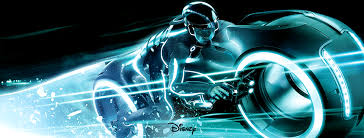
I’m not quite sure why I missed “Tron,” growing up, apparently it was a big deal, ‘cause they made a sequel recently called “Tron: Legacy”. (And according to imdb.com, there's just been a greenlight on a third film) . Apparently the movie has a legacy, so I thought it might be worth watching. Considering when the movie was released, it might have been worth watching for the technical achievement it is. While I think most of it now looks like an early eighties music video for “The Cars,” it’s still impressive. My bigger problem though, and many might consider it a strength, but frankly the movie was very tunnel-vision and insular about the world of computer hacking, and this strange world that is created inside this computer, where either people getting, I don’t know if "sucked in" is the right word, they actually kinda get phased into this bizarre world, where you’re in the computer, or you’re the avatar of your gamer or something, but it’s really you, I was very confused by the entire actual sociological structure of this computer world. It might make some form of sense but I was lost by it. Most of the movie takes place in this world, and it is about the special effect, and there’s plot about a video game creator (Jeff Bridges) whose plans were stolen through this grand master computer, but I could just barely follow it, but even doing so, I couldn’t care about it. The effects are certainly amazing and memorable, but that’s about all the movie really is. It’s impressive, even today, but its not enough for a film, it's more of an interesting curiosity instead.
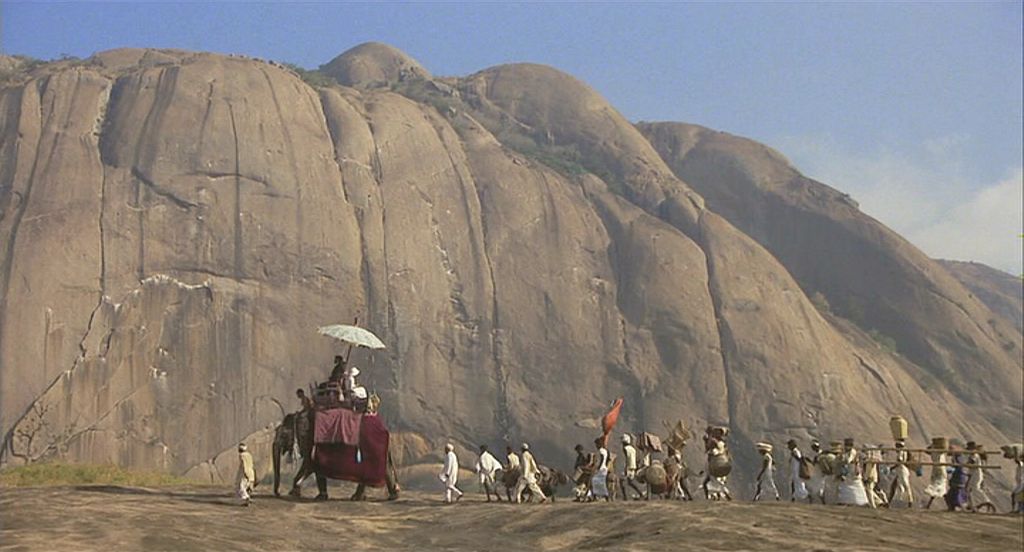
“A Passage to India,” eventually became David Lean’s final film, and while the film got 12 Oscar nominations, and won two, including a Supporting Actress win for Peggy Ashcroft, I’m not going to lie, I had trouble getting through this film. It’s not particularly unusual with David Lean, most of his movies are really long epics, but they also can be great epics that are some of the best films ever made. I normally pride myself on going through, about two movies a day on average, but with “A Passage to India,” it took me a few days to force way through it. Lean’s best movies are “Lawrence of Arabia,” “The Bridge on the River Kwai,” Great Expectations,” and “Brief Encounter.” (The latter isn’t one of his epics) “A Passage to India,” faithfully adapted from the E.M. Forster novel, is a good film, but it’s in the second tier of Lean’s work. It takes place around the time when India is about to try to regain its country from England. Adela (Judy Davis) and Mrs. Moore (Peggy Ashvroft) are the ones on the passage and they the two India’s the English which is filled with typical upper class aristocracy, and the India of the Aziz (Victor Banerjee) who’s a doctor and eventually becomes a well-trusted tour guide. Eventually taking them by train to some famous nearby mountains and caverns (There’s some great scenes where Victor is hanging along the side of the moving train along the edge of a mountain, that are quite stunning, reminded me of some old Harold Lloyd films) This takes a while to set-up, and for Lean, it’s unusually slow-moving up to this point, but finally there’s an unseen incident in the mountains, and Aziz is accused, by Adela of rape, and the country is soon divided over the incident and the impending trial. I haven’t read the novel, but a lot of these scenes I found confusing; I wasn’t sure whether this incident and trial were some kind of symbolism the moving state of India-England relations, or it was simply a trial involving these particular people, and it just happen to stir up conflict and create mass public interest. It's not so much that I wasn’t completely sure, but I got the sense that Lean wasn’t completely sure, either, so it feels like a combination of both, and neither was chosen. It's certainly a good film though, and no director could show us amazing landscapes of faraway worlds the way Lean can. It’s not his best, but it’s a more than suitable last film, just be aware that you might need some extra coffee to get through it.
HAMBURGER HILL (1987) Director: John Irvin
★★★1/2

“Hamburger Hill,” was the second movie about Vietnam made in “The Philippines,” in a two-year span. (The first being “Platoon”) and the second most noteworthy of 1987 (After “Full Metal Jacket”), and it really is mostly a movie deserving of those distinctions, it’s not as good as the other movies, well, at least not as memorable anyway. The movie’s title comes from the nickname soldiers gave a particularly had to survive hill, noted for being so much gunfire that soldiers turn into ground-up hamburger. (I wonder if the soldiers who fought there would like “Sweeney Todd”?) Strangely, the movie feels for much of it anyway, like a slice-of-life type film, almost like “The Big Chill,” or something along those lines. The soldiers go through regular drills and such, but there’s a lot of talking, bullshitting with each other, remembering, telling stories, or such. That’s probably why the movie isn’t the most memorable of the Vietnam movie, it doesn’t had audaciousness like “Apocalypse Now,” absurdity like “Full Metal Jacket,” or any metaphorical allegory like “Platoon.” It might actually be a great movie if the contrast with the battle scenes were comparable to those films, unfortunately while they’re good, they’re not as well-shot or as memorable as those aforementioned others. Outside of the war, the movie has kind of a interesting day-to-day, kind of ordinariness, that’s actually realistic to some extent, and surprising for a war movie. I’m not familiar with most of John Irvin’s filmography, so I don’t have anything to compare with it on that basis, but while this film’s flawed, it’s strangely interesting for all the kind of odd throwaway parts of the movie that he keeps in and focuses on, and not-as-much so, the war stuff however.
★★1/2

You ever watch a film and think its okay, but if somebody else directed it, it might be better? (Okay, you can all stop naming random Brian De Palma films now; I’m trying to make a point.) While watching Neil Jordan’s “The End of the Affair,” I was having that thought, but specifically I kept thinking about what Atom Egoyan might have done with this material. His work involves not simply an adult perspective on both nudity and erotica, but his films often involve playing with the linear storytelling structure, and he’s made some of my favorite films like this. (His films include, “Exotica,” “The Sweet Hereafter,” “Chloe,” and “Where the Truth Lies,” among many others.) That not to say that Neil Jordan is a bad filmmaker, in fact he’s quite good, most famously known for “The Crying Game,” but he’s directed numerous movies, like “Breakfast on Pluto,” “Mona Lisa,” “Michael Collins,” and most recently, “Ondine.” (Plus he’s current Emmy-nominee for “The Borgias”.) He’s made good and bad films, as has Egoyan, but his movies are best at having more linear storytelling, and his most interesting tales involving sex, usually concern sexual identity. “The End of the Affair,” begins with Henry (Stephen Rea), fearing his wife Sarah (Julianne Moore) is having an affair, and asks his writer friend Maurice (Ralph Fiennes) for advice involving hiring a private detective to follow her. Little does he know, Maurice had once been having an affair with Sarah. For a while, and it was right under Henry’s nose. Maurice thought it was love, but now, he’ s just as betrayed, if not moreso than her husband. Julianne Moore got an Oscar-nomination for her performance, and it’s a worthy nomination, she gives a strong erotic performance, but the movie itself, while there is all the nudity and sex, and WWII breaking out, and then suddenly the church comes into it at the end, can be surprisingly boring. It’s based on a famous Graham Greene novel, I haven’t read it, but I have a feeling it’s somewhat literally adapted here, which might not have been a good idea if it’s really told mostly from Maurice’s 1st person, perspective and continually jumps recalls flashback memories, the scenes are there, they’re actually shot well, but they’re almost completely lacking in context except as being retold from Maurice, either as memory or as something he’s writing in his “Diary of Hate”, as Maurice puts it. I think Egoyan would’ve known that “to hate,” usually means “to desire”.
The Italian (2007) Director: Andrey Kravchuk
★★★★

“The Italian,” is a Russian film about an Italian orphan, who goes on a long journey to find his birth mother, right as he’s about to find new parents of his own. It was Russia’s entry into the Academy’s Foreign Language Oscar a couple years back and I can see why, it’s a powerful little tale, that’s not too far away from “Oliver Twist.” Kolya Spiridonov plays the kid named Vanya, and at first he’s happy at the possibility of finally getting adopted, but right after one of his friend’s found a family, his mother suddenly arrived at the orphanage looking for him. She was a little too late, and now Vanya wonders about the whereabouts of his own mother, and who she even is. It takes a while; he first has to learn to read enough so he can read his file, and then find a way to get a hold of the file which is under, guard, lock and key. From there, he hits the trains, while the people who run the orphanage begin trying to follow his tracks. He gets some help along the way, and occasionally runs into some less than reputable fellows, like I said, this is a particularly new narrative, but still a very good old narrative to follow, and it’s effective. There’s somewhat of an open-ending as to Vanya ultimate fate, but we hope he’ll be all right, and either way, he’s finally got/going to get the answers he’s looking for. Well made, well directed, well acted, and it also shows you a lot of Russia, very good film.
RANGO (2011) Director: Gore Verbinski
★★★★★
“Rango,” is sure to be remembered for the Oscars next year, at least in the Animated Film Category, and I wouldn’t be at all surprised if it sneaks into Best Picture. It’s almost as good at referencing the classic western genre as “Wall-E”, was at referencing classic Sci-Fi, but both films manage to tease out of adornment and not out of cynicism and simultaneously create films that are as good or as the best film in their genres. “Rango,” is as good as any western, and probably more visual and funny than most.
The story involves a lonely pet chameleon (Johnny Depp), who crosses the road and ends up in the town of Dirt, which is suffering from an unbelievable drought, and through a series of exaggerated claims and ironically lucky incidents, he becomes the new Sheriff of the town, promising to end the water shortage. The rest of the characters, are mostly western archetypes, but they’re well performed and wonderfully animated. Verbinski used kind of an unusual form of, well it's not exactly motion-capture but it's similar. Here, he gets the actors on a regular stage instead of a voiceover booth, and has them act out the entire film recording the sound, and then he use the taped footage of the actors as a reference for the animating of the footage, which was done by George Lucas’s “Industrial Light & Magic (ILM)" special effects company. It’s LMI’s first time doing a fully animated film, and it’s an impressive one. “Rango,” is filled with amazingly visual bright colors and amazing animation, and the best part, it's not in 3-D! I’d recommend the movie just at how well they got a vulture to look like Harry Dean Stanton, but the whole movie is amazing.
UNCLE BOONMEE WHO CAN RECALL HIS PAST LIVES (2011) Director: Apichatpong Weerasethakul
★★★★½
I don’t quite know if I understand what the hell happened in “Uncle Boonmee Who Can Recall His Past Lives,” but I kind of got swept away by it anyway. Probably not since David Lynch’s “Mulholland Drive,” have I felt like this watching a movie, where I wasn’t sure exactly what was happening, and what was real, what was a figment of imagination, why does the son look like a gorilla, or is the son a ghost, or whatever was with the catfish that does something with a characters, that’s a little unusual for a catfish to do, as far as I know. Frankly, like “Mulholland Drive,” asking for an explanation is missing the point, it’s the journey that’s most important, in this case, the journey that’s ending for Uncle Boonmee (Thanapat Saisaymar). He’s a Thai farmer, who’s quickly dying of kidney disease. He’s being taken care of by his family and a nurse, and this is when his relatives come, some may be living, some may be ghosts, others may be spirits reincarnated as many things, including a catfish. The movie was the surprise winner of the Palme D’Or at Cannes last year, and it’s basically split critics and audiences ever since. This is s spiritual movie, and once you stop asking questions of logic, you’ll start to, if not understand, you’ll accept that these metaphysical beings and the real world simply exist together. Sometimes, we don’t realize it, and other times, when we’re more susceptible to listening to such voices, like when Uncle Boonmee is dying, we might just listen a little more carefully. I’m not gonna pretend I understood everything, but I certainly understood enough to know I couldn’t wait to see this movie a second and third time to try and find out more. It's a beautiful and spiritually-enlightening film.
TRON (1982) Director: Steven Lisburger
★★
I’m not quite sure why I missed “Tron,” growing up, apparently it was a big deal, ‘cause they made a sequel recently called “Tron: Legacy”. (And according to imdb.com, there's just been a greenlight on a third film) . Apparently the movie has a legacy, so I thought it might be worth watching. Considering when the movie was released, it might have been worth watching for the technical achievement it is. While I think most of it now looks like an early eighties music video for “The Cars,” it’s still impressive. My bigger problem though, and many might consider it a strength, but frankly the movie was very tunnel-vision and insular about the world of computer hacking, and this strange world that is created inside this computer, where either people getting, I don’t know if "sucked in" is the right word, they actually kinda get phased into this bizarre world, where you’re in the computer, or you’re the avatar of your gamer or something, but it’s really you, I was very confused by the entire actual sociological structure of this computer world. It might make some form of sense but I was lost by it. Most of the movie takes place in this world, and it is about the special effect, and there’s plot about a video game creator (Jeff Bridges) whose plans were stolen through this grand master computer, but I could just barely follow it, but even doing so, I couldn’t care about it. The effects are certainly amazing and memorable, but that’s about all the movie really is. It’s impressive, even today, but its not enough for a film, it's more of an interesting curiosity instead.
A PASSAGE TO INDIA (1984) Director: David Lean
★★★1/2
“A Passage to India,” eventually became David Lean’s final film, and while the film got 12 Oscar nominations, and won two, including a Supporting Actress win for Peggy Ashcroft, I’m not going to lie, I had trouble getting through this film. It’s not particularly unusual with David Lean, most of his movies are really long epics, but they also can be great epics that are some of the best films ever made. I normally pride myself on going through, about two movies a day on average, but with “A Passage to India,” it took me a few days to force way through it. Lean’s best movies are “Lawrence of Arabia,” “The Bridge on the River Kwai,” Great Expectations,” and “Brief Encounter.” (The latter isn’t one of his epics) “A Passage to India,” faithfully adapted from the E.M. Forster novel, is a good film, but it’s in the second tier of Lean’s work. It takes place around the time when India is about to try to regain its country from England. Adela (Judy Davis) and Mrs. Moore (Peggy Ashvroft) are the ones on the passage and they the two India’s the English which is filled with typical upper class aristocracy, and the India of the Aziz (Victor Banerjee) who’s a doctor and eventually becomes a well-trusted tour guide. Eventually taking them by train to some famous nearby mountains and caverns (There’s some great scenes where Victor is hanging along the side of the moving train along the edge of a mountain, that are quite stunning, reminded me of some old Harold Lloyd films) This takes a while to set-up, and for Lean, it’s unusually slow-moving up to this point, but finally there’s an unseen incident in the mountains, and Aziz is accused, by Adela of rape, and the country is soon divided over the incident and the impending trial. I haven’t read the novel, but a lot of these scenes I found confusing; I wasn’t sure whether this incident and trial were some kind of symbolism the moving state of India-England relations, or it was simply a trial involving these particular people, and it just happen to stir up conflict and create mass public interest. It's not so much that I wasn’t completely sure, but I got the sense that Lean wasn’t completely sure, either, so it feels like a combination of both, and neither was chosen. It's certainly a good film though, and no director could show us amazing landscapes of faraway worlds the way Lean can. It’s not his best, but it’s a more than suitable last film, just be aware that you might need some extra coffee to get through it.
HAMBURGER HILL (1987) Director: John Irvin
★★★1/2
“Hamburger Hill,” was the second movie about Vietnam made in “The Philippines,” in a two-year span. (The first being “Platoon”) and the second most noteworthy of 1987 (After “Full Metal Jacket”), and it really is mostly a movie deserving of those distinctions, it’s not as good as the other movies, well, at least not as memorable anyway. The movie’s title comes from the nickname soldiers gave a particularly had to survive hill, noted for being so much gunfire that soldiers turn into ground-up hamburger. (I wonder if the soldiers who fought there would like “Sweeney Todd”?) Strangely, the movie feels for much of it anyway, like a slice-of-life type film, almost like “The Big Chill,” or something along those lines. The soldiers go through regular drills and such, but there’s a lot of talking, bullshitting with each other, remembering, telling stories, or such. That’s probably why the movie isn’t the most memorable of the Vietnam movie, it doesn’t had audaciousness like “Apocalypse Now,” absurdity like “Full Metal Jacket,” or any metaphorical allegory like “Platoon.” It might actually be a great movie if the contrast with the battle scenes were comparable to those films, unfortunately while they’re good, they’re not as well-shot or as memorable as those aforementioned others. Outside of the war, the movie has kind of a interesting day-to-day, kind of ordinariness, that’s actually realistic to some extent, and surprising for a war movie. I’m not familiar with most of John Irvin’s filmography, so I don’t have anything to compare with it on that basis, but while this film’s flawed, it’s strangely interesting for all the kind of odd throwaway parts of the movie that he keeps in and focuses on, and not-as-much so, the war stuff however.
The End of the Affair (1999) Director: Neil Jordan
★★1/2
You ever watch a film and think its okay, but if somebody else directed it, it might be better? (Okay, you can all stop naming random Brian De Palma films now; I’m trying to make a point.) While watching Neil Jordan’s “The End of the Affair,” I was having that thought, but specifically I kept thinking about what Atom Egoyan might have done with this material. His work involves not simply an adult perspective on both nudity and erotica, but his films often involve playing with the linear storytelling structure, and he’s made some of my favorite films like this. (His films include, “Exotica,” “The Sweet Hereafter,” “Chloe,” and “Where the Truth Lies,” among many others.) That not to say that Neil Jordan is a bad filmmaker, in fact he’s quite good, most famously known for “The Crying Game,” but he’s directed numerous movies, like “Breakfast on Pluto,” “Mona Lisa,” “Michael Collins,” and most recently, “Ondine.” (Plus he’s current Emmy-nominee for “The Borgias”.) He’s made good and bad films, as has Egoyan, but his movies are best at having more linear storytelling, and his most interesting tales involving sex, usually concern sexual identity. “The End of the Affair,” begins with Henry (Stephen Rea), fearing his wife Sarah (Julianne Moore) is having an affair, and asks his writer friend Maurice (Ralph Fiennes) for advice involving hiring a private detective to follow her. Little does he know, Maurice had once been having an affair with Sarah. For a while, and it was right under Henry’s nose. Maurice thought it was love, but now, he’ s just as betrayed, if not moreso than her husband. Julianne Moore got an Oscar-nomination for her performance, and it’s a worthy nomination, she gives a strong erotic performance, but the movie itself, while there is all the nudity and sex, and WWII breaking out, and then suddenly the church comes into it at the end, can be surprisingly boring. It’s based on a famous Graham Greene novel, I haven’t read it, but I have a feeling it’s somewhat literally adapted here, which might not have been a good idea if it’s really told mostly from Maurice’s 1st person, perspective and continually jumps recalls flashback memories, the scenes are there, they’re actually shot well, but they’re almost completely lacking in context except as being retold from Maurice, either as memory or as something he’s writing in his “Diary of Hate”, as Maurice puts it. I think Egoyan would’ve known that “to hate,” usually means “to desire”.
The Italian (2007) Director: Andrey Kravchuk
★★★★
“The Italian,” is a Russian film about an Italian orphan, who goes on a long journey to find his birth mother, right as he’s about to find new parents of his own. It was Russia’s entry into the Academy’s Foreign Language Oscar a couple years back and I can see why, it’s a powerful little tale, that’s not too far away from “Oliver Twist.” Kolya Spiridonov plays the kid named Vanya, and at first he’s happy at the possibility of finally getting adopted, but right after one of his friend’s found a family, his mother suddenly arrived at the orphanage looking for him. She was a little too late, and now Vanya wonders about the whereabouts of his own mother, and who she even is. It takes a while; he first has to learn to read enough so he can read his file, and then find a way to get a hold of the file which is under, guard, lock and key. From there, he hits the trains, while the people who run the orphanage begin trying to follow his tracks. He gets some help along the way, and occasionally runs into some less than reputable fellows, like I said, this is a particularly new narrative, but still a very good old narrative to follow, and it’s effective. There’s somewhat of an open-ending as to Vanya ultimate fate, but we hope he’ll be all right, and either way, he’s finally got/going to get the answers he’s looking for. Well made, well directed, well acted, and it also shows you a lot of Russia, very good film.
Saturday, August 13, 2011
THE BEST MOVIES OF 2010! (Sorry for the 8-month delay)
Jim Emerson's blog recently noted that more and more movie critics are taking the summer to put together a Top Ten List of "Best Movies So Far This Year". As per the usual, wait 'til the end of the year to make simply one list of the Best Films of the year. (Link to article is below.)
http://blogs.suntimes.com/scanners/2011/08/the_best_movies_since_last_tue.html
This has become a common practice for critics, especially internet critics, for numerous reasons, I think the main one Emerson hits on the head, when he notes how most studios save their absolute best films for after Labor Day, which is the unofficial start of Oscar season. So in film terms, the first eight months of the year occasionally tend to get forgotten or at times ignored during Award season, and while most film released during that time generally give us plenty of reasons to ignore/forget them, there are always a few gems that shouldn't be, and its nice to make some kind of note on them. However, Emerson's blog attempts to focus on the bigger trend that half-year lists represent is that we are in fact a list-obsessed culture, one that's exploded in the days of the internet, and the general obsession of people making list out of everything. It's interesting timing for me, just as I'm trying to take advantage of that list culture.
To those who might not have gone through my earlier blog, I have a list of every movie I have ever seen, and am currently about 20 movies from 3,000 feature-length films on the list, which is when I plan to first publish it on this blog. I wrote an earlier blog on how this list started and then grew to where it is today, which you can check to hear that story, but frankly, I am apart of the list-making, list-obsessing, list-debating, culture. I watched every AFI list program that came out, always had complaints and praises. For a while, when I had cable, I watched every VH1 list they did on Great Artists of Rock'n'Roll, or song, pop songs, dance songs, video, whatever, and somebody somewhere does a new list of random list of something new, I'd say about every week, and I don't mean random people, I mean, legitimate newspapers, magazine, TV channels, known established names within the industry. Hell, I still can't understand why VH1 cancelled "The List," a TV show in which five times a week, special guests made their own lists, and it was debated and voted on by the studio audience. The things is, lists are fun to obsess over and debate and it's easy way to analyze somebody's opinion, and like stamps, they're collectable, and the old ones become more interesting historically, and possibly more valuable because they show us the standards of where we've been. (Okay, maybe a list won't make anybody any money, literally, unless you count increases in sales and ratings) Some people lists are more interesting than others. I look forward to critic lists every year, as its their profession to know what's good and what's better and why. I take less interest in listS made by the general public or by internet poll, but there generally based more on popularity than anything else. This is the same reason why I knock down reality shows that have an audience and/or at home vote.
Well, with all this, I have to say, I promised the list of the Best Movies of 2010, last year, and I'm gonna produce it. Why, so late, well, as I mentioned in one of my first blogs, I don't get to go see every movie all the time. In fact, as of today, by my count, I've seen 5 movies that were released in 2011. 4 I saw on DVD, 1 I got to see in theatres. I can make a list, but frankly it's not worth it. It's too small a sample size, even if I do think "Rango," is going to be tough to beat. But, most people don't have the opportunity to watch every film, and I haven't. I've seen about 150 or so films from last year, while that's a lot, there's a lot I'm still missing. I try to watch every important or big must-see movie throughout the year, sometimes it's even hard to tell what that is. I try to watch movies that critics seem to like, even if I don't agree, it good to see what they're recommending. There's always important directors, writers and actors who I almost always make a note to watch their films ASAIC (As soon as I can). Sometimes it's simply personal preference. When is it a good time to make a list for a year? I do think you have to have seen a certain amount of films, and you have to set some standard of quality to judge on. Well, for a minimum standard, I recommend and use the Academy Awards. Actually, I generally like to use as many award shows as possible, the big ones being the BAFTAS (British Oscars) Independent Spirits (Independent Films), Broadcast Film Critics Awards (the aforementioned critics) certain industry union awards are also always worth noting (DGA [Directors] WGA [Writers] SAG [Actors] PGA [Producers], there's dozens of them) and it's always good to keep up with certain films that either win awards at film festivals or get a lot of so-called buzz, at the major film festivals (Toronto, Cannes, Sundance, Telluride, a few others) but if you're not that interested in following all these awards as obsessively as some follow lists, then the Oscars, even if I/you disagree with them, are a good general benchmark. (In case some of you may be wondering, the Golden Globes, despite popularity and the national TV contract with NBC, they're actually not that well respected a standard in the industry, they're one of the minor, minor awards at best, but you can throw them in there too.) And even narrowing it to the Oscars, we can narrow it to the major categories. The biggest is Best Picture, that's 10 (This year, I don't know if you've heard, instead of a set number, there's gonna be a surprise variable number somewhere be 5 and 10. Can't wait to see how they screw that one up) So, the main 10, the next category is Director, this year all the Directing nominees coincided with Best Pictures, so 10. That's was a lesser common occurance when there was the traditional 5. There's two writing categories, Adapted and Original Screenplay, so 10 nominees, but only one "Another Year," we haven't already mentioned, so 11. Now we go to acting, that's twenty nominations, but only 5 that we haven't brought up so far, so 16 total. Animated features, there's always 3 or 5 of them, this year 3, one, "Toy Story 3," got a Best Picture nomination, so 2, that's 18. There's a lot of technical categories, some of you might have a preference on them, I have some friends that keep close eyes on the music categories for instance, the two that I would focus on though are editing and cinematography. Editing is often the last stage of filmmaking, and some things are tougher to edit than others. Chase and action movies have a tendency to sneak into this category, and cinematography, is the lighting of the movie, and essentially the first part of the language of film, so it's always critical. This puts our total to, well, 18. All these films got nominated in other major categories. After that, it's always good to try and see the Documentary Feature and Foreign Language Feature categories, but it's not always possible. I haven't even seen three of the Foreign Language Films yet, including last years winner, "In a Better World." Those are preferable, but not always readily available. And basically, if you make it a point to watch all these Oscar-nominated films, plus whatever other movies you happen to watch during the year, you can probably say with relative confidence what the Best Films from last year were.
And frankly, it's just a list, you can change it at any time, so it's not really anything of importance were talking about here, but, that's the standard I go with, and when I saw "Another Year," a couple weeks back, I had officially seen all the major category-nominated films, that I just named, and while I wanted to wait to see "Barney's Version," which won some smaller awards and got an Oscar-nomination for the Make-Up, I think it's time that I make an official list of films from last year, especially since if I've seen all these movies I've mentioned, than I know that most everybody can now see them themselves, if they haven't already, and hopefully you all, agree, but if you want to completely disagree with me loudly, that'd be cool too. The following list, will be the general, Top Ten style used by film critics, and mastered in parody form by the great David Letterman, and there'll always be a lot of noted "Jury Prizes", for films that didn't make the Top Ten, but are certainly special and worth noting anyway, and with this year's list, I have to say, I believe 1-4 can basically be interchangeable on the list. I think they're all the absolute Best Movies to come out last year, maybe some of the best ever made, and the order they're in, I've simply based on the most miniscule details of personal preference. After that, I find the list somewhat subjective.
Here we go, David Baruffi's
TOP TEN MOVIES OF 2010
1. "The Social Network"- Alright, it's a popular choice, but it really was amazing. David Fincher along with the great Aaron Sorkin's screenplay, crafted a modern-day origin story that's can be looked upon as the answer to the question "How did we get here?". It's also the rare movie that involves smart people who say smart things, a staple of Sorkin's work (TV's "The West Wing,") and also show in Marc Zuckerberg, a portrait of the, modern-day artist, the man who uses computer programs as his paints and easels. Jesse Eisenberg gives an amazing performance, and he is going to be the next great American actor, and this was his best role yet. It's Fincher's best movie yet, the supporting cast, especially Andrew Garfield and Justin Timberlake and perfectly casted. But it's the screenplay that helped make this unfilmable, elaborate, multi-perspective story about people who work in the language of computer, able to remain the intelligent people they are, while allowing us to understand what exactly happened and how it forever change the world.
2. "The Girl with the Dragon Tattoo"- The first of the three films dubbed "The Millenium Trilogy," (All of which are amazing) based on the best-selling novels by Steig Larsson, this movie, directed by Niels Arden Oplev, is actually being remade and soon-to-be-released in America, directed by the aforementioned David Fincher, and starring Daniel Craig and Rooney Mara. While I have high expectations, this is one of those times where you have to see the original. This film has everything and the kitchen sink, plus a mysterious character that's one of the most unique and interesting film has ever seen. One who's actions we cannot predict, and thoughts we cannot read. The story itself actually isn't that far off from an Agatha Christie novel, but what a way to go about it. There's a rich old millionaire with his an island where his family lives, and he hired the recently sentenced to prison Mikael Blomkvist (Michael Nyqvist) to investigate a long-ago murder in the family that's never been solved, and there's eighty possible suspects, many of whom are of a suspicious nature, including former Nazis, and that's just the beginning. Then there's the tiny, tattooed, pierced computer hacker Lisbeth Salander (Noomi Rapace). With all due respect to Nathalie Portman, Rapace gave the performance of the year in my book, and what a tricky, often wordless performance this is. Let me put it this way, this is one of the few films, where I watched it, and then immediately decided to read the book. From somebody like me who doesn't read that much, it's the highest of praise.
3. "Inception"- From the mind that first brought us "Memento," Christopher Nolan has proven to be one of the best and most successful directors in Hollywood, most notably, the recent "Batman," films, which are the best of the superhero movies were constantly inundated with. "Inception," was his pet project that took him ten years to write, and is as genius and brilliant a phychological mindfuck ever created. It also takes full advantage of the most up-to-date special effects, in a way that we hope they get used, but almost never do. The story involves people who infiltrate mind for business owners to try and find the latest and most hidden of ideas there competitors have, and now they have to infiltrate and plant an idea in someone's head. This movie take place upon layers and layers of out inner unconscious, and yet, I've seen it three times, I barely understand it but, I can't find any contradictions in logic. It's the Best Action movie since "The Dark Knight," and I'm still not completely sure which side of it's open-ending I like to take, but it's the most inventive creation Hollywood's dared in years. Congrats to Nolan, if for nothing else, for having that kind of Hollywood clout, so young.
4. "The King's Speech"- The winner of four Oscars, including Best picture, Director (Tom Hooper) and Best Actor (Colin Firth), it's the most touching film of the year, and easily the most inspirational. I thought Colin Firth's performance the year before in Tom Ford's "A Single Man," was amazing, here, he's proves he's one of the best actors alive. Playing King George VI, who's secret of his stutter was painfully revealed to an international audience due to the advent of radio, and with the Crown, the movie is as much about his friendship with his longtime speech therapist, Lionel Logue (Geoffrey Rush) as it is about how he overcomes his impediment.
5. "127 Hours"- Another inspirational story based on true events, but this one is a little more gruesome. While James Franco wasn't a great Oscars host, his performance in this film, which is basically all him, is one of the most impressive. From the same director/writer combo that did "Slumdog Millionaire," Danny Boyle and Simon Beaufoy, "127 Hours," refers to the length of time hiker Aron Ralston has his arm, and himself, trapped between a giant boulder and a canyon wall, and how with the most minimal of equipment, he manages to break free, by cutting off his own arm. For an amazing visual stylist director like Boyle, how he manage to keep us entertained with an entire movie taking place stuck in a canyon is amazing even for him. Just the continuous backtracking shots that eventually lead to a bottle of gatorade alone is worth a viewing, even if the rest of the film might make you turn away squimishly.
6. "True Grit"- I had long given up trying to predict what the Coen Brothers are going to do next, but remaking a John Wayne classic would've been nowhere near my guess, and yet, for them, it makes perfect sense, and they made a perfect western, better than the original. (Although casting Matt Damon in the Glen Campbell part alone, might have done that) Similar to how they based "No Country for Old Men," very literally on the Cormac McCarthy novel, they went to the original novel "True Grit," for direct inspiration for this film, instead of the original movie, this makes the sudden appearance of a man in a bear costume, suddenly seem more logical than it should. While the story of a teenager insisting on getting the notorious Rooster Cogburn to find the man who killed and robbed her father is basically the same, the telling is quite different, and with amazing performances by Jeff Bridges, Matt Damon, and where-did-they-find-this-one newcomer Hailee Steinfeld, "True Grit," is possibly the Best Western since "Unforgiven".
7. "Mother and Child,"- From Rodrigo Garcia, one of the most interesting film and TV directors around, comes a multi-narrative story of adoption that's almost cruelly ironic, but is also emotionally heart-wrenching. This was the film that I had the most emotional reaction to this year. Karen (Annette Bening) gave up a child for adoption when she was very young, sight unseen. Now she's a nurse at a hospital and while simultaneously starting to date fellow nurse Paco (Jimmy Smits), she begins to make inquiries on the whereabouts of her child. That child is Elizabeth (Naomi Watts) who's pretty cold-hearted for most of this movie, almost disturbingly so. She sleeps around and usually with people who are unavailable, partly just to ruin there lives. Then after having an affair with her latest boss (Samuel L. Jackson) she becomes pregnant. There's also a couple (Kerry Washington and David Ramsey) who are having trouble in their marriage, but are looking to adopt a child, but not for the same reasons. Don't think just because you've seen these kind of multiple storylines that you can predict how/if they will come together in this film, and why. Garcia is a master at touching, small, human stories. On top of directing such TV shows as "Six Feet Under," and "In Treatment," he made the wonderful "Nine Lives," a couple years ago, which involves nine vignettes, each following one different woman for one long take, in there lives, he also made the Sundance hit and Showtime movie, "Things You Can Tell Just By Looking at Her," which also followed many different women. "Mother and Child," is his best film yet.
8. "Exit Through the Gift Shop"- Okay, it's not the most important documentary last year, but it was the most entertaining. Directed by the mysterious graffiti artist Banksy, taken mostly out of old footage of street art, that had been collected for years on videotape by French shop owner Thierry Guetta, Banksy, possibly inadvertantly and regrettably influences Guetta to create his own street art, even opening a Warhol-inspired high-pressed 1st show at the former home of CBS Studios. While Guetta is unbelievably passionate about art, he's not the most impressive artist, but he's an incredible subject for this documentary, which also documents the rise of street art from its underground beginnings all the way back to the '80s, to it's place now on found at art auctions and exhibits that grab on worldwide acclaim. And it has some amazing art by such great artists as Sheppard Fairey, Space Invader, and Banksy himself. The movie's also incredibly funny.
9. "Black Swan"- Darren Aronosfky's "The Wrestler," made pro wrestling look like the most self-destructive, violent, and possibly the most suicidal thing anybody could ever do there own body. In "Black Swan," he makes ballet, look more self-destructive than pro wrestling. Led by Nathalie Portman's amazing performance, as an obsessed, closed-in ballerina, this movie lives in the surreal. She gets the coveted part of both the White Swan and Black Swan in her company's latest production of "Swan Lake," Nina starts to go somewhat insane. There's competition from a fellow ballerina (Mila Kunis, who should've gotten an Oscar-nomination) pressure from both her coach (Vincent Cassel) and her overbearing mother (Barbara Hershey), as well as the everlingering image of the company's former star (Winona Ryder) who she's replacing. Plus, whatever else is going on in her frigged up mind. I think certain movies where the terror comes from inside one's own mind tend to fail on camera, because it's impossible to capture the visual believably (This is my big complaint about "The Shining") but here, Aronofsky succeeds, scares the hell out of me, and keeps me on the edge of my seat, as Nina's (Portman) world and mind collapse all around her. I don't know what was real and what was imagined most of the time, and that was terrifying enough. Aronosfky achieved one of the toughest things possible with this film, creating terror inside a character's mind, keeping it there, and yet manage to make the audience feel every emotional as viscerally as any film I've ever seen. I don't always remember what happened in this film, but I remember the feeling I got watching this film.
10. "Blue Valentine"- Two of the best and bravest performances last year came from a small independent film that not many people are going to particularly want to watch, (And very few could due to the movie's original NC-17 rating, later changed to an R.) but few films have so painfully and perfectly exhibited a relationship ending (as well as beginning) as "Blue Valentine". Ryan Gosline and Michelle Williams are a working, lower-middle class couple. In flashbacks, we see young love sparkle between them. Today, they're married, with a young kid, and are on their way to divorce, and the unfortunate fact is that, neither one of them are at fault. Writer/Director Derek Cianfrance worked for ten years to make this movie, and it's one of the most devasting and realistic films about relationships I've ever seen, and most importantly, it's amazing performances by Gosling and Williams. It's not just the sex scenes that make it difficult, these two actors have to convincingly play the same character at two distinctly different parts of their life, and make the changes or evolutions or lack thereof of the characters seem believable. It's two of the best performances of the year, in a film that's subject matter might be too realistic and close-to-home for some people.
SPECIAL JURY PRIZES
(For the sake of brevity, these will simply have the title and director of the films listed, but they are all amazing films that just didn't find a place on my list, but easily could've. They'll be listed alphabetically)
LIVE-ACTION AND ANIMATION
Another Year-Mike Leigh
Easy A-Will Gluck
Fish Tank-Andrea Arnold
The Ghost Writer-Roman Polanski
The Girl Who Kicked the Hornet's Nest-Daniel Alfredsson
The Girl Who Played with Fire-Daniel Alfredsson
Greenberg-Noah Baumbach
Hereafter-Clint Eastwood
I Am Love-Luca Guadagnino
I Love You, Phillip Morris-Glenn Ficarra and John Requa
The Illusionist-Sylvain Chomet
Jack Goes Boating-Philip Seymour Hoffman
The Kids Are All Right-Lisa Cholodenko
Machete-Robert Rodriguez
Mother-Joon-Ho Bong
The Other Guys-Adam McKay
Rabbit Hole-John Cameron Mitchell
Red Riding Trilogy-Julian Jarrold, James Marsh, and Anand Tucker
The Runaways-Floria Sigismondi
Somewhere-Sofia Coppola
Toy Story 3-Lee Unkrich
Welcome to the Rileys-Jake Scott
Winter's Bone-Debra Granik
DOCUMENTARIES
Catfish-Henry Joost and Ariel Shulman
Gasland-Josh Fox
Inside Job-Charles Ferguson
Joan Rivers: A Piece of Work-Rikki Stern, Anne Sundberg
Restrepo-Tim Hetherington and Sebastian Hunger
Waiting for 'Superman'-Davis Guggenheim
Winnebago Man-Ben Steinbauer
Thursday, August 11, 2011
GOODBYE WISTERIA LANE: FINAL THOUGHTS BEFORE THE FINAL SEASON OF "DESPERATE HOUSEWIVES".
I've just been sorting through some of the recent "Desperate Housewives," news clippings on imdb.com. All of them based around some kind of possible/proposed storyline for next season, which actors will appear, what characters, etc. etc. Other such things. I'm not quite sure why now, maybe I thought I would be more inspired to either write this blog, or possibly start-up watching the show again, one last time.
For those who might not have heard, ABC announced the other day that this next season of "Desperate Housewives," will be its last, cancelling the show after eight years. There's wild speculation out there now, ranging from the theoretical "Is this the end of serialized storytelling on basic TV?" to the ridiculous, "How much did the "Real Housewives..." series 'cause an end to "Desperate Housewives?". I think it's well-past time for the show to end, although I find it somewhat bittersweet. No TV show in my lifetime exploded on the air the way "...Housewives," did. The show had that rare combination of being creative, inventive, risk-taking and good, while simultaneously being the biggest cultural phenomenon of the time. It was also an adult show. Filled with soap opera melodrama to be sure, but not as salaciously produced on network TV until then. Filled with sex, violence, mystery, adultery, mischief, and all the great outrageous behavior we expect from the most audacious of soap operas, revolving around four strong female lead characters (Okay, 3 1/2, I'm counting Susan as half a strong female character. You want to count Edie, then 4 1/2). Oh, and it's a comedy! That part seems to be the most overlooked in these speculations, analysis and wikipedia articles and such. This show was not a drama. While it uses the storytelling techniques and references of dramas such as "Knots Landing," "Twin Peaks," and "American Beauty," (the latter could be contrived as a dark comedy as well), the show was comedy. A satire of the primetime soap opera genre that had actually at that time, been long dead on TV. All of TV. That was also part of the appeal and the shock of the show.
The Marc Cherry script had been rejected by every basic network and every cable network. He didn't have the best TV show reputation going in, having last been a successful writer on "The Golden Girls," and had nothing but failed shows and pilots since. But ABC was a dead last 4th in the ratings, and didn't have a single scripted TV show that was a hit. It was a desperation play by the Disney network, which was even then contemplating getting rid of it's longtime cash cow, "Monday Night Football." Yet, Marc Cherry had to fight just to keep the original title of the show. (The phrase was common before the show, but usually used on the, eh, lets just say, its was an options on the less reputable internet sites, and since the show went on the air, those sites have replaced it with the anachronism, "MILFs".) This contributed to the original appeal of the show. It was benefited by also being good. It was controversial, and it had everyone talking. I think I watched more entertainment magazine shows during 2004 than I have in my whole, all of them talked about "Desperate Housewives," for at minimum, a good ten-minutes of their 30-minute running time. The ladies of the show made the cover of Time Magazine, a feat that took the cast of "Friends," nine years to accomplish. Maybe the most absurd thing I remember about that first season, was seeing the "Desperate Housewives," trivia game on the shelves at Walgreen's, while I was playing with that little 20 Questions ball that they always had there. (How that ball figured out I was thinking about the "Desperate Housewives boardgame," I will never know) The show hadn't even finished it's first season, yet there was a trivia game already. It basically must've only consisted of events that occurred in the show's first 13 episodes, at most. Didn't exactly sound like much of a trivia game, but it was that big a show at that time.
Yet, the more I think about it, the less and less likely I feel that I'm even going to be able to sit through a single episode of the show in it's final season. In fact, I haven't seen an episode since season five. It was the episode Edie was in the car accident and ran into the electrical pole. Come to think of it, while I know her character was killed off, I don't actually know if that's what did it. I have a hard time imagining she survived it, but after getting run over by Susan in Season two, I'm pretty sure Edie could've. I'm a little surprised Gabby didn't just choke her to death in season four for sleeping with Carlos. The show had continually waned in its quality since the first season, but it had to. A phenomenon that big can't possibly live up to the standard that was thrust upon it, and coming up with new storylines after the resolution of the mystery behind Mary Alice's suicide, must've been a dreadful task for any writer. The show was basically set-up for the one season, the one great long-running storyline. Naturally, others would have to pale in comparison. They continually brought in new characters with new secrets. Some we liked, others that we didn't care that much for. Characters continually died, especially if Bree ended up marrying them. Others died for many other reasons. Poisoning, falling off a house, shot by a crazy-ass Laurie Metcalf in a supermarket. I kept watching. I don't know why now, I think I had hoped it would be one of those long-running shows like "Dallas," or "Dynasty," that you knew was clearly way past it's prime, but you kinda wanted to keep up with whatever crazy thing they were doing next. How's Bree gonna drive another man crazy? How Susan gonna completely screwup a relationship doing something stupid, crazy and incompetent that we hadn't really seen since Lucille Ball last tried it? Will Lynette ever break down, and simply start drowning all her kids one day, or whatever. It was a soap opera after all, a comedic one, but they were also the most interesting characters on TV. I rank Marcia Cross's Bree Van de Kampf, as one of the most original of TV characters. She reminded me of the Laura Linney character in "The Truman Show," pretending to be the perfect June Cleaver housewife, and finally that character had people who absolutely hated her for it. Barbara Billingsley, with yellow rubber cleaning gloves, a shotgun and a whip, and usually she still just tried to outsmart everyone, which either ended successfully, or ended with somebody in the hospital. You know its funny, while there were a few attempts at copying or replicating the appeal of the show by the other networks, there really isn't a show out there quite like "...Housewives," on TV. No successful show has borrowed any of the aspects of that show that made it fresh and unique. TV dramas have mostly come in some form of a cop/detective/hospital show (Or a combination of some of those shows), and cable shows have remained dark as well. Even a show like "True Blood," which has many of the aspects of "Housewives," including a plotline that's serial in its nature filled with violence, lust, and a constant refreshing of characters with secrets, has absolute nothing in common with the tone of "Housewives." Other than the aforementioned reality shows, that are really not worthy of being mentioned in the same conversation as "Desperate Housewives," are the only things that have survived with even the most miniscule of influence from the show. I think it's that unique quality that's got me somewhat more in mourning of it's impending end. There's not gonna be another show like it or even influenced from it in the near future. It was a mini-miracle that it ever made the air to begin with, especially on basic TV.
So, why can't I watch it one last time? Well, the show jumped the shark at the end of the fourth season. After the revelation of Katherine's daughter and ex-husband were resolved, the show did something unusual. It literally jumped, five years into the future. It presented a world that had suddenly, drastically shifted from the world we just left. Children were grown up and moved out, others had been born, others had been taken away, careers and partnerships, professionally and personally had changed completely, frankly, it was the sloppiest of storytelling the show had ever done, and they had committed to it, with no possible way of backing out of it. It's not that it wasn't understandable. The show, had issues with it's storytelling to begin with. It relied heavily on characters with secrets that had to be found out and/or eventually revealed, and that meant continually bringing in new, mysterious characters that we're in some way, up to no good. We didn't quite know or understand how, but the effect was basically the same as on "Star Trek," when somebody who clearly wasn't a regular in the cast, was going on a mission, particularly if he chose to wear a red uniform, he was gonna die. I didn't particularly mind, it was part of the charm of the show, and it went along well with the satirizing of the soap opera genre, which also uses that storytelling technique. Hell, that is the storytelling technique of soap operas. The jumping ahead might have seemed like a way to keep the show fresh and alive. Something that wouldn't have simply given us a new dimension on the characters and a way to refresh a storyline, or two that had become stagnant. Once Susan and Mike had gotten married, there entire storyline was basically done and finished. They needed a way to keep those characters apart because their struggle to get together and remain together was the entire crutch of their storyline.
In that way, they failed. Instead of progressing that storyline five years down the road, they in fact, went backwards. Forcing that storyline to remain and continue at what was obviously considered the most comfortable place to keep those characters, they actually did the opposite of what they should have done. They didn't evolve when they had the opportunity. That wasn't the worst part of that time jump. Some aspects of it were good, I think Bree's storyline as a famous cook book author, with her son positioned as her key supporter was a good jump into the future that progressed her storyline for instance. However, Gabby's storyline completely betrayed her character up to that point. She had been in a constant struggle over whether or not to have kids for most of the series. She was pregnant at one point in season two, but lost the kid after an accident, and the timing was bad with her husband Carlos in jail at the time. And frankly their marriage was enough of a struggle to keep together. She went from sleeping with the teenage gardener to marrying the Mayor, all the while, she was in love with Carlos, who had had his flings himself in between jail, career changes, and a bout of blindness. Suddenly, without any explanation, Gabby is then simply handed two kids. Of course, in later flashbacks, we know that she just had the kids, the normal way, with Carlos, but that knowledge came later. The initial effect completely undercut her entire persona up 'til that point. Frankly, that specific decision was the jumping the shark moment for me. The going forward in time has it's advantages and disadvantages in of itself, granted it's bad storytelling, but the worst part about it was that it was unnecessary. (Unlike for instance, the essential need for the infamous "Dallas," season that became Pam's dream, which was predicated from the original producer/creator/showrunner of the show returning after a year off where the storylines got over-the-top, and ridiculous, and with the need to explain Bobby's return from the grave anyway, it was a genius way to quickly and suddenly rid the show of the all that had come before that wasn't underthe showrunner's control and bring the show back to its original standing.) This sudden deus ex machima of Gabby's two kids, without previous explanation, and without the needed character development to explain her kids and her decision to keep them, was missing, and unexplained, and frankly, the show could never fully recover from this. It still seems wrong for her character to have kids. It's like having a stripper at your kid's birthday party, in of themselves they're two things that are okay, but they clearly shouldn't be paired together.
The show could have recovered from this, might have even been better than ever. It even had a few really good episodes after the time jump. The great 100th episode of the show, which focused around the sudden death of a local handyman played by Beau Bridges, I'd argue, was onc of the best single episodes of the series. (Bridges went on to get an Emmy nomination for that episode, and deservedly so.) However, once a storyline is broken in a serial, it's just about impossible to jump into it again with the same kind of whimsical zeal one used to.
It's not the first show to start off as high as the sun, only to fall like Icarus, and unfortunately, it won't be the last. But this one hurts. It was as special as any show has ever been, and it ends, remaining special. Not as popular, not as strong, not the ratings hit it once was, but frankly it tried and failed where most shows wouldn't even have conceived, and there isn't enough of that on TV, not on basic TV anyway. It's going to be a long time before a scripted TV show is going to replicate the creative aspects of "Desperate Housewives." and have its pop culture phenomenon-style popularity. So, Goodbye Wisteria Lane. We'll miss all of you. even you Mary Alice, even though you've been dead forever, and you still won't shut up, you're gonna really be missed.
Subscribe to:
Posts (Atom)